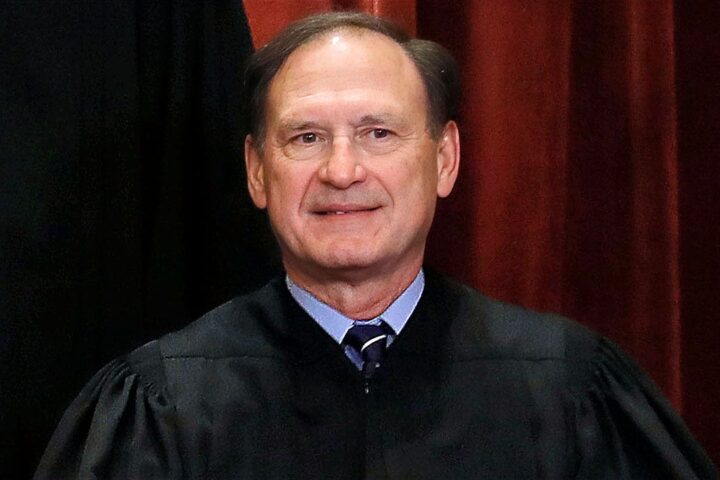
The Supreme Court on Monday issued a 6-3 decision allowing President Trump to remove Federal Trade Commission Commissioner Rebecca Slaughter, a ruling that narrows a key protection once afforded to independent agencies and puts the administrative state on notice for new constitutional challenges.
What the ruling says
The Court’s majority held that the President may lawfully remove the FTC commissioner at will in this dispute, a result that immediately changes the dynamics of agency leadership at the FTC. The opinion, authored by Chief Justice John Roberts and joined by five other justices, framed the case around whether the FTC’s mix of investigative, regulatory and adjudicative tasks are sufficiently executive in character to require presidential control.
The decision named President Trump and Commissioner Rebecca Slaughter and explicitly limited the protection that flowed from the 1935 Humphrey’s Executor decision. By concluding the FTC’s core functions are, in important respects, executive, the majority found presidential removal power appropriate for the agency official at issue.
Why the court overturned Humphrey’s Executor
Humphrey’s Executor has long been understood to allow Congress to shield certain multi-member independent agencies from at-will presidential removal of their heads when those agencies performed quasi-legislative or quasi-judicial functions. The majority reasoned that where an agency “unquestionably exercises executive power,” Humphrey’s traditional insulation conflicts with the Constitution’s separation of powers and the President’s duty to ensure the faithful execution of the laws.
Chief Justice Roberts’ opinion reexamined historical practice and precedent to draw a line between agencies exercising primarily executive functions and those properly insulated from immediate presidential control. The majority said it was narrowing Humphrey’s protection as applied to the FTC in this case rather than announcing a single rule that resolves every independent-agency structure across government.
That factual and legal framing is set out in the Court’s opinion (see the Supreme Court’s site for the full text), and the majority emphasized presidential accountability where executive authority is concentrated in an agency role.
Gorsuch concurrence and the administrative state
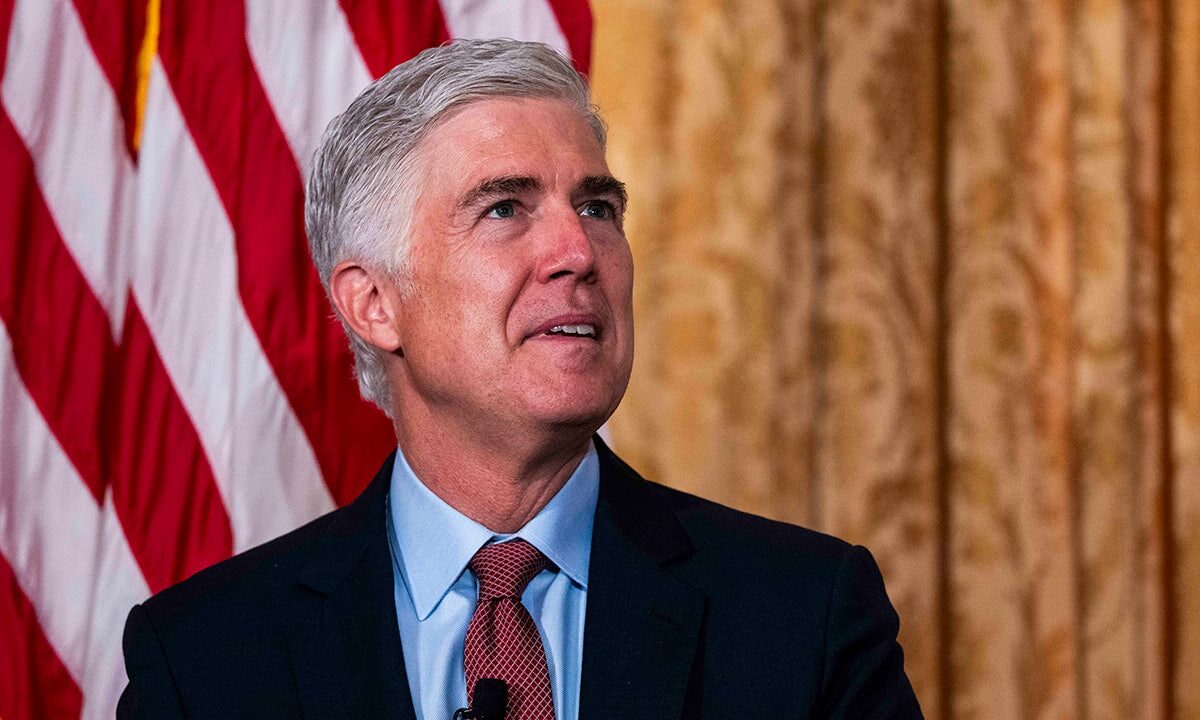
Justice Neil Gorsuch wrote separately in a concurrence that both welcomed the majority’s result and pressed a broader constitutional critique of modern administrative governance. Gorsuch argued that if agencies are plainly within the executive branch, then longstanding practices of extensive congressional delegations of rulemaking and adjudicatory power raise fresh separation-of-powers questions.
Gorsuch’s concurrence sketches a litigation roadmap: if agency officials are subject to presidential control, challengers may next attack statutory delegations that allow agencies to make binding policy, decide contested facts, or adjudicate alleged violations without Article III oversight. He warned that those practices may be harder to justify once agencies’ placement within the executive branch is emphasized by the Court’s separation-of-powers framework.
Expert reaction and likely next moves
Conservative legal strategists quickly signaled litigation will move beyond removals. Carrie Severino, president of the Judicial Crisis Network, told Fox News the next phase will sort agencies into constitutional categories and press challenges beyond firings. “I think the next step in this type of litigation won’t be looking at firings per se, but really trying to make sure all of these administrative agencies actually fall into one of our constitutional buckets,” Severino said.
Haley Proctor, a constitutional law professor, also told Fox News that the concurrence functions as a roadmap for targeted challenges to agency power. She said the decision invites litigants and Congress to reassess which decisions belong to lawmakers or Article III courts rather than to administrative bodies.
Legal observers expect plaintiffs and private parties to bring targeted lawsuits over specific agency actions — for example, challenging particular rulemaking procedures, the constitutionality of in-house adjudication, or statutory delegations that give agencies broad discretion. Such suits would likely proceed case-by-case, giving lower courts opportunities to refine the boundaries Gorsuch described.
What comes next for agency rulemaking and adjudication
The Court explicitly limited the holding to removal authority and did not categorically displace Humphrey’s Executor across the board. That restraint means agencies can continue many existing activities for now, but the ruling creates pathways for future challenges that could narrow particular agency powers over time.
Practically, agencies may respond by shifting governance structures, reassigning functions, or seeking statutory clarifications from Congress. Congress could also act to restructure how certain decisions are made—either by tightening delegations, creating new governance models, or reallocating responsibilities to courts or congressional committees. In the near term, expect a flurry of litigation testing the constitutionality of specific rulemaking mechanisms and in-house adjudicatory processes at multiple agencies.
Background: Humphrey’s Executor in brief
Humphrey’s Executor (1935) held that Congress may limit the President’s ability to remove officials of certain independent agencies when those agencies carry out quasi-legislative or quasi-judicial functions. That precedent has underpinned decades of administrative law by allowing multi-member commissions and insulated officials to operate with some independence from the White House. The Court’s narrow variance from that precedent in this FTC case signals a reevaluation of how Humphrey’s protection applies when agencies exercise what the majority views as core executive functions.
Quick takeaway
The ruling expands presidential control over at least one agency position and opens legal avenues to challenge other aspects of the administrative state. But the Court’s narrow holding means changes to rulemaking and adjudication will likely be incremental and fought through a series of follow-on cases and possible congressional responses. For now, the decision is consequential but not dispositive of the entire administrative state.
Source: Fox News — coverage and reaction; full opinion: SupremeCourt.gov; additional analysis: SCOTUSblog.