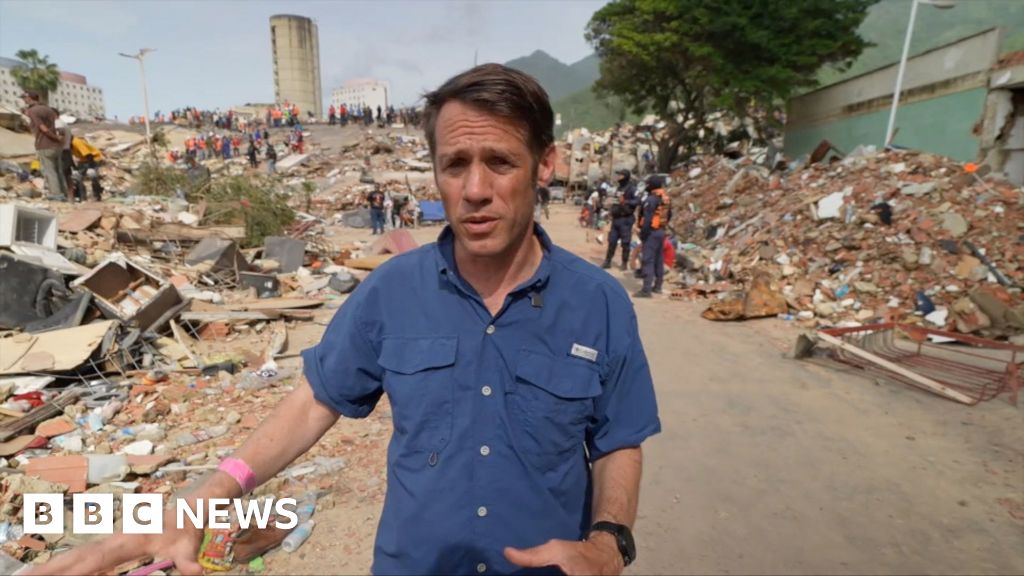
The Venezuela earthquake left residents in Caraballeda scrambling through dust and toppled concrete, searching by hand and flashlight for relatives and neighbours trapped under rubble. BBC correspondent Will Grant, reporting from La Guaira, described urgent, improvised search efforts as people worked into the night using hands, small tools and torches to probe collapsed flats and damaged buildings.
The immediate hours after the quake were marked by local people becoming first responders. Neighbours formed lines to move debris, calling out names and listening for any sign of life amid the wreckage. The scene was one of frantic activity rather than organised rescue operations.
Venezuela earthquake: what reporters saw in Caraballeda
Will Grant reported from Caraballeda in La Guaira, which he described as among the hardest hit areas. Streets were littered with masonry, twisted metal and household items thrown from collapsed apartments. Photographs and video from the scene show residents searching through rubble in Caraballeda after the quake, picking through broken walls and fallen furniture.
Local accounts relayed to the BBC conveyed a town where routine life was abruptly replaced by searches for missing people. Makeshift teams of family members and neighbours concentrated on buildings where relatives were known to live, checking apartments door by door when access was possible.
There were reports of limited heavy equipment in the early period after the tremor; much of the lifting and digging was done by people on the ground. Emergency vehicles were present in parts of La Guaira but, according to the on-scene reporting, were stretched by the scope of damage and the number of calls for help.
How families and neighbors are searching
Families and neighbours organised quickly, using whatever tools they had to widen voids where victims might be trapped. Volunteers formed teams to rotate labour, allowing exhausted searchers short rests while others continued clearing debris to try to reach potential survivors.
Search efforts were cautious because of unstable structures. In some places, people reported hearing faint noises under piles of rubble, which led to intense, concentrated digging to attempt rescues. Those on the ground prioritised places where they believed loved ones lived and coordinated informally to avoid duplicating effort.
Community leaders and local organisers helped allocate which streets and buildings to check first. The emphasis in many neighbourhoods was on rapid, local action — neighbours checking the homes they knew best, calling into stairwells and moving debris where they could safely do so.
Damage and local impact in one of the hardest hit areas
Caraballeda and nearby parts of La Guaira showed signs of major structural damage, with several buildings demonstrating partial or total collapse. Streets were blocked by fallen facades and utility poles, complicating movement for both residents and responding teams. Pictures from La Guaira show neighbours and volunteers looking for family members amid debris and collapsed buildings in the coastal zone.
Local shops and services were disrupted, and power and communications were intermittent in parts of the town, according to the BBC report. Medical facilities faced sudden surges in demand that risked overwhelming capacity in the immediate aftermath.
The BBC correspondent noted that there were no official casualty figures available at the time of the report. Local authorities had not published verified totals when the correspondent filed his account; descriptions of heavy damage are drawn from on-the-ground observation and eyewitness reporting.
Local response and what comes next
Civil defence units and municipal staff moved to coordinate with volunteers to prioritise searches and channel resources. Formal aid and larger-scale search-and-rescue teams were mobilising, but access limitations and unstable structures slowed the deployment of heavy machinery into some neighbourhoods.
Authorities advised residents to report missing people to designated local centres so search teams could allocate resources more effectively. Officials emphasised caution around damaged buildings because of the risk of further collapse; aftershocks can complicate and slow both volunteer and professional rescue efforts.
If local capacity is exceeded, officials indicated that additional assistance — including specialised urban search-and-rescue units — may be requested and deployed. In the short term, priorities are to stabilise dangerous structures, triage those in immediate need of medical care, and continue methodical searches of damaged buildings.
Source and how to follow updates
This account is based on the BBC News video report by correspondent Will Grant from Caraballeda, La Guaira (published 2026-07-01). The original BBC report and footage provide the on-the-ground observations referenced here: BBC News – Will Grant, Caraballeda report.
At the time of reporting there were no verified official casualty figures available from local authorities; updates will depend on confirmations from emergency services. The Nonstop News will update this story as verified information becomes available from authorities and trusted news sources.
Next update: further verified details will be published when authorities release official figures or vetted rescue reports are available.