Lockheed Martin’s recent company video presents an argument for AI autonomy warfighter tools as practical helpers on the battlefield and in space. The short film highlights systems including the F-35, Lockheed Martin Vectis™, Matrix Autonomy and the U-Hawk while describing how connected autonomy can surface timely information for pilots and operators. Watch the Fox News summary of the video here: Smarter Systems, Safer Missions: AI, Autonomy and the Warfighter.
The video frames autonomy not as a single breakthrough platform but as a set of interoperable tools meant to reduce workload, extend mission reach and help keep people out of harm’s way. This article breaks down the battlefield implications, missile-defense claims and space ambitions, then notes verification limits and key takeaways.
What the Lockheed Martin video shows
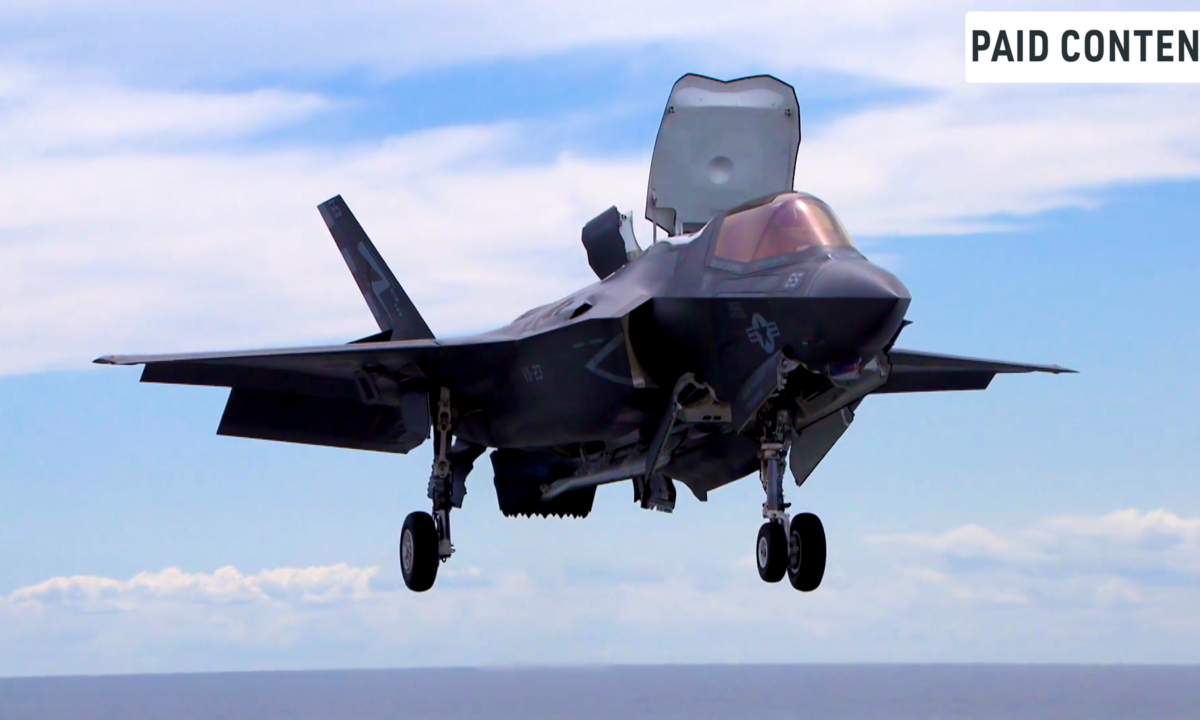
The company names several products and concepts as central examples. The F-35 is shown as an information node that fuses sensors to give pilots consolidated situational awareness. Lockheed Martin Vectis™ and Matrix Autonomy are presented as software and architecture layers that enable systems to share intent and data. The U-Hawk is cited as an unmanned logistics and resupply demonstrator.
Visually and verbally, the video ties these elements together across land, sea, air and space. It highlights decision-support interfaces and data integration as enablers for faster, more informed action—examples that are portrayed as demonstrations of a systems-level approach rather than independent operational reports.
How AI autonomy warfighter tools reduce workload and extend reach
Lockheed Martin positions AI autonomy warfighter tools as human-centered: designed to surface the right information at the right time so operators can act faster. The company contends that automation and AI can reduce routine cognitive load, allowing crews to focus on mission-critical choices.
In practical terms, the video shows how autonomous agents and sensor-fusion systems can process routine data, flag anomalies, and present prioritized options to human decision-makers. That, in turn, is described as extending mission reach by enabling unmanned logistics, persistent sensing, or delegation of high-risk tasks to uncrewed systems.
“Reducing workload, extending mission reach and helping keep people out of harm’s way,” the company says in the video as a summary of its autonomy goals.
Those outcomes are framed as intended effects rather than independently validated performance metrics. The footage mixes concept demonstrations with prototype capabilities, meaning operational claims require outside testing for confirmation.
Next-generation missile defense and integration
The video’s missile defense thread focuses on accelerating the chain of sensing, decision-making and response. Lockheed Martin uses the phrase “see, decide, respond” to describe the desired tempo when integrating sensors, platforms and decision tools.
Key themes include open architecture and modular integration so that disparate systems can share data quickly. The company argues AI-enabled decision support can act as a force multiplier when threats evolve faster than a single platform can handle.
Visually, the video suggests flows where sensors feed common data models, software layers like Matrix Autonomy coordinate intent and command tools present prioritized actions. Those flows are conceptual demonstrations; the video does not present independent end-to-end test data under contested operational conditions.
From Viking 1 to Artemis: space and long-range goals
Lockheed Martin connects its NASA heritage—Viking 1, Orion and prior spacecraft—to present ambitions for Artemis and future Mars missions. The company positions autonomy and robotics as essential for lunar logistics, resource scouting and long-duration missions where communication delays and sparse support make autonomy necessary.
Segments highlight robotic missions, potential use of lunar resources, nuclear power systems for long-range missions and spacecraft automation. The claim is that lessons from past space programs inform software and systems designed to operate safely under latency and limited-support conditions.
These space-focused items reinforce the message that autonomy scales beyond tactical battlefields into strategic operations where human supervision is constrained by distance and delay.
Limits and verification of company claims
Company videos serve to explain strategy and show prototypes. Assertions about operational effectiveness, response timelines and battlefield results in the Lockheed Martin video are company claims and not independently verified in this analysis.
Independent testing, peer-reviewed studies, or published operational assessments are not included in the video or the Fox News summary. Treat demonstrations and conceptual integrations as indicative of direction and capability intent rather than conclusive proof of fielded performance.
Verified-not-verified note: The specific operational claims shown are company statements and have not been independently verified here.
FAQ
What is Matrix Autonomy and how does it work?
The video describes Matrix Autonomy as an architecture and software layer that helps systems coordinate intent, share situational data and assist decision-making across platforms. The film does not provide detailed technical specs or public performance metrics.
Which Lockheed systems are cited for AI autonomy support?
The F-35, Lockheed Martin Vectis™, Matrix Autonomy and the U-Hawk are named in the video. Each is shown as part of a broader integrated vision spanning air, ground, sea and space roles.
Are the operational claims independently verified?
No. The claims are presented as company statements in a Lockheed Martin video and summarized by Fox News; they are not independently verified within this article.
Key takeaways
- Lockheed Martin’s video frames AI autonomy as a systems-level approach to ease operator workload, extend reach and support missile defense and space missions.
- Named examples include the F-35, Vectis™, Matrix Autonomy and the U-Hawk; the presentation mixes demos with conceptual integration.
- Missile-defense messaging emphasizes “see, decide, respond” via sensor fusion, open architecture and decision tools, but no independent end-to-end test data is shown.
- Space ambitions tie historical NASA work (Viking 1, Orion) to Artemis-era autonomy needs for lunar and deep-space operations.
- Claims about operational effectiveness are company statements and not independently verified here; outside testing would be needed to confirm fielded performance.
In closing, the Lockheed Martin video sketches an integrated autonomy vision aimed at helping the warfighter across domains. It outlines plausible utility—reduced workload, faster decision cycles and extended reach—while leaving proof-of-effect to future independent evaluations and operational testing.
Source: Fox News video and summary: Smarter Systems, Safer Missions: AI, Autonomy and the Warfighter. Note: claims in the Lockheed Martin video are company statements and not independently verified.