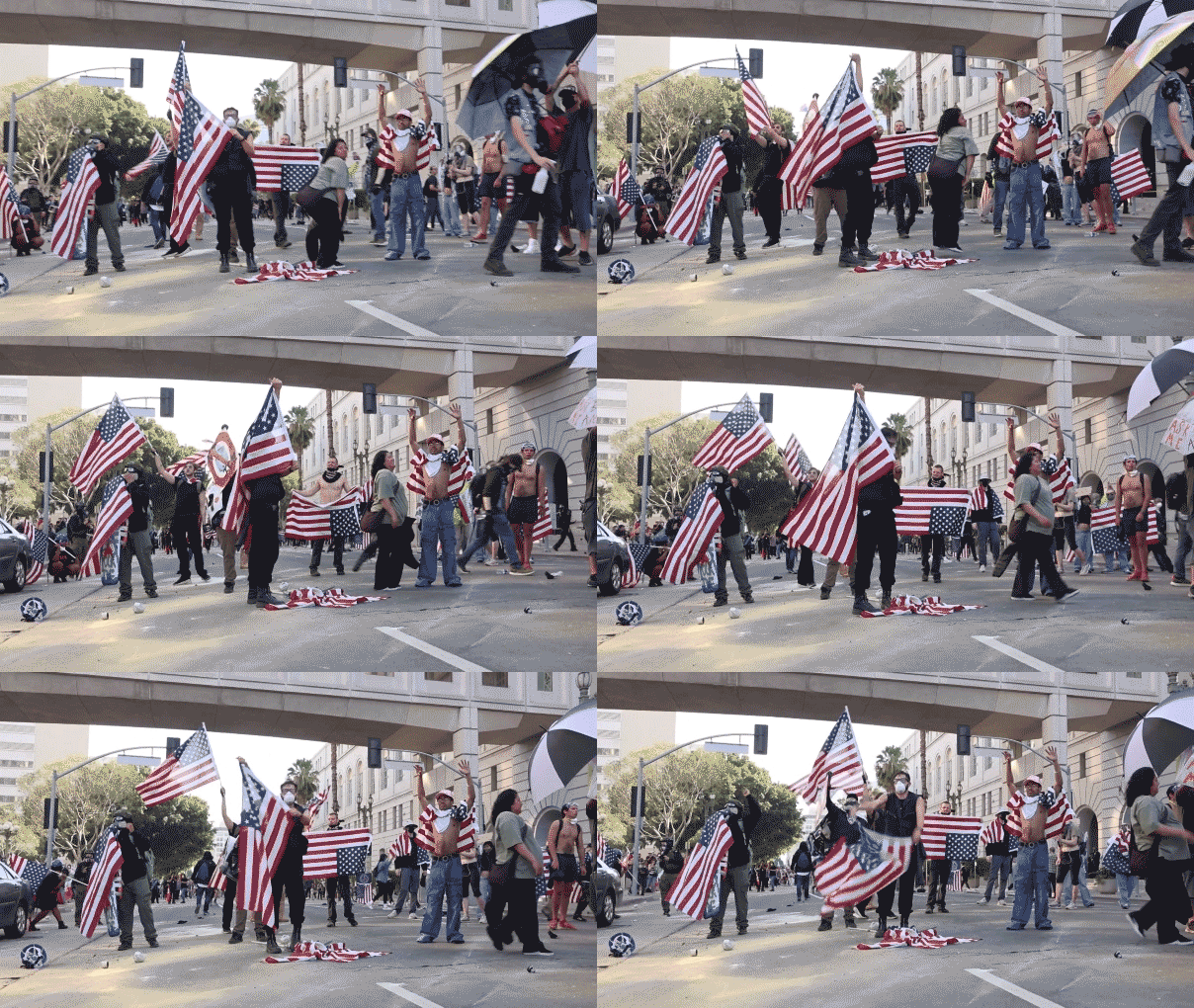
The FBI Joint Mission Center says it has identified suspected actors and what officials described as “nefarious” funding streams tied to episodes of violent interstate protest, Co-Deputy Director Chris Raia told Fox News Digital. Raia said the center has moved beyond scene arrests to targeted financial investigations as investigators work with federal prosecutors.
FBI Joint Mission Center findings
Raia described the Joint Mission Center as a centralized clearinghouse that brings counterterrorism, cyber and counterintelligence investigators together with financial specialists. He told reporters the team has “subjects identified” and has traced portions of funding networks linked to political violence, while stressing that identifying subjects is not the same as proving criminality.
Officials emphasized an investigatory posture: the center catalogs actors, maps relationships and develops evidence to hand to prosecutors. Raia cautioned that translating intelligence into admissible evidence and criminal charges requires additional steps, legal process and time.
How investigators trace protest funding
Investigators follow money across bank ledgers, nonprofit filings, commercial transactions and digital payment systems. The Joint Mission Center pairs FBI financial investigators with specialists from the Treasury Department and the Internal Revenue Service to trace commingled and layered transfers, identify intermediaries and pursue records through subpoenas.
Raia and other officials said a core challenge is that alleged illicit transfers are often commingled with legitimate activity, requiring forensic accounting, subpoenas and cooperation from financial institutions to isolate suspect flows and demonstrate intent.
Targets, grand jury and legal moves
Federal prosecutors have opened parallel inquiries. Reporting says a grand jury in the Southern District of New York has issued subpoenas seeking financial records tied to entities that some sources have linked to Neville Roy Singham; that connection is reported as an allegation from people familiar with the matter and has not been proven in court.
Separately, prosecutors in the U.S. Attorney’s Office for the Middle District of Alabama have pursued allegations tied to earlier protest-related investigations; those claims are reflected in prosecutorial filings and public statements. Raia said the FBI is coordinating with U.S. attorney offices and grand juries as it develops evidence and seeks legal process such as subpoenas.
Why it matters
Shifting to financial investigations is intended to disrupt networks that allegedly enable recurring political violence rather than focusing only on individuals arrested at protest scenes. Officials say following the money can reveal organizers, logistics channels and repeat actors operating across jurisdictions.
That strategy raises implications for nonprofits and advocacy groups. Law enforcement officials warn some legitimate-appearing organizations can be used to route funds, making it difficult to separate lawful charitable or political activity from suspected illicit financing without careful, evidence-based analysis.
Legal experts caution investigators to balance aggressive financial inquiry with First Amendment protections and nonprofit law; allegations reported by unnamed sources or in prosecutorial filings remain allegations until proven in court.
What comes next
Investigations of this type usually proceed through stages: grand-jury subpoenas and civil or criminal records requests, targeted interviews, forensic accounting and then possible indictments if prosecutors conclude evidence meets legal standards. The Department of Justice will decide whether evidence supports criminal charges.
Timelines can stretch for months or longer because paper trails span multiple entities and jurisdictions. Practical hurdles include obtaining foreign records, parsing commingled accounts and proving that funds were intended to support criminal conduct rather than lawful advocacy.
Source attribution
This article is based principally on an interview with FBI Co-Deputy Director Chris Raia and reporting by Fox News Digital. Specific claims about grand jury subpoenas and the alleged routing of funds through nonprofit networks are attributed in reporting to people familiar with the investigations and to prosecutors; those items are described here as reported or alleged and remain unproven until adjudicated.
Named officials and offices referenced include Chris Raia, Acting U.S. Attorney Todd Blanche, the Treasury Department, the Internal Revenue Service and the U.S. Attorney’s Office for the Middle District of Alabama. Original reporting: Fox News Digital.
Reporting note: This article flags allegations attributed to unnamed sources or prosecutorial claims. Statements and charges are described as alleged or reported rather than established fact.