The Supreme Court on Monday blocked President Trump’s executive order addressing birthright citizenship, and Justice Samuel Alito warned the outcome was “one of the most important decisions in the history of the Court, and in my judgment, the Court has made a serious mistake.”
Birthright citizenship
According to the Fox News opinion piece by MIKE DAVIS, the ruling prevented the administration’s executive order from taking effect and, the op-ed reports, the Court’s majority read the 14th Amendment in a way that preserves a broad form of birthright citizenship tied to being born on U.S. soil. Those characterizations are attributed to the Fox News column and are reported here as the author’s description of the decision, not as an independent reading of the Court’s full opinion.
What the Court ruled
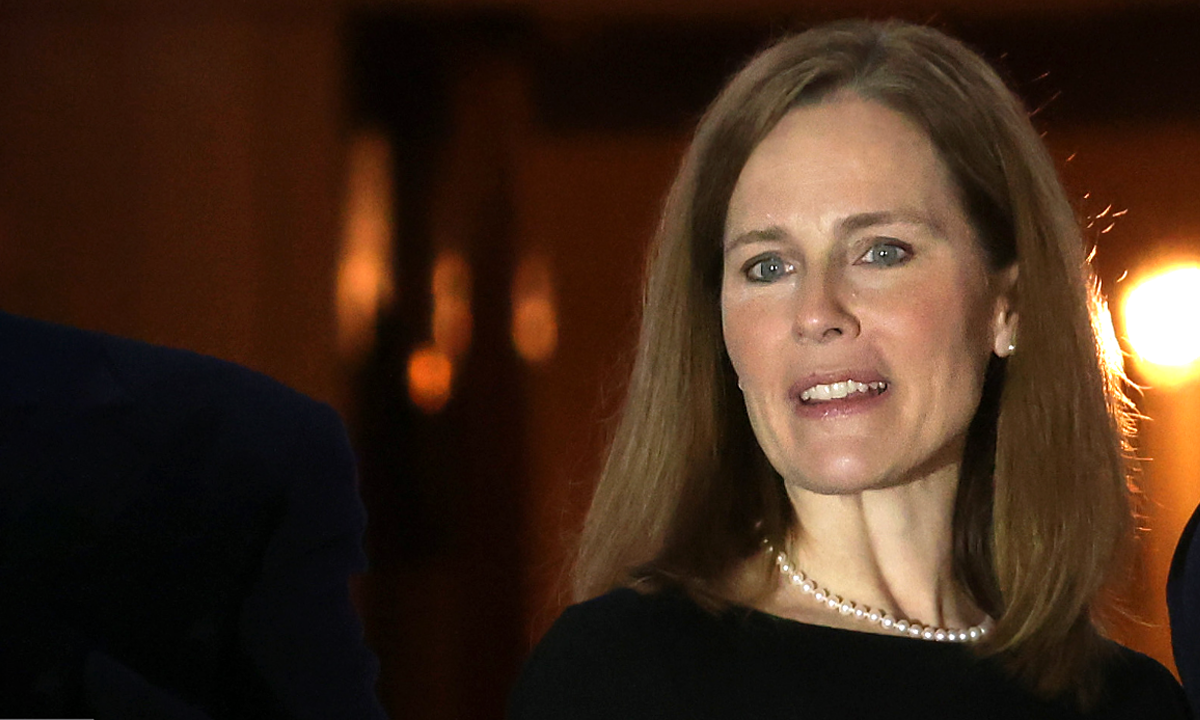
The Fox News op-ed reports that Chief Justice John Roberts and Justice Amy Coney Barrett joined three liberal justices to form the majority that blocked the order. This article attributes that description of the majority coalition to MIKE DAVIS’s column and does not purport to summarize the Court’s full signed opinion beyond the op-ed’s account. Readers should consult the Court’s opinion for the official disposition and commanding rationale.
The op-ed frames the outcome as a constitutional ruling rather than a narrow statutory decision. The column argues that because the Court resolved the question on constitutional grounds, it forecloses simpler statutory fixes and raises the bar for undoing the result. Those points are attributed below to the Fox News piece.
How the Court read the 14th Amendment
The Fox News column emphasizes the 14th Amendment’s Citizenship Clause and the phrase “subject to the jurisdiction thereof” in discussing the majority’s reasoning. The op-ed argues the majority relied on the Amendment’s text and historical practice in concluding that most persons born on U.S. soil are covered. For the Amendment’s text and historical cases often cited in these debates, see the 14th Amendment and Elk v. Wilkins below.
Legal commentators differ over how to interpret the jurisdictional phrase. MIKE DAVIS’s column cites precedent and historical materials to challenge the majority’s reading; this article attributes those claims to the column and to commentators cited therein rather than treating them as settled fact.
Dissent and the Alito warning
Justice Samuel Alito’s dissent, quoted in the op-ed and in subsequent commentary, stated: “This is one of the most important decisions in the history of the Court, and in my judgment, the Court has made a serious mistake.” The op-ed reports that Alito compared the decision’s potential long-term impact to landmark rulings such as Dred Scott and Roe v. Wade to underscore his view of the ruling’s significance. Those comparisons are presented here as Alito’s dissenting rhetoric as reported by the source.
Policy response from conservative commentators
MIKE DAVIS’s Fox News column urges a set of policy responses and frames the ruling as requiring aggressive action. The op-ed calls for measures including expanded removals, reduced federal funding for certain programs serving undocumented immigrants, and stepped-up enforcement. These policy prescriptions are attributed to the author of the Fox News opinion piece and are reported here as the opinions of that author and the commentators he cites.
The column also raises concerns about so-called “birth tourism,” asserting it as a phenomenon that some commentators tie to the broader policy debate. This article reports those concerns as claims reported in the Fox News op-ed and does not independently verify the prevalence or national-security implications of birth tourism.
How the ruling could be reversed
Because the source describes the Court’s disposition as constitutional in scope, MIKE DAVIS argues that reversal would be difficult. Standard legal routes discussed by scholars and in the op-ed include a constitutional amendment (approval by two-thirds of both houses of Congress and ratification by three-fourths of the states) or a constitutional convention called under Article V, both of which are politically challenging.
The Fox News column notes that had the Court resolved the case on narrower statutory grounds, Congress might have had a clearer path to legislatively alter the effect. That legislative path is discussed in the op-ed as a less fraught alternative, but the column reports that the majority did not choose that narrower route.
Background and legal lineage
Debate over birthright citizenship traces to Reconstruction-era drafting of the 14th Amendment and to later cases such as Elk v. Wilkins (1884). Elk v. Wilkins is often cited in modern litigation and commentary on the Amendment’s scope; for those wishing to review the decision, see the Court’s text at the link in the source attribution below.
Scholars continue to dispute whether the Amendment’s jurisdictional language excludes particular categories of persons. The Fox News op-ed rehearses that history to support its critique of the majority’s reasoning; those historical and interpretive claims are attributed to the op-ed and to the commentators Davis cites.
What comes next
In the near term, the decision — as characterized by MIKE DAVIS — keeps in place existing practices that confer U.S. citizenship on most people born on U.S. soil. Politically, the op-ed predicts intensified legislative efforts, litigation, and executive-branch enforcement proposals. Those predictions and policy recommendations are sourced to the Fox News column and its author.
Frequently asked questions
What did the Court decide about birthright citizenship?
Reportedly, the Court blocked President Trump’s executive order and, according to the Fox News op-ed, the majority interpreted the 14th Amendment to preserve a broad form of birthright citizenship tied to birth on U.S. soil. This article attributes that summary to MIKE DAVIS’s column.
Which justices joined the majority?
The Fox News opinion piece reports that Chief Justice John Roberts and Justice Amy Coney Barrett joined three liberal justices to form the majority. This article attributes that description to the Fox News column; readers should consult the Court’s opinion for an official roster and any signed opinions.
Can the ruling be overturned and how?
The op-ed argues reversal would likely require a constitutional amendment or a constitutional convention because the decision is described there as grounded in the Constitution rather than in narrower statutory grounds. Those pathways are difficult and political; this article reports the op-ed’s assessment.
Source attribution
This analysis attributes specific claims about the ruling’s composition, policy prescriptions, and political implications to: MIKE DAVIS, “Dissecting the Supreme Court’s ‘Birthright’ betrayal,” Fox News (opinion). Original column: https://www.foxnews.com/opinion/mike-davis-dissecting-supreme-courts-birthright-betrayal.
Key legal texts and precedents cited in this article for reader reference: the full text of the 14th Amendment (Cornell LII — 14th Amendment) and Elk v. Wilkins, 112 U.S. 94 (1884) (Cornell LII — Elk v. Wilkins).
Where this article reports policy prescriptions, majority membership, or characterizations of the Court’s reasoning without direct citation to a signed Supreme Court opinion, those points are explicitly attributed to the Fox News opinion piece by MIKE DAVIS. For the Court’s authoritative holdings and the signed majority and dissenting opinions, consult the Supreme Court’s published opinion and the parties’ filings.