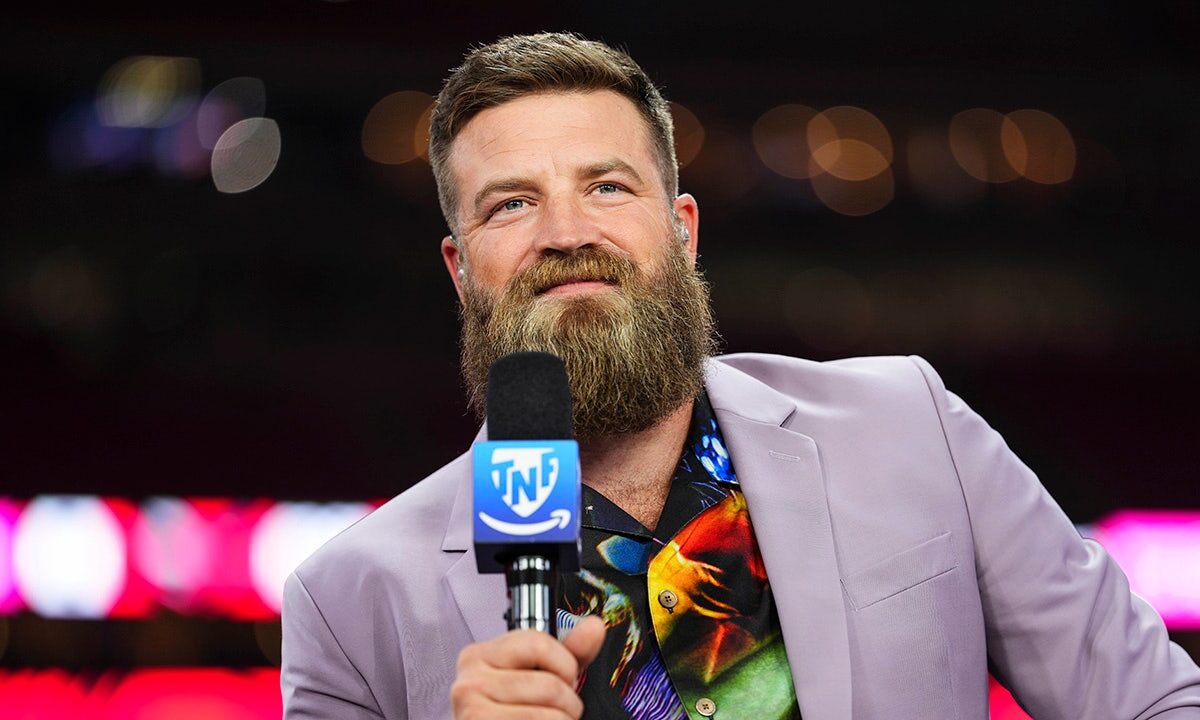
Ryan Fitzpatrick holds a unique place in modern NFL lore: he started for nine different teams while building a career defined by movement, relationships and resilience. That NFL record — both a statistical oddity and a personal narrative — has come to define how fans and media frame his career. Fitzpatrick has repeatedly said the path he took, though unconventional, gave him chances to play, lead and form meaningful bonds along the way.
Ryan Fitzpatrick and the nine-team NFL record
Fitzpatrick’s record is straightforward to state and hard to replicate: he started games for nine separate NFL franchises. Across his long career he took snaps as a starter for the Buffalo Bills, New York Jets, Miami Dolphins, Cincinnati Bengals, Tampa Bay Buccaneers, St. Louis Rams, Houston Texans, Tennessee Titans and Washington Commanders.
That list — nine different starting stints — is why Fitzpatrick’s name often surfaces in discussions about longevity and adaptability in professional football. Rather than reducing his career to a single stat line, many fans and analysts point to the contexts in which he arrived: teams needing a veteran presence, locker rooms seeking leadership, and seasons where his experience allowed him to step into a starter role and guide younger players.
Why he embraced moving from team to team
Fitzpatrick told Fox News Digital that as a child he had imagined staying with one franchise, but “that just didn’t happen to be my story.” He framed the journeyman arc not as a series of setbacks but as repeated opportunities to play the game he loved. “I always wanted to play. So wherever I went, it was usually with the intention of becoming a starter and playing somewhere,” he said, describing a career shaped by seizing chances to be on the field.
Rather than give weight to the label alone, Fitzpatrick emphasized the human side of the moves. He spoke about the friendships formed with teammates, the communities his family experienced, and the relationships that followed them from city to city. “A lot of it was the amount of teammates I was able to have, but it was also the journey that I was able to go on with my wife and with my kids,” he said, noting that neighbors and friends in each stop are connections “that we’ll keep forever.”
When he summarizes his outlook, Fitzpatrick is plain and emphatic: “I wouldn’t change it for the world.” That sentence captures how he reframes a career that might otherwise be read as instability into a deliberate, experience-rich path. For him, the journeyman experience meant continued chances to play, lead and build memories beyond the field.
From the field to Lake Tahoe: the American Century plan
As Fitzpatrick transitioned away from regular NFL play, he has leaned into the celebrity-golf circuit, returning this year to the American Century Championship in Lake Tahoe. The event is known for gathering athletes and entertainers in a fan-focused, celebratory setting — a different stage from the high-stakes intensity of an NFL season but one that still rewards competition and camaraderie.
To prepare, Fitzpatrick worked with Performance Golf to lower his handicap before teeing off in Lake Tahoe. He described the American Century as “so much fun,” and noted that many participants return year after year, which creates a familiar, almost family-like field. For athletes accustomed to team locker rooms, the event offers a relaxed setting to reconnect with peers, engage fans, and enjoy competition without the same professional pressures.
This shift from Sunday football to celebrity golf reflects a broader pattern among retired athletes who seek new outlets for competition and public engagement. For Fitzpatrick, the tournament represents another arena where relationships matter: former teammates, opponents and fans who followed him from city to city often show up to support and share stories about the journey.
What this career means for his legacy and fans
Fitzpatrick’s legacy resists tidy categorization. Critics might read a journeyman label as evidence of inconsistency; admirers view it as proof of adaptability and leadership across changing contexts. Because he repeatedly earned starting roles, he is remembered not just as a stopgap but as a player who could lead in different offensive systems and locker-room cultures.
Fans who tracked Fitzpatrick through multiple uniforms often praise his affable personality and competitiveness. Across teams, teammates encountered a leader who wanted to play and who prioritized building rapport both on and off the field. Those personal connections — the friendships, mentorship moments and community ties — are as central to his public image as any box-score achievement.
Ultimately, the nine-team record reads less like a punchline and more like a ledger of connections. For many observers, Fitzpatrick’s career reframes a statistical oddity into a portrait of a player who valued opportunities to compete and relationships that extended beyond wins and losses.
Source attribution: This profile is based on reporting from Fox News Digital. Any allegation referenced in the original Fox News article is treated here as reported by that source and unconfirmed; this piece reflects the perspective and quotes published by Fox News Digital.