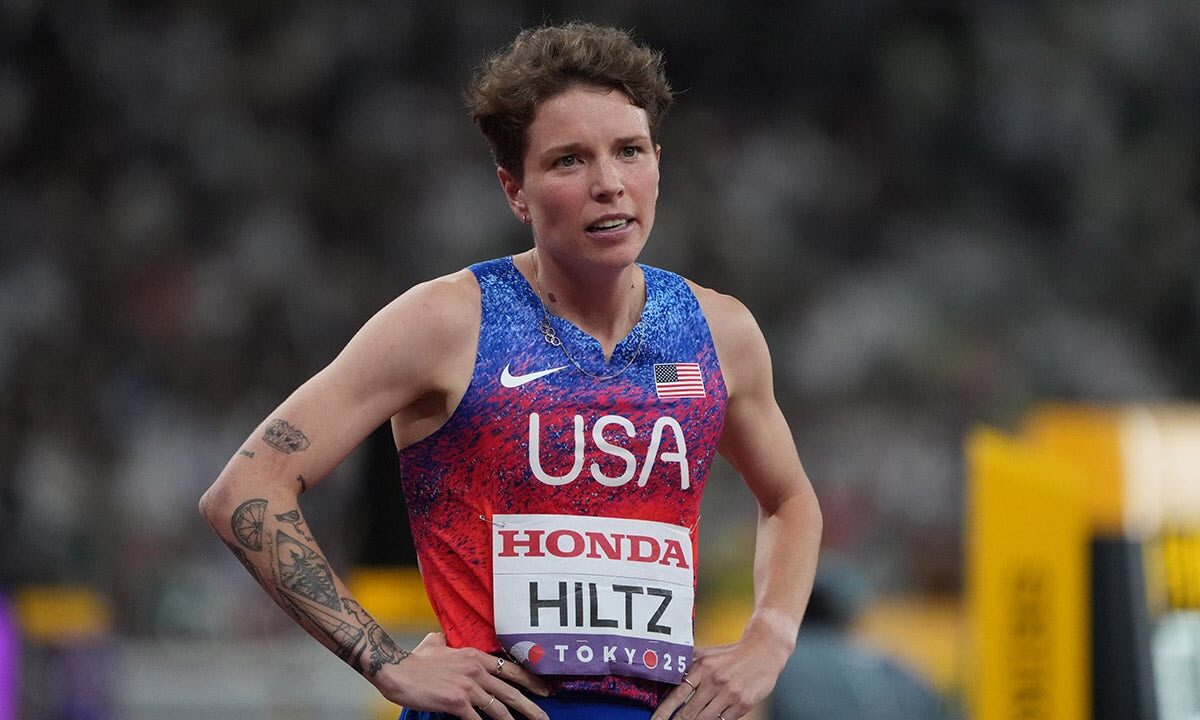
The Supreme Court on Tuesday issued a 6-3 decision that upholds state laws restricting transgender athletes from competing on girls’ teams. American runner Nikki Hiltz, who identifies as transgender nonbinary, responded publicly after the ruling, calling it disappointing and reiterating their commitment to remain visible in the sport.
What the Supreme Court decided
In two consolidated cases — West Virginia v. B.P.J. and Little v. Hecox — the high court sided with states that adopted eligibility rules for girls’ and women’s sports tied to biological sex. The 6-3 majority opinion was authored by Justice Brett Kavanaugh and held that states may adopt and enforce sex-based eligibility criteria for school and interscholastic athletics consistent with federal law frameworks referenced by the court.
The court’s opinion considered how Title IX and the Equal Protection Clause apply to disputes over transgender athletes’ participation; the majority concluded that states have room to craft and enforce sex-based classifications for athletic eligibility. The rulings were brought by transgender athletes seeking access to girls’ sports; the states were supported by the Alliance Defending Freedom, while the athletes were represented by organizations including the American Civil Liberties Union and Cooley Legal.
Nikki Hiltz reaction and recent result
Nikki Hiltz, who has competed in women’s races and identifies as transgender nonbinary, told The Athletic that they were disappointed by the decision. “I wasn’t surprised, but I was obviously still disappointed,” Hiltz said (as reported by Fox News).
Hiltz added that visibility matters to them: “For me, I want to show that trans people can be in sport, be affirmed in their gender. We’re not these big, scary things.” Those remarks were reported by Fox News summarizing Hiltz’s comments to The Athletic.
After the ruling, Hiltz ran at the Prefontaine Classic in Eugene, Ore., winning the mile in 4:17.49. The performance and Hiltz’s remarks underscore the immediate, personal stakes for athletes who may face different eligibility rules depending on venue and jurisdiction.
Legal and sports context
Two central legal authorities recur in these disputes: Title IX, the federal statute that prohibits sex discrimination in education programs that receive federal funds (20 U.S.C. § 1681), and the Equal Protection Clause of the Fourteenth Amendment to the U.S. Constitution. The court’s opinion analyzed how those frameworks intersect with state laws that define eligibility for female athletic teams.
Advocates for state rules have argued that separate teams and sex-based eligibility protect competitive opportunities for biological females; advocates for transgender athletes have argued that exclusion on the basis of gender identity raises legal and civil-rights concerns. Leading outside counsels in the cases included Alliance Defending Freedom representing the states and the American Civil Liberties Union and Cooley Legal representing the athletes.
The practical legal question before the court concerned how far states may go when creating eligibility rules that treat sex as the relevant category for girls’ sports, and whether federal nondiscrimination principles categorically preempt those state rules. The majority concluded states may impose such eligibility criteria within the contours the court described.
Why it matters
The rulings immediately alter the legal landscape for school and youth athletics by affirming that states may enforce sex-based eligibility rules in many contexts. That change empowers states that have adopted bans or eligibility limits to implement and enforce those policies with the backing of the high court’s decision.
At the same time the decision ensures a continued patchwork of rules across the country: roughly two dozen states have laws restricting transgender athletes in girls’ sports, while about 23 states either lack such restrictions or have laws, regulations or athletic-association policies that protect transgender athletes’ participation. States such as California, New York and Massachusetts have statewide policies or statutes that generally support transgender athletes’ participation in girls’ teams.
The split affects where student-athletes can compete under which rules, how school districts draft eligibility policies, and how state athletic associations administer championships and compliance procedures.
What comes next
In the short term, states with existing laws that the court upheld are likely to move forward with enforcement and implementation. That process may include administrative guidance from state education departments, rulemaking by state athletic associations, and revisions to school-district policies.
Legislatures in some states may respond with clarifying statutes or adjustments to eligibility frameworks; in others, advocates and athletes may pursue state-court challenges or seek administrative relief. These state-level actions will determine how broadly or narrowly the Supreme Court’s ruling is applied in practice.
For individual competitors such as Hiltz, the decision means navigating differing rules by venue: eligibility can vary by state, by the governing athletic association, and by the level of competition. Advocates on both sides of the issue say they expect continued litigation, administrative disputes and legislative proposals as organizations adapt to the court’s guidance.
Source attribution and further reading
This article draws on reporting by Fox News and the original filings and reporting around West Virginia v. B.P.J. and Little v. Hecox. For Hiltz’s quoted comments, see Fox News’ coverage of Hiltz’s remarks to The Athletic.
Key primary and reporting sources:
- Fox News report on Nikki Hiltz and the ruling (cites Hiltz’s interview with The Athletic)
- West Virginia v. B.P.J. case page — SCOTUSblog
- Little v. Hecox case page — SCOTUSblog
- Title IX (20 U.S.C. § 1681) — Cornell Law School
- Equal Protection Clause — Cornell Legal Information Institute
- Alliance Defending Freedom — counsel for state petitioners
- American Civil Liberties Union — counsel for some athlete petitioners
- Cooley LLP — counsel for some athlete petitioners
We will update this story as additional official opinions, transcripts or guidance are published by the Court and state authorities.