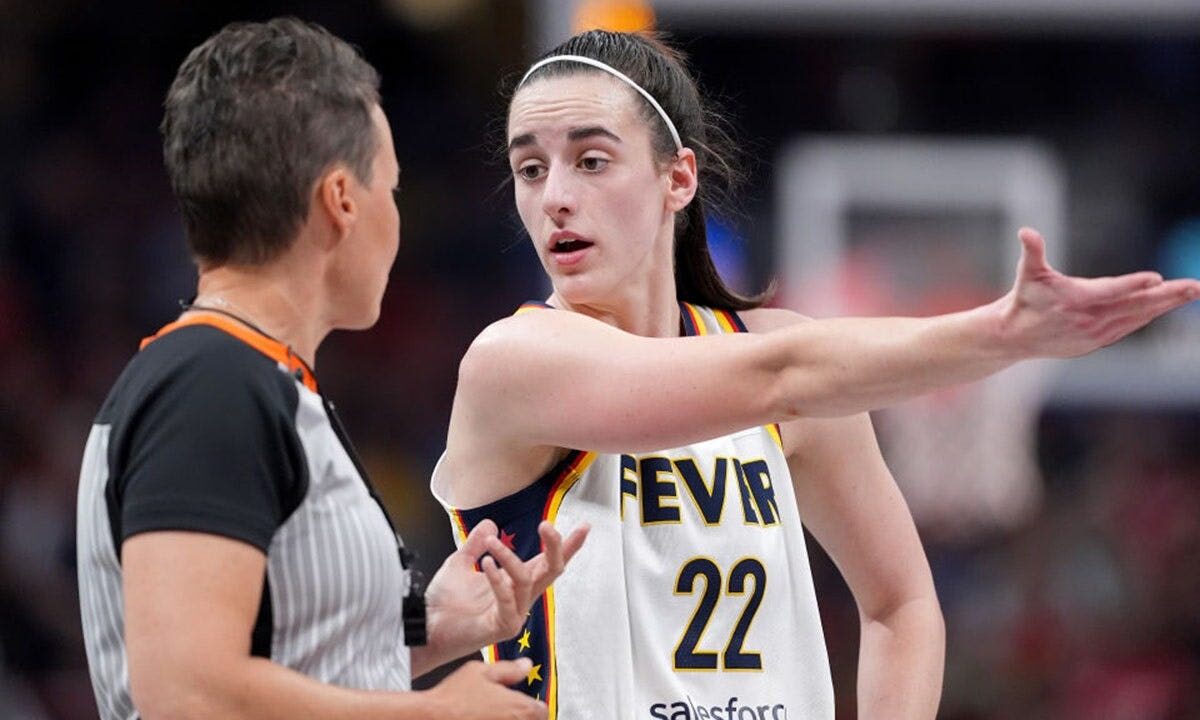
The WNBA officiating controversy erupted again when Indiana Fever star Caitlin Clark took a shot to the throat during a loose-ball scramble — a sequence that drew no immediate flagrant call but was later upgraded to a Flagrant 2, with Phoenix Mercury forward Alyssa Thomas suspended one game. The late change has refocused attention on why players, coaches and front offices are pressing for clearer standards, faster corrective action and, increasingly, full-time referees.
From that fast lede, questions about review reliability, referee training and accountability have moved to the center of the league conversation. The phrase “WNBA officiating” has come to represent not just inconsistent calls but genuine concerns about player safety and competitive fairness as the league grows its audience and business footprint.
What happened: the Clark throat hit and the review
During the loose-ball sequence, Clark took contact to her throat from Alyssa Thomas. On the court, officials initially declined to assess a flagrant foul. After further review over subsequent days the league upgraded the play to a Flagrant 2 and suspended Thomas for one game.
Clark reacted plainly: “I did think it was a flagrant foul.” The delayed discipline highlighted a criticism repeatedly voiced by players and coaches — that postgame review systems can be slow and reactive, addressing harm only after a play has already occurred rather than stopping dangerous actions in real time.
WNBA officiating: other high-profile errors this season
The Clark incident was not isolated. Coaches and executives around the league have flagged multiple mistakes as evidence of a pattern, and outlets have reported growing frustration across team leadership.
- The Chicago Sky were reportedly told that three critical calls in a June 20 loss to Dallas were incorrect.
- In an Indiana game, officials failed to note that Fever guard Kelsey Mitchell had reached her sixth foul and should have been removed, allowing play to continue briefly until corrected.
- Broadcasters and former players called several sequences “gross unawareness,” pointing to routine procedural lapses that disrupt game flow and outcomes.
In addition, The Athletic reported that coaches and general managers from eight teams have formally raised concerns about officiating standards and consistency — a claim the league is now addressing publicly through task-force work and internal reviews.
League response so far: task force, hires and promises
The WNBA assembled a task force of coaches and executives to tackle excessive physicality, freedom of movement and consistency issues. Commissioner Cathy Engelbert publicly pledged action after players and coaches raised alarms at last year’s All-Star Weekend and in subsequent meetings.
The league also hired longtime official Eric Brewton as referee performance and development advisor to lead investigations into crew performance, training and accountability. Task-force meetings and targeted reviews are underway, and league executives say they expect recommendations — from rule clarifications to operational changes — in the coming weeks.
Still, several teams told media outlets that the changes so far have not produced consistent results, and some leaders say additional structural reforms will be required to restore confidence.
Why WNBA officiating matters now
WNBA officiating problems matter for three linked reasons: player safety, competitive fairness and the league’s business momentum. Missed calls that put players at risk have reputational and legal consequences, and repeated visible errors can erode trust in the product.
The league is in a growth phase, enjoying record television audiences and a multibillion-dollar media-rights environment. Mistakes on the court can damage the game’s credibility during a pivotal period for expansion and investment — and they risk alienating viewers drawn to a higher level of professionalism.
As one player put it: “It’s kind of been a discussion for three years now, and I think we really need to do a better job protecting the people in this league.”
Possible fixes: full-time refs, pay, tech and review changes
Teams, broadcasters and former officials have floated concrete options that are now central to the debate.
- Full-time referees: Making referees full-time employees and raising pay could attract and retain higher-level officiating talent, offer continuous training and create clearer accountability. Several players and coaches have explicitly urged the league to consider this model.
- Referee pay and recruitment: Increasing compensation and building a professional pipeline could reduce turnover and improve consistency across crews.
- Review process overhaul: Faster in-game review protocols and clearer escalation rules could reduce the number of corrections that only occur after a play has impacted the outcome.
- Technology upgrades: Better replay tools, improved communication systems and data-driven performance tracking for refs would support on-court officials and officiating supervisors.
Each option carries tradeoffs: cost, logistics and implementation timelines. League stakeholders warn that piecemeal fixes are unlikely to satisfy players and coaches if systemic staffing and training issues remain unaddressed.
Expert reaction
Broadcast analysts and some former players have been blunt. Analyst Meghan McPeak described certain sequences as showing “gross unawareness,” while several current and former league figures have urged more professionalization of officiating to match the WNBA’s rising profile. As the task force reports back, expect pointed input from both current players and experienced referees on practical training and rule-interpretation changes.
What comes next
The WNBA task force review process is ongoing and will likely produce a series of recommendations, pilot programs and closer game monitoring in the short term. Investigations and performance reviews led by Eric Brewton should shape new training curricula and accountability measures.
The league may test expanded replay authority, adjusted foul definitions or even a phased move toward full-time referees. Fans and teams should watch upcoming matchups for faster review rulings, clearer communication from crews and public updates from the WNBA on task-force progress.
FAQ
Will the WNBA hire full-time referees?
The league is studying the model. Teams and players have urged it, but no final decision has been announced as the task force and league advisors evaluate costs, logistics and pilot options.
What did the league do after the Caitlin Clark incident?
The play was reviewed and upgraded to a Flagrant 2, resulting in a one-game suspension for Alyssa Thomas. The league reiterated that it is reviewing officiating processes and has tapped Eric Brewton to lead referee performance and development efforts.
How could officiating changes affect player safety and TV deals?
Clearer, more consistent officiating and faster reviews should improve player safety and preserve competitive fairness. That stability helps maintain viewer trust and protects the league’s business momentum with broadcasters and sponsors.
Source attribution: Fox News; reporting and team/G.M. concerns referenced from The Athletic; league statements and task-force announcements available at WNBA.com News.