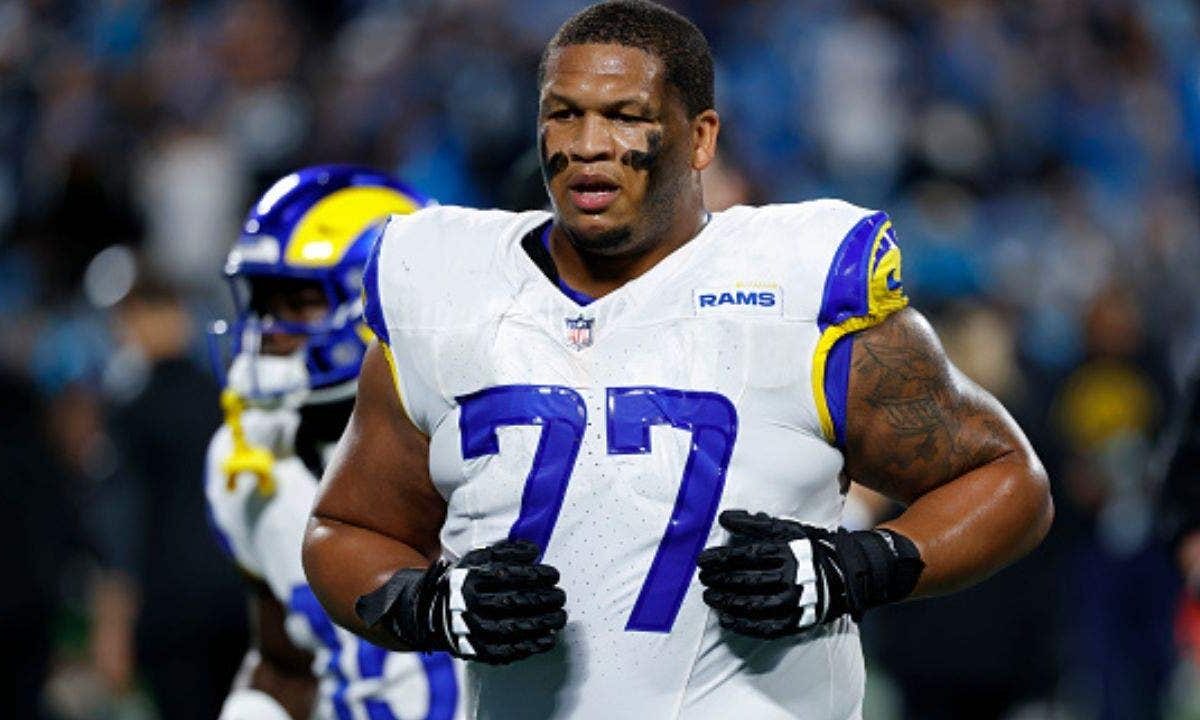
Prosecutors declined to pursue criminal charges after Alaric Jackson’s June 9 arrest in Los Angeles, according to reporting. The decision means no criminal filing will follow from that incident, but the NFL has opened its own review under the league’s Personal Conduct Policy and may still take disciplinary action.
Legal update on Alaric Jackson
Per reporting by the New York Post as cited in Fox News’ coverage, the Los Angeles District Attorney’s Office previously declined to file felony charges related to the June 9 incident. More recently, the city attorney reviewed the matter and opted not to pursue misdemeanor charges, leaving prosecutors without a legal basis to move forward with criminal counts from that arrest.
That sequence — a DA decision not to file felonies followed by a city attorney decision not to file misdemeanors — effectively ends the prospect of criminal prosecution in Los Angeles tied to the June arrest, according to the reporting. The distinctions between felony and misdemeanor charging decisions are significant legally, and local prosecutors typically weigh the totality of evidence, witness cooperation and the likelihood of conviction when making such calls.
Police account of the incident
Los Angeles police described the incident as a domestic dispute that began after Jackson believed his girlfriend was secretly recording him on her cellphone, according to the published police report cited in media coverage. Officers reported scratch marks on the woman’s arm and arrested Jackson on suspicion of domestic violence; he was later released on bond, per reporting that summarized the police account.
Those details reflect the allegations documented in the police report and relayed by media outlets; the DA and city attorney decisions mean those allegations will not result in criminal charges in this matter. Reporting noted the woman involved voluntarily dismissed a temporary restraining order connected to the events.
Why the city attorney passed on misdemeanor charges
Officials who review cases at both the District Attorney’s Office and the city attorney’s office follow charging standards intended to reflect the strength of the evidence and the prospect of conviction. In this instance, the DA declined to file felony counts first, and the city attorney later passed on misdemeanors, according to the reporting that relayed statements from law‑enforcement and prosecutorial sources.
Prosecutors do not always release full internal memos explaining their charging decisions; news accounts said the determinations were made after review of the police report and other available evidence. Observers of charging practices note that witness cooperation, corroborating evidence and legal thresholds for each charge category commonly guide such decisions.
NFL investigation and possible discipline
Separately from the criminal-justice process, the NFL has opened an independent investigation under its Personal Conduct Policy, according to media reports. The league’s process is distinct from criminal proceedings and does not depend on whether prosecutors file charges.
Under the Personal Conduct Policy the NFL investigates off-field incidents and can impose discipline — such as fines or suspensions — if it determines a violation occurred. The league typically conducts interviews, reviews police reports and other evidence, and consults with team officials as part of its inquiry. Any decision by the NFL would be announced by the league once its review is complete.
Team and contract context
Jackson, an offensive lineman for the Los Angeles Rams, signed a multi-year contract that has drawn attention in coverage of the situation; reporting has noted a three-year, $57 million deal as context for team and cap considerations. If the NFL imposes discipline that affects Jackson’s availability, the Rams would have to weigh roster and salary-cap consequences as they plan for the season.
The Rams have not publicly announced internal discipline tied to the June incident, according to the reporting. Team responses to off-field investigations can range from no public action to fines, roster moves or other measures, depending on the findings and timing of a league determination.
Background and related matters
Published media accounts referenced earlier, separate allegations involving Jackson that reportedly included a federal lawsuit and a prior related suspension. Those past matters were described in reporting as having been resolved or settled and dismissed in April; those actions were reported as separate from the June arrest and are presented in news coverage as part of a broader public record surrounding the player.
News reporting on prior incidents often uses cautious language — noting when matters were settled, dismissed or resulted in formal disciplinary action — and that same caution applies here given the prosecutorial decisions and the ongoing league review.
What comes next
With prosecutors in Los Angeles declining to pursue charges tied to the June 9 arrest, the immediate criminal question is effectively closed for now. The next and open step is the NFL’s independent investigation under the Personal Conduct Policy, which could take weeks to complete and may include interviews with involved parties and examination of police reports and other evidence.
If the league concludes a policy violation occurred, it can impose discipline independent of the criminal process. Any such determination would carry implications for Jackson’s playing status and the Rams’ roster planning. As of this writing, the NFL has not announced findings or discipline, and the Rams have not outlined any internal actions.
Key takeaways
- Prosecutors declined to pursue criminal charges after the June 9 arrest, per published reporting.
- Police reported scratch marks and said the dispute began over an allegation of being secretly recorded.
- The city attorney passed on misdemeanor charges after the District Attorney declined felony charges.
- The NFL is conducting a separate investigation under its Personal Conduct Policy and could impose discipline regardless of the criminal charging decision.
Sources and attribution
This update is based on reporting by the New York Post as cited in Fox News coverage. Specific legal and law-enforcement details referenced above come from the police report and media accounts summarized in those outlets. For the original published account, see the Fox News Outkick article: Fox News — Outkick. Additional context was drawn from New York Post reporting as cited therein.