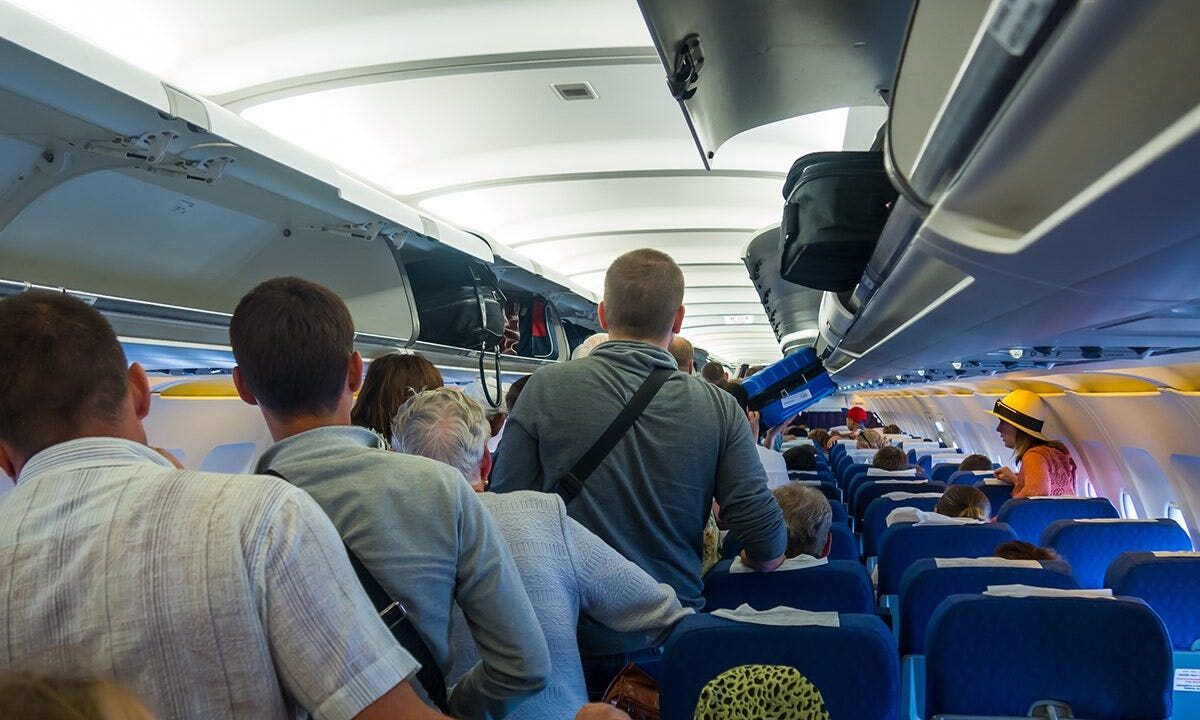
Southwest Airlines standing after landing became a viral topic after the carrier poked fun at a familiar traveler habit: standing as soon as the seatbelt sign goes off. The exchange landed quickly on social feeds and reopened a conversation about whether early standers help or hinder the exit process.
What Southwest posted and why it went viral
Southwest posted a short, snarky message on Threads that many users recognized immediately: “You 👏 won’t 👏 get 👏 off 👏 the 👏 plane 👏 faster 👏 by 👏 standing 👏 up 👏 .001 👏 seconds 👏 after 👏 the 👏 seatbelt 👏 sign 👏 turns 👏 off 👏.” The post used repeated clapping emojis and a jokey tone, which drove quick reactions across platforms.
The post went viral because it named a behavior that frequent flyers and occasional travelers alike have seen on flights: passengers who pop up the instant the seatbelt sign extinguishes. For many it was a lighthearted call-out; for others it highlighted genuine frustration when early standers cause temporary blockages in narrow aisles.
Southwest Airlines standing after landing: the debate
The phrase Southwest Airlines standing after landing captures the core of the argument. On one side, some travelers say standing early is a practical way to stretch, gather carry-ons or prepare to exit. On the other, frustrated passengers and crew argue the practice can create bottlenecks and slow the overall flow when people cluster in the aisle waiting for their row.
Social posts ranged from amusement to annoyance. Some readers treated the airline’s message as fair ribbing; others posted short videos or anecdotes showing how a single person standing in the aisle can cause a chain of brief delays as fellow passengers and flight attendants navigate around them.
Why passengers stand right after landing
Several common reasons explain the impulse to rise immediately after the sign turns off:
- Stretching after a long flight — cramped legs and a desire to move often push people up quickly.
- Retrieving carry-on items — passengers with bags stored several rows ahead may stand to reach overhead bins before the cabin fills with others moving.
- Preparing to deplane — people hoping to save a few seconds gather belongings and position themselves before the rows ahead clear.
Many commenters insisted they were not trying to cut ahead but simply preparing. Still, timing matters: when several people stand at once or linger in the aisle, the result is often a short delay for everyone.
Etiquette and safety guidance from an expert
Etiquette expert Diane Gottsman told Fox News Digital that anxiety, comfort and habit all play roles in why people rise quickly after landing. “With long flights, people are anxious to stand up and stretch their legs,” she said. “They also want to get their suitcases out of the bins and be prepared to efficiently walk out of their aisle.”
Gottsman warned that problems occur when passengers step into the aisle too early and block others. “Moving into the aisle and trying to push is a definite etiquette faux pas,” she said, adding a safety reminder: “For safety reasons, it’s best to remain seated unless there is room to comfortably move about.”
Flight attendants are responsible for managing the cabin once the seatbelt sign is off; crew instructions and the orderly flow of rows generally produce the quickest deplaning. When passengers ignore spacing and timing — even with good intentions — aisles can momentarily clog, which creates more delay than a patient, row-by-row exit.
Practical deplaning tips readers can use
Short, practical rules reduce conflict and speed the overall exit:
- Do wait for rows in front of you to stand and move toward the aisle; it keeps traffic flowing.
- Do gather small items while seated so you can stand and move when your row is called.
- Do keep larger carry-ons above your own seat when possible to avoid reaching across other passengers.
- Do stretch in place briefly if you need to move without blocking the aisle.
- Don’t stand in the aisle and linger if you’re several rows back — it creates a choke point.
- Don’t assume standing gives you license to push ahead; patience usually shortens total deplaning time.
Practical habits — like stowing heavier bags in the overhead bin above your seat and keeping aisles clear — help everyone leave faster and with less friction.
Key takeaways
- Southwest’s Threads post calling out early standers reignited a familiar etiquette debate.
- Many passengers stand for comfort or to access bags, but the timing and behavior determine whether it helps or harms the flow.
- Experts recommend remaining seated until there is clear space to move, gathering items while seated, and following crew direction to keep deplaning efficient and safe.
Source attribution: Reporting by Fox News Digital included the Threads post and commentary; Diane Gottsman was quoted. Fox News Digital also noted it reached out to Southwest Airlines for comment. For original reporting, see the Fox News story linked below.
Further reading: Major airline roasts passengers who jump up right after landing, igniting fierce backlash.