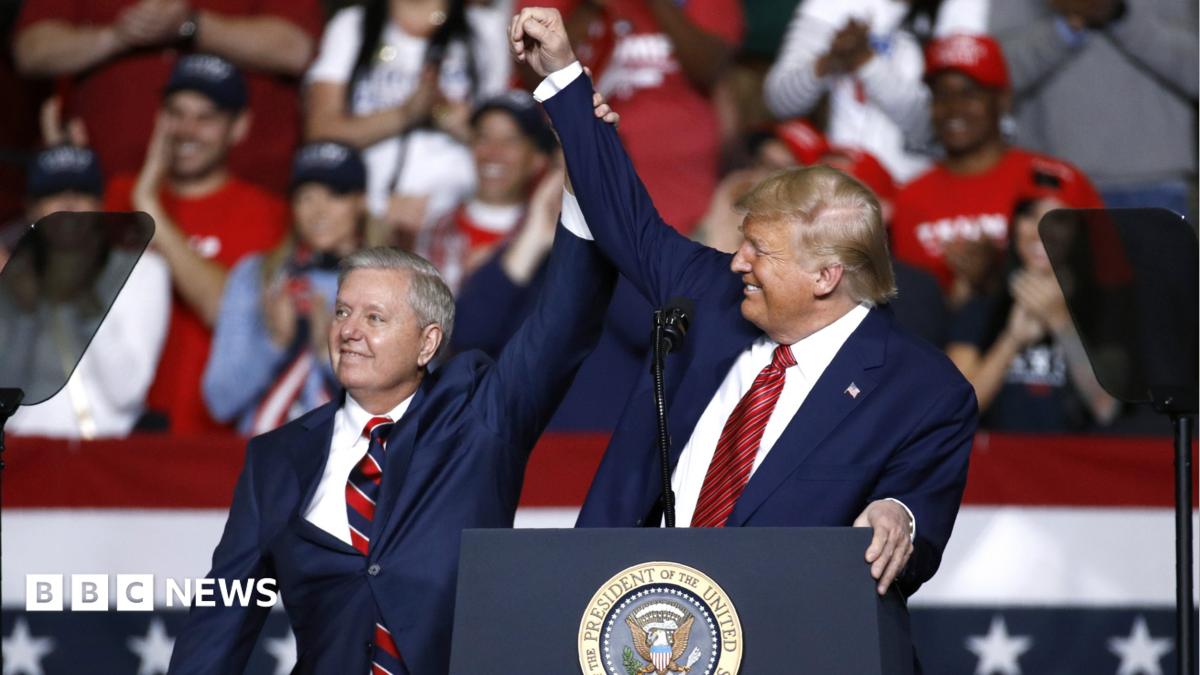
Lindsey Graham’s arc — from one of Donald Trump’s early, vocal critics to a senator more often aligned with the former president’s priorities — is a central theme in understanding party realignment in recent years. This profile draws on reporting by Anthony Zurcher for BBC News to trace that evolution, examine motives and assess what it means for Graham’s career and for the Republican Party.
The change has invited both scrutiny and analysis. Observers describe the transformation less as a single conversion than as a sequence of tactical adjustments made by a long-serving senator navigating the MAGA era. Much of the framing below follows Zurcher’s reporting and the BBC’s characterization of Graham as a “political survivor.”
Lindsey Graham
Overview: Graham’s arc
Graham built a reputation over decades as a hawkish, combative lawmaker on national security and a senator willing to speak bluntly. Early in the Trump years he was among the more prominent GOP figures to criticise Mr Trump directly; by later cycles his public posture had shifted toward guarded praise and selective alignment.
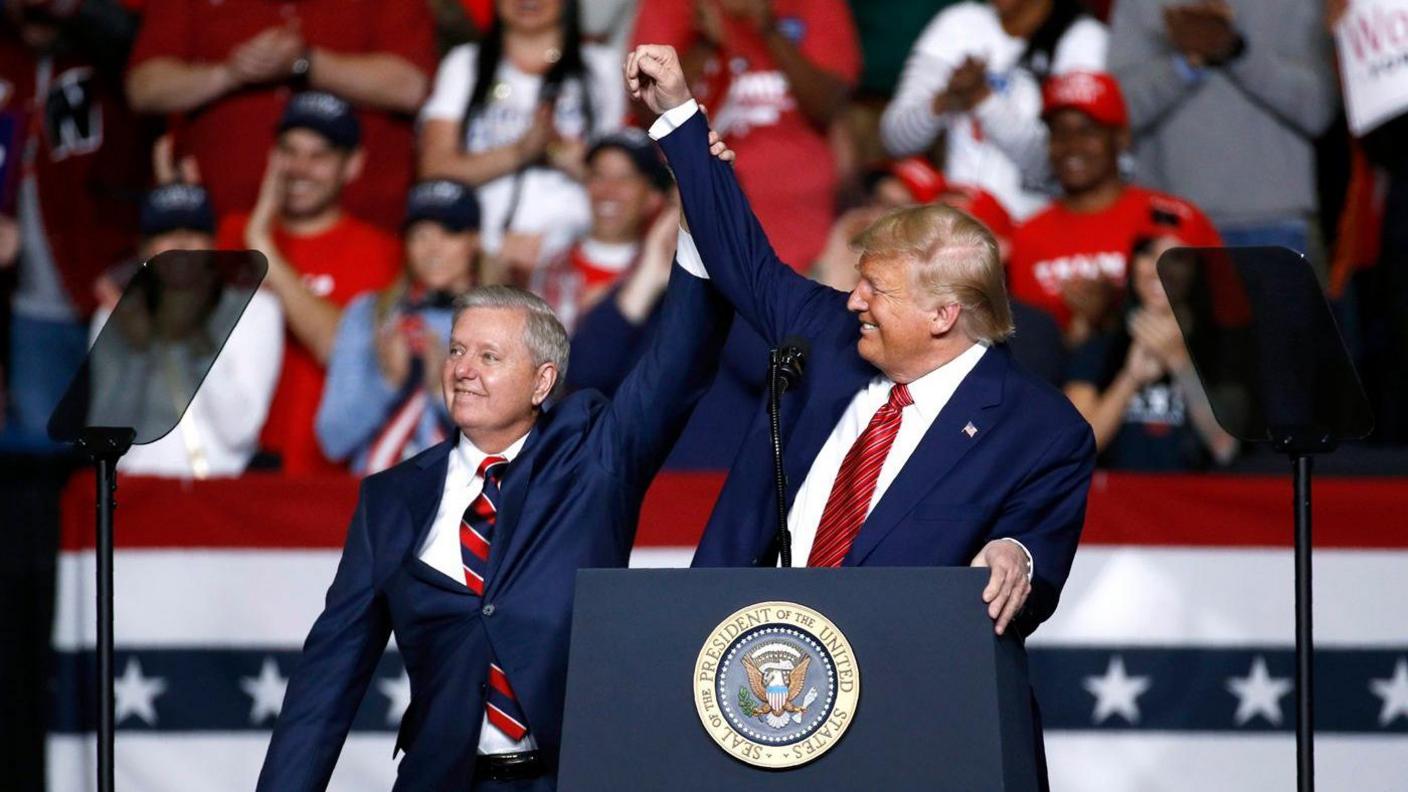
That trajectory, as Zurcher notes, reflects a broader political calculation: when a party’s base and leadership move in one direction, senior figures often recalibrate to remain influential. For Graham, that meant balancing personal views, Senate power, and the electoral realities of representing a conservative state.
Key shifts in public positions
Rather than one dramatic reversal, Graham’s record shows a sequence of positional adjustments. His rhetoric softened in public settings; strategic votes and public alignments increasingly reflected concerns about party cohesion and staying relevant within a caucus shaped by Trump-era priorities.
Observers identify several observable patterns: a move from direct confrontation to guarded endorsement in key moments; a prioritisation of institutional roles and committee influence; and an emphasis on unity when fracture threatened legislative goals. These are presented in BBC reporting as signs of pragmatic adaptation rather than purely ideological conversion.
Public moments that mattered
Across campaigns and major political fights, certain moments crystallised how Graham repositioned himself. His public language, choice of endorsements, and governing priorities reflect a senator attentive to the limits and possibilities of dissent within his party. The BBC article maps these shifts as emblematic of the pressures senior Republicans faced during the height of MAGA influence.
Why he shifted
The simplest explanatory frame is adaptation. Zurcher and other analysts argue that Graham’s moves were driven primarily by political survival: the need to maintain committee clout, fundraising viability and electoral safety in an era when Trump’s influence shaped primary and general-election dynamics.
That adaptation also signals a calculus about effectiveness. For lawmakers who want to shape policy and keep access to institutional levers, accommodation can be a route to continued influence. BBC reporting presents this not as an unusual tactic in politics but as a clear instance of a veteran politician prioritising relevance amid upheaval.
Internal party incentives mattered too. As rank-and-file preferences and leadership signals shifted, the cost of open opposition rose. For some, including Graham, the pragmatic choice was to seek influence through cooperation rather than sustained public dissent.
Impact on the GOP and Trump
Graham’s shift carries both symbolic and practical consequences. Symbolically, high-profile Republicans moving toward accommodation conveyed to others that working with Trump-aligned priorities was feasible and often rewarded. That signaling narrowed the visible band of institutional resistance within the party.
Practically, the consolidation reduced the range of policy debate within Republican leadership and helped ensure that Trump’s preferences remained central to party strategy. The BBC frames Graham’s case as part of a broader trend in which senior Republicans adjusted to preserve influence rather than lead a concerted institutional opposition to the MAGA direction.
What comes next for Graham
Predicting the near-term future depends on multiple variables: whether the MAGA coalition endures in its current form, electoral pressures in South Carolina, and how Senate dynamics evolve. Zurcher suggests Graham is likely to remain a figure who can broker and moderate positions if he continues to retain committee roles and bipartisan visibility.
That role — elder statesman, broker, or pragmatic survivor — carries limits. Survival within a changing party does not guarantee new national ambitions. It may instead point to continued emphasis on influence over insurgency, and to a senator focused on shaping outcomes from a seat near party leadership rather than running a separate political course.
Key takeaways
Graham’s evolution illustrates how politicians adapt when party norms shift rapidly. As the BBC’s reporting underscores, his story is less about a single betrayal or conversion than about strategic choices made to preserve power, influence and relevance during the MAGA era.
Frequently asked questions
How did Lindsey Graham’s stance on Trump change? Reporting portrays his stance moving from pointed criticism to a more accommodating posture, driven largely by political calculations tied to party dynamics and electoral realities.
Why is Graham called a political survivor of the MAGA era? The term captures his repeated ability to recalibrate positions and alliances to maintain influence as the party’s center of gravity shifted under Trump’s influence.
What does Graham’s shift mean for the Republican Party? His shift contributed to a narrowing of visible dissent among senior Republicans, reinforcing the centrality of Trump-era priorities in party strategy and policy debates.
Source attribution
This profile is based on reporting by Anthony Zurcher, North America correspondent, BBC News. Original reporting: Anthony Zurcher, “From Trump critic to ally, Lindsey Graham was a political survivor of the Maga era” (BBC News, 2026-07-12). Read the original piece: https://www.bbc.co.uk/news/articles/clyrdn216k2o?at_medium=RSS&at_campaign=rss.