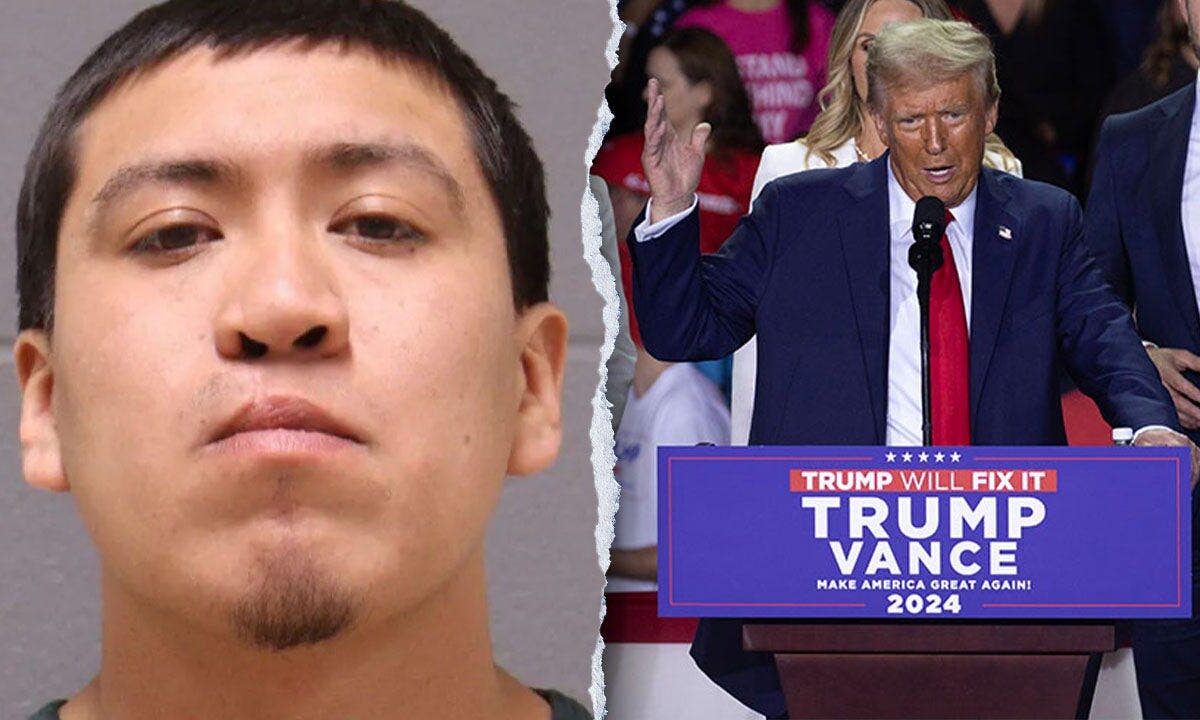
Brandon Ortiz-Vite, a Michigan inmate serving a 39- to 102-year sentence, has filed a handwritten federal complaint against former President Donald Trump and White House official Steven Cheung seeking $75 million, a public apology and U.S. citizenship. Ortiz-Vite says his mugshot and case were used in campaign messaging in a way that humiliated him and his family.
Brandon Ortiz-Vite’s complaint and demands
The brief, handwritten filing names Donald Trump and Steven Cheung and seeks three primary remedies: $75 million in damages, a public apology and U.S. citizenship. Ortiz-Vite — who prepared and signed the complaint while representing himself — says national publicity over his case turned his life into a “nightmare” and stripped away his dignity.
“I was put into a category. Who I was as a person no longer mattered!” Ortiz-Vite wrote in the complaint, framing the political uses of his image and case as the core harm he seeks to remedy.
The suit alleges the campaign and its surrogates used his mugshot and case in political ads and commentary to make broader points about immigration and crime. According to reporting, the complaint points to commercials and public remarks that it says presented Ortiz-Vite as an example of perceived immigration failures. The filing asks a federal court not only for money but also for the extraordinary remedy of naturalization, which is highly uncommon in a civil suit by a convicted, incarcerated person.
The underlying criminal case in Michigan
Ortiz-Vite, 27, pleaded guilty to second-degree murder in the March 2024 killing of Ruby Garcia. Authorities said Garcia was shot multiple times and her body was found dumped along a road near Grand Rapids. Reporting indicates Ortiz-Vite turned himself in after the slaying and acknowledged responsibility.
He was sentenced to 39 to 102 years in prison. Coverage also notes Ortiz-Vite’s immigration background: he had been in the Deferred Action for Childhood Arrivals (DACA) program until 2019, was deported after a 2020 driving-while-intoxicated arrest, and at some point returned to the United States; reporting says the timing and details of any re-entry are unclear.
Legal hurdles for Brandon Ortiz-Vite and expert analysis
Lawyers and legal scholars contacted in reporting say the complaint faces pronounced procedural and substantive obstacles. Federal law requires courts to screen prisoner suits before defendants are served, and many such cases are dismissed during that initial review. Experts expect prompt screening here, and anticipate dismissal unless the complaint can state a plausible legal theory for relief.
“Federal law requires courts to screen prisoner suits before anyone is served. This complaint will likely not survive that screening,” said Matthew Borgula, a criminal defense attorney and former federal prosecutor.
Borgula and others emphasize presidential immunity principles and the difficulty of converting public political speech into a successful damages claim. In general, statements made in political advertising and public forums are hard to translate into constitutional violations that would allow compensatory awards against a former president or his aides.
Analysts note additional barriers: courts typically require a direct legal injury, and public embarrassment or reputational harm alone seldom establishes the kind of legal wrong that yields monetary damages. Winning the requested naturalization would be even more extraordinary; immigration and naturalization are governed by statute and administrative processes, not ordinarily by ad hoc civil judgments in private lawsuits.
Political use and reactions
Reporting documents that Trump campaign ads and public remarks included Ortiz-Vite’s mugshot as part of arguments about criminality and immigration policy. Those materials were used to illustrate broader policy claims in political messaging.
“As long as we have Democrats jetting to other countries to coddle criminal illegal aliens over margaritas, this level of arrogance and entitlement from convicted murderers will continue,” Tudor Dixon, a former Michigan GOP gubernatorial candidate, told reporters.
The complaint portrays that political exposure as more than speech: Ortiz-Vite says the publicity led to ridicule by other inmates and staff and intensified shame and emotional harm to his family. Still, legal observers stress that emotion and public humiliation do not necessarily meet the legal tests for federal relief.
What comes next
Procedurally, the case will enter the standard prisoner-suit pipeline. Under statutes and federal practice, the court will screen the complaint — commonly under the Prison Litigation Reform Act screening standards and related federal rules — to determine if it states a claim and whether the plaintiff can proceed in forma pauperis or must pay filing fees.
If the judge finds the complaint insufficient, the likely immediate outcome is dismissal, either with or without leave to amend. If the complaint survives screening, defendants would be served and would almost certainly file motions to dismiss raising issues like lack of subject-matter jurisdiction, failure to state a claim, and immunity defenses. Discovery in such matters is often limited if the court resolves threshold immunity questions first.
Any dismissal could be appealed to the appropriate federal circuit court. Timelines vary: initial screening and any dismissal typically play out over weeks to a few months; if motions and appeals follow, the process could extend significantly. Observers cited in reporting say the complaint’s chances of producing monetary relief or naturalization are remote, but the filing will produce a docket and rulings that clarify how courts treat these novel claims.
For now, the most likely near-term result is an early dismissal at screening. Regardless of outcome, the case spotlights how an individual criminal matter became a component of national campaign messaging and the legal limits on converting political speech into civil liability.
Source attribution: reporting by Fox News Digital. Original article: Fox News — Illegal immigrant who murdered Michigan woman sues Trump.
Next steps: the federal court will perform routine prisoner-suit screening (often the first 4–12 weeks in practice). If the complaint survives, expect motions to dismiss and potential early resolution; if it is dismissed, the docket and any opinion will explain the court’s reasoning.