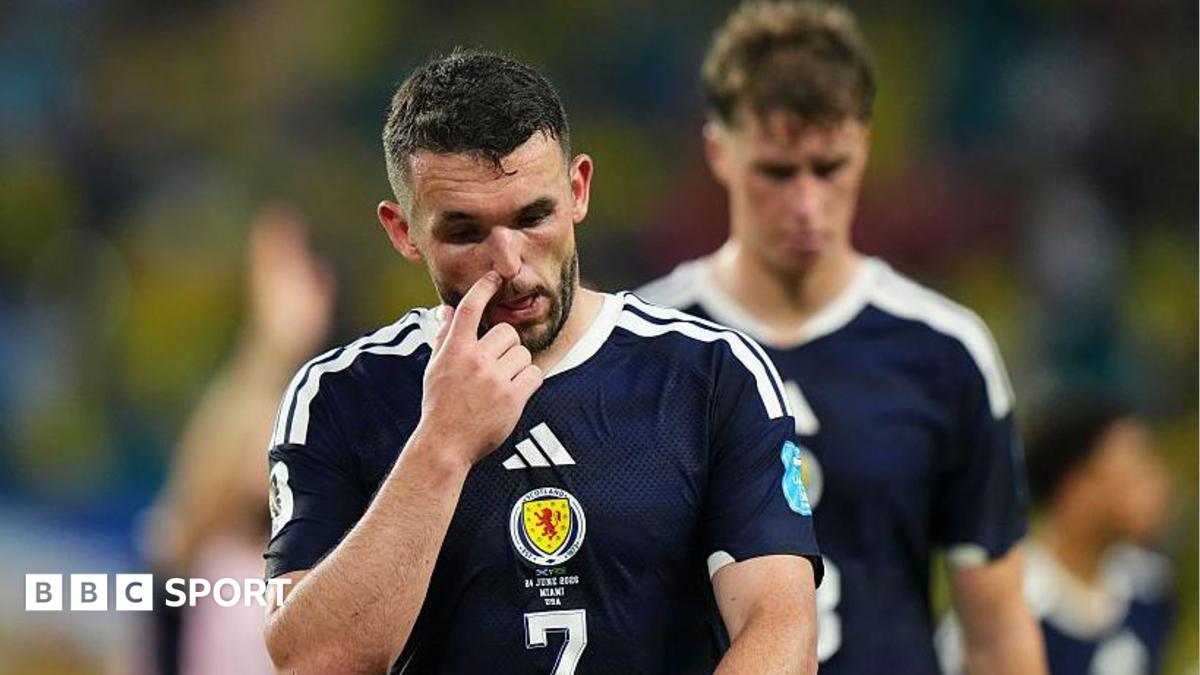
The latest probabilistic projection shows Scotland World Cup hopes have tumbled from about 42% to just 5.26% after the team’s defeat by Brazil, a swing that leaves qualification for the tournament highly uncertain. This change is a statistical estimate rather than a deterministic outcome, but it marks a sharp decline in the likelihood Scotland will reach the finals under the model used.
That drop reflects both the immediate effect of the Brazil result and a string of subsequent setbacks. Below we unpack what the numbers mean, why the figure can change quickly in either direction, and the realistic routes that remain for Scotland to keep World Cup qualification alive.
Immediate impact of the Brazil defeat on Scotland World Cup hopes
The headline move — from a roughly 42% chance to about 5.26% — followed the Brazil defeat and the way that result altered the balance of likely outcomes in the remaining fixtures. In probabilistic projection systems, a single high-profile loss can remove many simulated paths that previously ended in qualification, so the calculated chance falls sharply.

It is important to stress what this means in plain terms: Scotland World Cup hopes being estimated at 5.26% does not mean qualification is impossible; it means that under the simulation assumptions and current standings only a small fraction of plausible match sequences lead to Scotland finishing in a qualifying position.
How the probability fell
“Qualification probability” numbers such as 42% and 5.26% are produced by projection models that simulate many possible futures from the present state. Typical inputs include current group standings, remaining fixtures, assumed match-by-match win/draw/loss probabilities (which themselves may be informed by team ratings, recent form, home advantage and travel), and sometimes contextual factors like likely squad availability.
Those simulations then count how many of the simulated tournament paths result in qualification and report that share as a percentage. The large swing here reflects the way the Brazil defeat removed favourable branches from the simulation tree: outcomes that were once plausible are now much less likely.
A brief methodological note: the publicly reported figures usually summarise Monte Carlo-style simulations using available results and ratings rather than revealing proprietary weighting or exact model parameters. That means the 5.26% figure should be read as a model-based estimate that depends on the chosen inputs and assumptions — useful for comparing scenarios, but not an absolute prediction.
Recent setbacks and remaining scenarios
Since the Brazil loss, a sequence of follow-up results and missed opportunities meant little went Scotland’s way, further compounding the initial damage to their projection. In combination, those outcomes narrowed the set of remaining scenarios in which Scotland climbs back into qualification contention.
The scenarios that remain are constrained. Practically, Scotland now needs a high win rate in their remaining fixtures and a degree of favourable results elsewhere in the group: rivals dropping points, goal-difference swings and timely upsets. Each match left carries more weight than before the Brazil result; any dropped points will further reduce the already small probability.
That said, low-probability scenarios do sometimes occur in football — late comebacks, unexpected upsets and sudden shifts in form can overturn projections. The 5.26% figure quantifies that such outcomes are unlikely but still possible under the model’s assumptions.
What comes next for Scotland
Next, Scotland faces a set of fixtures that will determine whether the projection continues to fall or stabilises. To have any realistic path back into contention the team needs consistent wins and a degree of fortune in other results going their way. Tactical changes, squad rotations and an emphasis on defensive stability or goal-scoring will all be part of the immediate coaching response.
From a practical perspective, managers and players must treat each remaining match as effectively a high-stakes fixture: margins for error are slim and psychological momentum matters. A single positive run — consecutive wins coupled with favourable outcomes elsewhere — could lift the projection substantially, but the most likely short-term outcome under current assumptions is that qualification odds remain depressed unless results change markedly.
By the numbers
- Previous projection: around 42% chance of qualification (as reported earlier).
- Current projection after setbacks: 5.26%.
- Interpretation: a low but non-zero probability under the modelling used; sensitive to match outcomes and model inputs.
FAQ
What happened with Scotland World Cup hopes?
Scotland World Cup hopes fell sharply after a defeat by Brazil and a series of follow-up results that did not go their way. That sequence reduced their projected chances from roughly 42% to 5.26% in the model reported by BBC Sport.
Why does Scotland World Cup hopes matter?
The projection matters to supporters, team planning and broader expectations: it summarises the likelihood, given current form and fixtures, that Scotland will qualify. It also shapes media coverage, supporter sentiment and the pressure on managerial decisions in the run-in.
What happens next?
Scotland must win the remaining fixtures and hope other results are favourable. The low projection means the margin for error is small; every remaining game is effectively more decisive than before the Brazil match.
For the original reporting and the analysis that produced these projection figures, see BBC Sport’s coverage: From 42% to 5.26% – how Scotland’s World Cup hopes are fading. For further context on personnel and fixtures, consult the Scotland team overview (BBC Sport — Scotland) and the wider World Cup qualification pages (BBC Sport — World Cup qualification).
Source: BBC Sport. No BBC social embed was available for inclusion in this analysis.