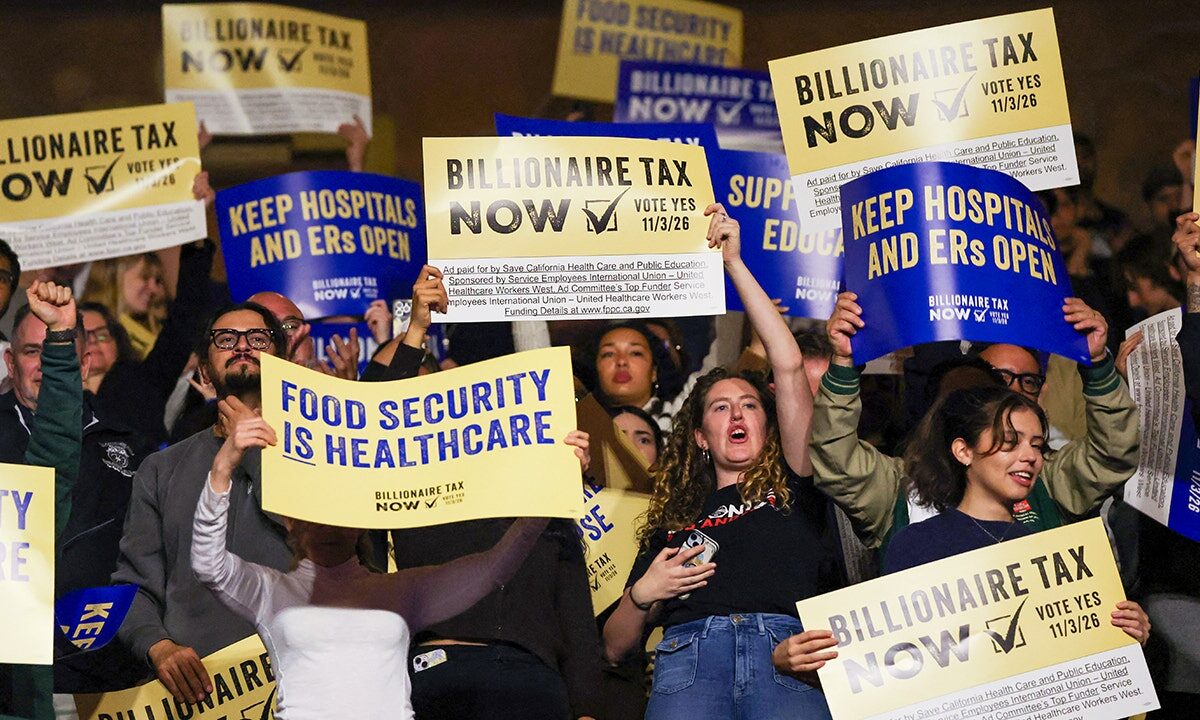
California voters will decide in November whether to approve the proposed Billionaire Tax, a one-time 5% levy on residents with a net worth above $1 billion. Backers say the measure would generate capital to shore up health care services as federal Medicaid funding declines; critics including Gov. Gavin Newsom call it short-sighted and warn it could prompt wealthy residents to leave.
What the Billionaire Tax would do
The ballot measure imposes a one-time 5% tax on the net worth of qualifying California residents. It applies to individuals whose net worth exceeded $1 billion on Jan. 1, 2026, and is calculated on that valuation date rather than annual income. The design targets accumulated wealth rather than yearly earnings.
To ease compliance for people whose assets are largely illiquid, the proposal allows taxpayers to elect payment over five annual installments and includes a deferral mechanism for qualifying illiquid holdings. The initiative also contains anti-avoidance provisions intended to limit restructuring or transfers aimed at evading the levy.
Billionaire Tax: How much backers and analysts expect
Supporters of the measure have highlighted a headline figure of about $100 billion in potential revenue, emphasizing the scale of a one-time levy on the state’s wealthiest residents. That figure is a backers’ estimate for the total gross receipts the measure could produce in the initial collection period.
The nonpartisan Legislative Analyst’s Office (LAO) offers a more cautious assessment. The LAO says the initiative could raise “tens of billions” of dollars in the first few years but emphasizes substantial uncertainty around valuation, compliance and behavioral responses. The office also notes the possibility that, over time, California’s personal income tax collections could fall by hundreds of millions annually if affected taxpayers relocate or change reporting and investment patterns.
Estimating revenue from a novel wealth levy is difficult because it depends on how assets are valued on the specified date, how many taxpayers use payment deferrals, and the effectiveness of anti-avoidance rules. The LAO flagged those technical and behavioral risks in its analysis, underscoring that headline estimates are provisional.
Where the revenue would go
Under the proposal, roughly 90% of collected funds would be dedicated to health care programs and services, according to the initiative text and supporters. Backers say those dollars would help offset reductions in federal Medicaid funding and keep hospitals and emergency rooms operating.
The remaining 10% would be earmarked for education and food assistance programs. Supporters frame the split as prioritizing immediate health system needs while maintaining support for other social services that assist low-income families.
Political reaction and key opponents
The measure has drawn opposition from high-profile state leaders. Gov. Gavin Newsom has criticized the tax as a temporary fix that could worsen long-term budget challenges by encouraging wealthy taxpayers to relocate or change their financial arrangements. Both Democratic gubernatorial candidate Xavier Becerra and Republican candidate Steve Hilton oppose the measure, and business groups have argued it could make California less attractive to high-net-worth residents.
Opponents argue the tax risks increasing revenue volatility and could prompt legal and financial maneuvers that reduce its expected yield. Supporters counter that the measure is a one-time corrective step to shore up key services in the face of federal Medicaid cuts and chronic shortfalls in safety-net funding.
Implications for state revenue and volatility
California’s tax system already depends heavily on a small number of very high earners: the state’s top 1% of taxpayers account for nearly half of personal income tax receipts. That concentration makes collections sensitive to the behavior and residency decisions of the wealthiest taxpayers.
The LAO cautions that while a one-time levy can raise substantial near-term dollars, it may also encourage changes that reduce future income tax revenue. The timing and magnitude of any such effects are uncertain and hinge on how many taxpayers restructure assets, defer sales, shift residency, or otherwise alter their taxable income after the levy.
Implementation would require state agencies to create valuation methods, collection procedures and enforcement systems for a novel wealth tax. Establishing those rules — including how to value private company stakes, real estate holdings and other complex assets — could delay collections and affect initial receipts.
By the numbers
- Rate: one-time 5% tax on net worth over $1 billion.
- Supporters’ estimate: about $100 billion in revenue.
- LAO estimate: “tens of billions” in early years; later declines in income tax collections possible.
- Revenue split: roughly 90% health care, 10% education and food assistance.
- Payment mechanics: five annual installments; deferrals for illiquid assets; anti-avoidance rules.
What comes next
The measure will appear on the November ballot after qualifying. If voters approve it, state agencies would need to establish detailed valuation, collection and compliance rules for a novel wealth tax structure, including timelines for when funds become available to designated programs.
Given the LAO’s caveats, lawmakers and budget analysts will monitor early collections and reassess impacts on broader income tax trends in subsequent budget cycles. Legal challenges or implementation disputes could also affect timing and final receipts.
FAQ
Who would pay the Billionaire Tax?
Individuals who were California residents with a reported net worth over $1 billion on Jan. 1, 2026, would be subject to the one-time 5% levy, subject to the initiative’s rules and any qualifying deferrals.
How much money would the measure likely raise?
Supporters say the tax could raise about $100 billion. The Legislative Analyst’s Office estimates “tens of billions” in the early years but warns revenue is uncertain and could lead to later declines in personal income tax collections.
How would the revenue be used?
About 90% of funds would go to health care programs, with the remaining 10% earmarked for education and food assistance, according to the initiative text and supporters’ descriptions.
For more detail, see the Legislative Analyst’s Office at lao.ca.gov. This article draws on reporting by Fox Business: Fox Business.