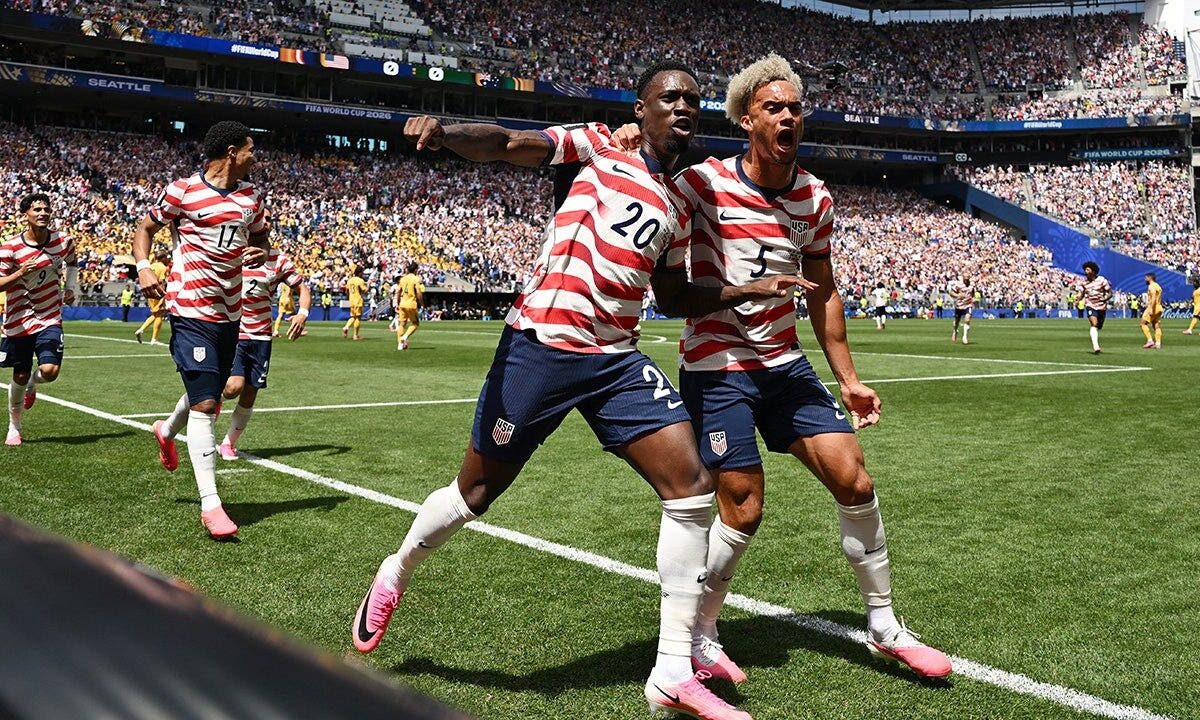
The USMNT path to 2026 World Cup final begins with a Round of 32 match on July 1 in Santa Clara and could culminate in a home final on July 19 in the New York/New Jersey area if the United States wins each knockout round. This explainer names the most likely opponents and venues, summarizes how FIFA’s 48-team bracket and third-place pairing chart produced the current pathway, and notes where uncertainty remains as group results finish.
USMNT path to 2026 World Cup final: quick snapshot
The United States is scheduled to play its Round of 32 match on July 1 in Santa Clara, California against Bosnia and Herzegovina, according to current FIFA bracket assignments and reporting on the draw. FIFA lists the host cities and match windows for the tournament; media coverage of the draw and bracket has tracked the U.S. side of the bracket in detail (see Fox News analysis below).
Under the expanded 48-team format, 12 group winners, 12 runners-up and the eight best third-place teams advance to the knockout phase. FIFA’s pre-set third-place pairing chart determines which third-place finishers face which group winners in the Round of 32; those combinations are what placed Bosnia and Herzegovina on the U.S. side of the bracket.
Round of 32: Bosnia and Herzegovina in Santa Clara
Match: United States vs Bosnia and Herzegovina — Round of 32, July 1, Levi’s Stadium, Santa Clara, California. This pairing comes from the official knockout bracket after group-stage placements are applied; FIFA’s tournament pages and the published bracket reflect that slot for the U.S. side. FIFA tournament page.
Bosnia reached the knockout field as one of the best third-place teams in group play and was slotted to meet the United States through the third-place combination chart. The Round of 32 is single-elimination: the winner advances; the loser is eliminated.
Projected route: likely Round of 16 and quarterfinal matchups
Early in the bracket projection, the most discussed likely opponent for a U.S. Round of 16 match is Belgium, with that tie projected for July 6 in Seattle (Lumen Field). Multiple outlets tracking the bracket have highlighted Belgium as the probable Round of 16 matchup if both teams advance through their Round of 32 games; reporting on prior friendlies has also noted Belgium’s recent win over the U.S. in March, a detail covered in the Fox News roundup of the United States’ bracket path.
If the U.S. defeats Belgium in a potential Round of 16, the bracket projects a quarterfinal in Los Angeles on July 10 against the winner emerging from that quarter — Spain is one of the prominent teams positioned in that quarter of the bracket and is frequently cited as a possible quarterfinal opponent. Those dates and stadiums are consistent with FIFA’s published host-city schedule for 2026 and media summaries of the knockout bracket.
Because the bracket is pre-drawn, the likely sequence (Bosnia/US → Belgium → Spain) is a common projection in coverage; such projections are conditional on every team advancing as expected and on the specific third-place outcomes that fill the Round of 32 slots.
Semifinal and final if the U.S. advances
Under the 2026 format, reaching the semifinals from a Round of 32 start requires three consecutive knockout wins (Round of 32, Round of 16, quarterfinal). The semifinal match tied to the U.S. side of the bracket is scheduled for July 14 at AT&T Stadium in Arlington, Texas, per FIFA’s match-window and host-site publishing. The tournament final is scheduled for July 19 at MetLife Stadium in the New York/New Jersey region (listed by FIFA as the New York/New Jersey stadium), the planned host for the championship match.
Historically, the U.S. men’s team’s deepest World Cup run occurred in 1930 when the tournament featured far fewer teams and the U.S. reached the semifinals; a deep run in 2026 would be the nation’s best finish in the modern World Cup era and would carry major sporting significance.
Why a run to the final would be significant
The expanded 48-team format changes qualification math and increases the number of knockout matches for many teams. For the U.S., the path to the semifinals requires three knockout victories after the Round of 32, making each knockout match a critical hurdle. A successful run to the final on home soil would mean defeating multiple established international sides across different venues, and it would represent a historic achievement for U.S. men’s soccer.
What could change and next steps for fans
All bracket projections remain conditional on final group-stage results. FIFA’s published third-place pairing chart accounts for a large number of possible third-place finish combinations — the official materials describe hundreds of possible third-place outcomes that influence Round of 32 matchups. Media coverage has cited the large number of permutations that feed into who plays whom in the first knockout round; these permutations are the reason projections should be described as provisional. FIFA.
Fans should monitor the remaining group matches to confirm which third-place teams advance and thereby lock in the precise Round of 32 pairings. Until group play is complete, any bracket route beyond the immediate Round of 32 pairing should be treated as a projection rather than a certainty.
By the numbers
48 — total teams in the 2026 World Cup, per FIFA’s expanded tournament format.
8 — number of best third-place teams that advance from the group stage into the knockout phase.
495 — the number of possible third-place combination outcomes tracked in the pairing logic and discussed in public-facing materials about the knockout chart (these combinations determine which third-place teams meet which group winners in the Round of 32).
FAQ
When does the U.S. play Bosnia and Herzegovina?
The U.S. plays Bosnia and Herzegovina in the Round of 32 on July 1 in Santa Clara, California, according to the current knockout bracket published in the tournament materials and media coverage of the draw.
Who is the most likely Round of 16 opponent for the U.S.?
Belgium is widely cited as the most likely Round of 16 opponent in bracket projections and media analyses if both teams win their Round of 32 matches; that projected match date is July 6 in Seattle, conditional on the earlier results.
Where would a U.S. semifinal or final be played if the team advances?
A potential semifinal is scheduled for July 14 at AT&T Stadium in Arlington, Texas, and the final is scheduled for July 19 at MetLife Stadium in the New York/New Jersey area, per FIFA’s host-city schedule for the tournament.
Source attribution and notes on uncertainty
Primary sources for bracket assignments, host cities and match windows: FIFA official tournament pages and published match-window schedule (FIFA – 2026 World Cup).
Bracket analysis and reporting on the U.S. side of the draw: Fox News summary of the United States’ knockout path (see reporting on projected opponents and prior friendlies). Specific match reports cited in media coverage (for example, mentions of recent friendlies and tournament context) are included in that coverage; bracket slotting and the third-place pairing logic come from FIFA materials. Fox News.
Additional context on the U.S. roster, team preparation and official communications can be found via U.S. Soccer Federation releases and match reports: U.S. Soccer.
Note on uncertainty: all route projections beyond the confirmed Round of 32 matchup are conditional on remaining group-stage results and FIFA’s third-place combinations. Projections named here (Belgium in Seattle, Spain in Los Angeles, semifinal in Arlington, final in New York/New Jersey) reflect the published bracket structure and common media projections but are not guarantees.