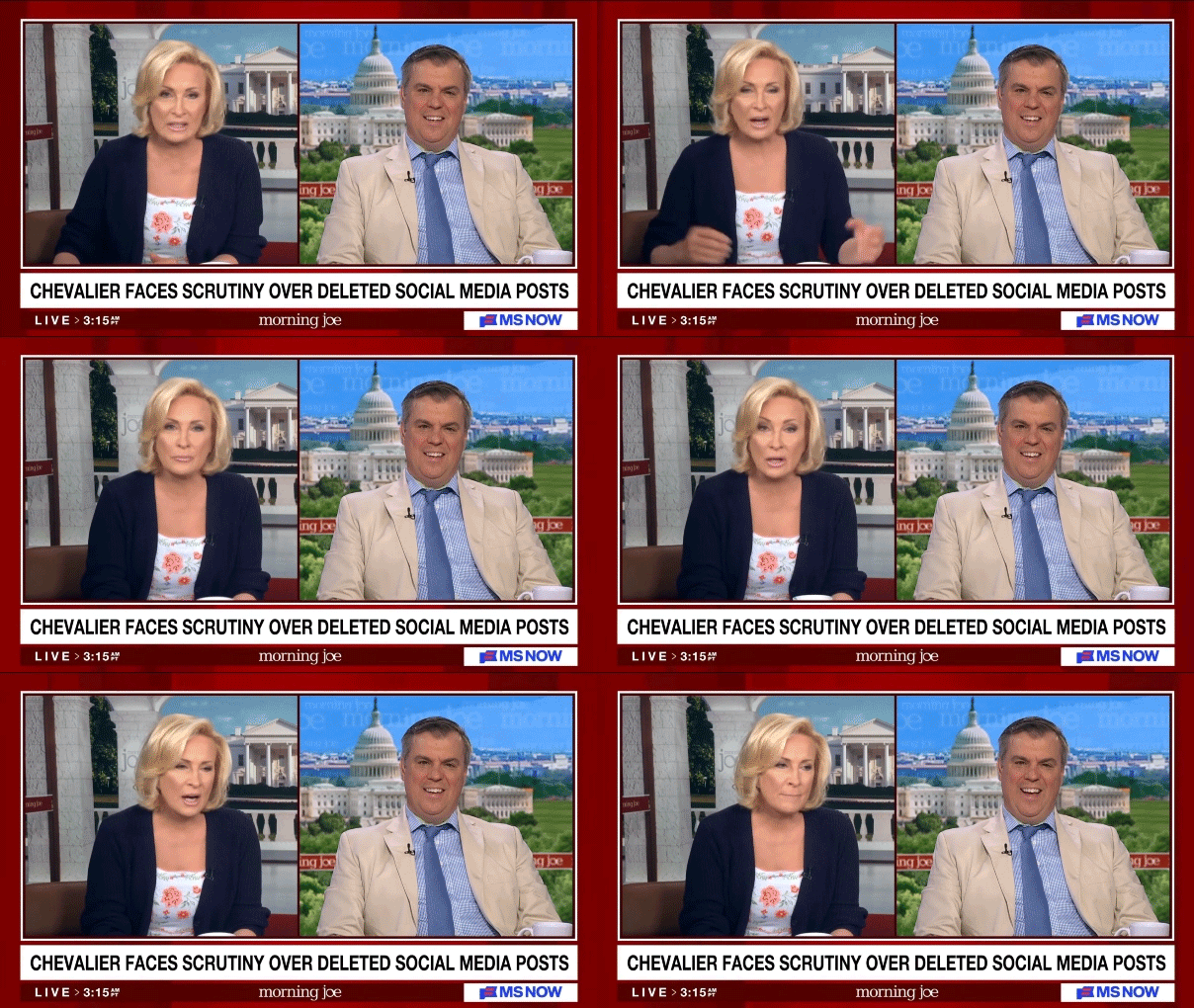
Mika Brzezinski on MS NOW sharply accused Sen. Chris Murphy of “gaslighting” after the Connecticut Democrat said he wasn’t “super familiar” with a New York House race that has come under scrutiny for a candidate’s now-deleted social media posts. The charged TV exchange — aired after Murphy’s appearance on Meet the Press — underscores widening tensions in the Democratic Party over how leaders handle controversial past remarks by progressive activists and candidates.
Brzezinski’s criticism was blunt: she said Murphy’s answer amounted to pretending not to know about widely reported material, which she characterized as a form of gaslighting. The exchange rapidly circulated on social platforms and drew commentary from across the political spectrum, illustrating how media moments can amplify intra-party debates ahead of competitive midterm and primary contests.
Mika Brzezinski’s accusation
On MS NOW, Brzezinski accused Murphy of being deliberately evasive when asked about the activist-turned-candidate. “That is like the most gaslighting experience one can ever, ever see throughout this entire political cycle or cycles because pretending you haven’t seen it is impossible — it’s an out,” she said on air. She framed her rebuke as a plea for accountability, arguing some statements should be clear dealbreakers for public office.
Brzezinski repeatedly urged party leaders to be direct when confronted with what she called “widely reported material,” saying voters expect clarity. Her comments were presented as media coverage of a public exchange and reflect the program’s viewpoint as reported by Fox News.
Murphy on Meet the Press
Sen. Chris Murphy told Meet the Press guest host Ryan Nobles that he wasn’t “super familiar” with the specifics of the New York congressional race when pressed about Darializa Avila Chevalier. Murphy argued the party needs a broader conversation about the Democratic tent and how to handle controversial past remarks, emphasizing caution before rushing to public condemnations.
Those remarks — in which Murphy stressed context and the limits of his direct knowledge — were reported on by multiple outlets and prompted immediate media reaction. Brzezinski and others said the response was insufficient; supporters of Murphy said his answer reflected an effort to avoid quick, potentially unfair judgments while the facts were still being confirmed.
Who is Darializa Avila Chevalier
Darializa Avila Chevalier is described in reports as a longtime community organizer who led protests at Columbia University and has since been linked to a competitive House primary in New York. Multiple outlets, including CNN, report that posts attributed to Avila Chevalier from roughly 2018 to 2022 were later deleted or removed from public view.
CNN’s reporting summarized archived captures and reposts that attributed calls to abolish borders, prisons and police as among the content critics flagged. The New York Post and other outlets highlighted additional provocative lines in coverage; because much of the material was reportedly deleted, those outlets relied on archival captures and third-party reposts to reconstruct what had been posted.
Reporting stresses these reconstructions are based on available archives and reposts and should be read as reported content rather than independently verified statements by Avila Chevalier herself. Media accounts vary in emphasis and context, and some defenders note posts may be dated, altered, or taken out of context.
Party fallout and reactions
Reaction inside media and political circles was swift. Joe Scarborough criticized Murphy’s reluctance to directly condemn the posts on X, urging Democrats to “call out crazy even when it’s on your side—especially when it’s on your side. Voters will reward you for being better than Republicans,” he wrote. Those comments were reported by several outlets tracking the fallout.
The episode highlights a broader debate within the Democratic Party: when should leaders publicly repudiate extreme-sounding past statements, and when should they allow for context, evolution of views, or questions of authenticity? Some strategists argue that rapid, public disavowals protect swing voters; others warn that reflexive condemnations can chill grassroots activism or mischaracterize historical speech.
What this could mean for voters
For voters, the exchange is a reminder that candidates’ digital footprints are increasingly central to vetting. Brzezinski warned certain statements are “complete dealbreakers,” while Murphy suggested leaders must thoughtfully consider context and proportionality. Both positions reflect real political calculations about credibility, electability and consistency.
Political consultants say voters will watch not only the original material but how party leaders and candidates respond. A forceful repudiation can reassure skeptical moderates and independents; a softer approach can risk alienating those same voters but may preserve party unity among the progressive base. How Democratic leaders handle these disputes may influence primary outcomes and general-election messaging in competitive districts.
Past episodes show that resurfaced posts can alter campaign trajectories, prompt formal condemnations or endorsements, and shape fundraising and volunteer enthusiasm. As archives and screenshots proliferate, both campaigns and media organizations face pressure to verify context quickly and communicate findings clearly to the electorate.
For more on the archived posts and reporting context, see CNN’s analysis of Avila Chevalier’s deleted posts and the New York Post piece that flagged additional remarks. Coverage continues to evolve as outlets corroborate and contextualize what has been shared online.
Fox News’ Peter D’Abrosca contributed to reporting on this story.
Source: Fox News. See also reporting from CNN and the New York Post.