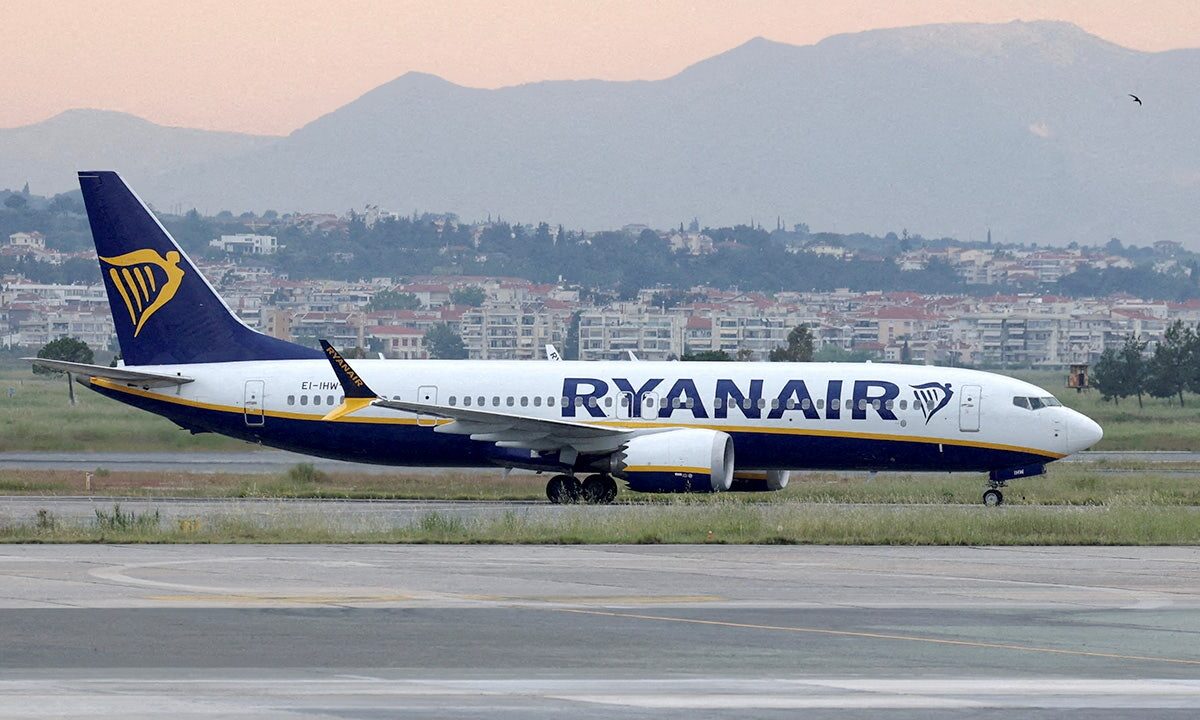
A passenger on a Ryanair-operated flight was partly pulled out of a shattered cabin window after debris struck the plane’s engine shortly after takeoff, survivors and investigators say. The Ryanair window incident forced the Boeing 737 to depressurize and return to Thessaloniki, Greece. Flight-tracking data and survivor accounts provide a preliminary timeline as officials begin an international investigation.
Ryanair window incident: What happened on the flight
The flight departed Thessaloniki on July 10 for Memmingen, Germany, operated by Malta Air on behalf of Ryanair. According to flight-tracking records published by Flightradar24, the aircraft climbed past roughly 15,000 feet about six minutes after takeoff, then descended to around 6,000 feet and stayed low to burn fuel before returning to Thessaloniki about an hour after departure. See Flightradar24 for the recorded track (Flightradar24).
Passengers reported a sudden explosion and rapid loss of cabin pressure after debris believed to have come from the engine struck and shattered a window. Crew declared an emergency and the aircraft returned to the airport. These timeline details are preliminary and subject to confirmation through the formal investigation.
Survivor account and injuries
Ljubisa Karović, 61, told reporters he remembers an explosion and fainting as he was pulled back inside the cabin. He described being “half in and out of the plane” for about two minutes before fellow passengers helped him back into his seat. Karović was treated in hospital for neck and shoulder injuries and friction burns; doctors prescribed a neck brace while his recovery and any need for surgery are assessed. Those survivor accounts and medical details are reported in news coverage of the event (Fox Business).
Passengers described urgent efforts to block the opening until the aircraft descended. One passenger initially used a bag, which was sucked out, then a suitcase to help contain the breach until the plane returned to the ground. Eyewitness recollections are being collected by investigators.
Airline response and technical clues
Ryanair CEO Michael O’Leary said early information suggested the engine may have suffered “foreign-object damage,” a term used when debris strikes and compromises an engine. Company statements stressing the preliminary nature of that assessment were reported by media; Ryanair and Malta Air have said the cause remains under investigation and that the aircraft will be inspected in line with standard procedures (Fox Business).
Ryanair also disputed some passenger accounts that cabin crew failed to assist, saying attendants followed emergency procedures during depressurization and arranged medical care once it was safe to do so. That dispute over crew actions is unresolved and will be part of investigators’ interviews and record reviews.
Investigation led by NTSB
The U.S. National Transportation Safety Board is leading the inquiry after the Hellenic Air and Rail Safety Investigation Authority delegated the investigation; Greek investigators are participating. The NTSB typically coordinates technical examination of the damaged engine and airframe, reviews maintenance logs and crew records, and analyzes flight data and cockpit voice recorders where available. The NTSB’s role and typical processes are outlined on its website (ntsb.gov).
Investigators plan to examine recovered parts, maintenance history and airport operations (including possible foreign-object presence on the runway) as they determine contributory factors. Early statements from airlines and operators are described as preliminary while evidence is collected and analyzed.
Safety context and traveler impact
Rapid decompression can expose passengers to extreme forces and airflow; seatbelts, rapid emergency descent to breathable altitude and oxygen systems are designed to reduce risk in these scenarios. Aircraft are built with containment and redundancy standards, but investigators examine every incident to determine if inspections, procedures or equipment need change.
“Foreign-object damage” can result from small debris, runway material or other objects ingested by an engine, and can produce fragments capable of damaging the airframe or cabin. If the investigation confirms such a mechanism, authorities will review maintenance records, airport debris control and inspection procedures.
What comes next
Investigators will continue collecting physical evidence, witness statements and recorder data. Any formal findings will follow a methodical review; regulators sometimes issue safety directives if a systemic risk is identified, but authorities typically wait for conclusive evidence before ordering fleetwide actions.
Officials emphasize that early remarks by airlines and others are preliminary. The final determination of cause, contributing factors and any recommended safety actions will be published after laboratory analysis and a full investigative review.
Source attribution
Key reporting and survivor quotes in this article are drawn from original news coverage and public data: Fox Business coverage of survivor accounts and airline statements (Fox Business), flight-track data available via Flightradar24, and official investigative procedures as described by the U.S. National Transportation Safety Board. Additional contemporaneous news reporting is available from international outlets that covered the event.
FAQ
Was anyone killed or critically injured?
No fatalities have been reported. The passenger partially pulled from the cabin was hospitalized with neck and shoulder injuries and friction burns; he is recovering under medical supervision as described in news reports (Fox Business).
Who is leading the investigation into the Ryanair window incident?
The U.S. National Transportation Safety Board is leading the probe after delegation by Greece’s safety authority, with Greek investigators participating. The NTSB will coordinate technical examinations and analysis.
Will Ryanair ground similar aircraft after this event?
Authorities and airlines generally await investigation results before ordering groundings. Any operational changes would depend on what investigators find about the cause and whether systemic inspections are required.