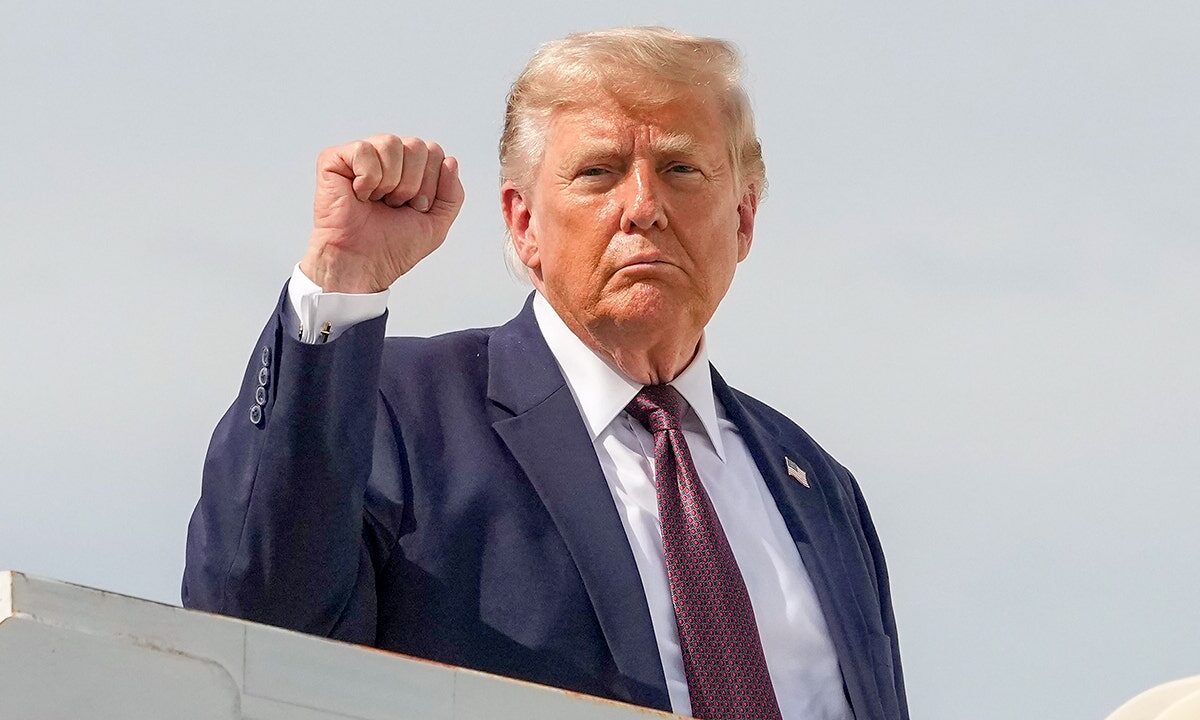
President Donald Trump accused major energy firms of gas price gouging and said he has ordered the U.S. Justice Department to look into pump prices, posting the allegation on Truth Social.
On Truth Social he wrote, “The big Oil Companies are not dropping their price at the pump commensurate with the sharply lower prices they are paying for Oil. Those prices are dropping like a rock! In other words, customers are being ‘gouged.'” He added, “I have instructed the DOJ to immediately start looking into this. Gasoline prices better start going down a lot faster than what I’m seeing!”
What Trump posted and the DOJ claim
The allegation comes directly from Trump’s Truth Social post naming “The big Oil Companies” and saying they had not passed lower crude costs on to drivers.
Trump said he had “instructed the DOJ to immediately start looking into this.” That language describes a request or direction from the president, but reporters have not confirmed that the Department of Justice has publicly opened a formal investigation. The DOJ has not issued a public statement confirming a formal probe as of the reporting cited below.
Gas and crude price snapshot
Key numbers cited in reporting: the AAA national average for regular gasoline was $3.928 per gallon (AAA), WTI crude futures were trading around $71 per barrel on Wednesday morning, and U.S. crude closed at $73.21 on Tuesday (market data cited in Fox Business and NBC News coverage).
Chart shows reported values: AAA national average $3.928 per gallon and WTI crude around $71 per barrel (U.S. crude closed $73.21). Data sources: AAA; market closes cited in Fox Business and NBC News.
Does the data show gas price gouging?
Trump used the phrase “gas price gouging.” Demonstrating legal or unlawful gouging requires more than a snapshot; it typically requires time‑stamped wholesale and retail transaction data, communications, and contract records.
Retail pump prices frequently lag crude moves because of factors such as refinery processing times, wholesale contract terms, distribution logistics, state and local taxes, and station-level inventory. Those lags can make pump prices appear to “not drop commensurate” with crude, but a lag alone is not conclusive evidence of illegal conduct.
Proving intentional overcharging or collusion would normally require a formal inquiry that can compel documents and testimony. As noted above, the reporting does not confirm the DOJ has publicly opened such a formal investigation; Trump’s post describes an instruction rather than an agency announcement.
Market drivers and Iran context
Reporters tied recent price behavior to geopolitical risk in and around the Strait of Hormuz and broader Iran-related tensions. The Strait of Hormuz is a key shipping chokepoint for oil; threats to tanker traffic or regional escalations can add a risk premium to crude and refined fuel prices.
U.S. military actions and diplomatic moves, as well as agreements like the Memorandum of Understanding cited in reporting, feed into market expectations. Those dynamics can lift wholesale fuel costs and — after refining and distribution — affect what drivers pay.
What a DOJ review could mean
If the Justice Department accepts a request to review pump pricing, typical early steps could include voluntary document requests, interviews, data subpoenas, and analysis of wholesale-to-retail margins and timing of price adjustments.
Antitrust or consumer-protection reviews can be civil and fact-finding; a civil review does not necessarily lead to criminal charges. Because news accounts to date relay Trump’s instruction rather than a DOJ announcement, any description of a DOJ “investigation” should be labeled unconfirmed until the department issues a public statement.
What comes next
Drivers should watch weekly AAA averages and crude futures. If crude stays lower and pump prices do not follow over several reporting periods, regulators, lawmakers or the DOJ (if it opens a formal probe) could seek more granular transactional data from industry participants.
For now, the public record consists of Trump’s Truth Social post and reporting by outlets that cite market data and sources; no public DOJ statement confirming a formal investigation was available in those reports.
FAQ
Is the DOJ officially investigating gas price gouging now?
Trump said he “instructed the DOJ to immediately start looking into this,” but the reporting does not confirm that the Justice Department has publicly opened a formal investigation or issued a statement.
Are oil companies required to lower pump prices when crude falls?
No. Retail prices do not automatically move in lockstep with crude. Contracts, inventories, taxes and local market conditions affect how quickly posted pump prices change.
How do crude prices and events in Iran affect what drivers pay?
Geopolitical risks, including hostilities involving Iran and threats in the Strait of Hormuz, can raise risk premiums on crude that flow into wholesale and, eventually, retail fuel prices.
Source attribution
This article is based on reporting from Fox Business and additional context from NBC News and AAA. Trump’s quoted post was published on Truth Social. Market prices cited reflect the figures reported by those outlets at the time of reporting.
Primary reporting: Fox Business. Related coverage and context: NBC News. AAA national gas-average data cited from AAA reporting.