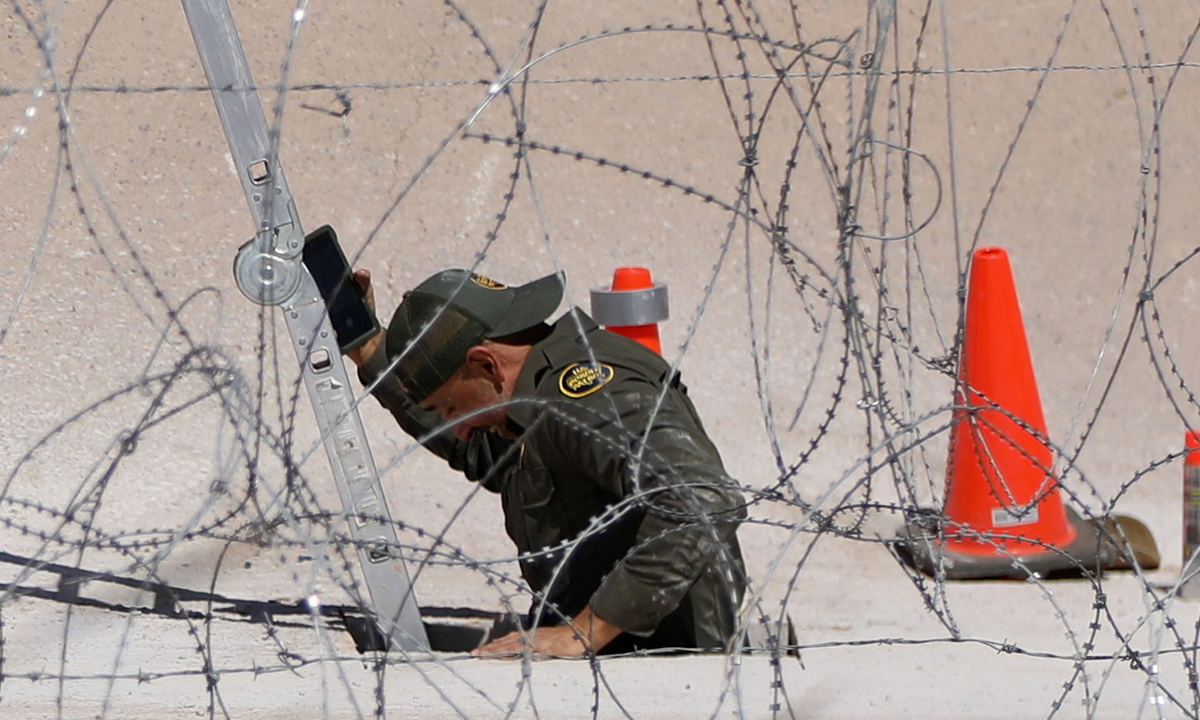
Cartel human smuggling tunnels carved into El Paso’s storm drains are narrow, heat-soaked arteries officials say cartels use to move people and contraband beneath the city. U.S. Customs and Border Protection (CBP) granted an exclusive on-site look with its Confined Space Entry Team, which described miles of concrete channels, dozens of river-facing entry points and hundreds of dispersed exits that turn enforcement into a high-risk, unpredictable operation.
During the walkthrough, team members emphasized that physical conditions are as much a threat as smugglers: steep slopes, sudden narrowings, thick stagnant air and blistering heat that can sap strength in minutes. “You’re already exhausted, and now you have to potentially fight with someone underground,” one team member told Fox News, describing the split-second dangers when contact is made inside a confined conduit.
What CBP found inside the tunnels
CBP investigators documented winding concrete channels with side conduits that can run for miles beneath neighborhoods. The agency reported 32 known entry points along the Rio Grande and described “hundreds” of exits across El Paso that allow people moving underground to re-emerge blocks apart, complicating interdiction efforts.
Inside these storm drains, CBP said heat and low-oxygen pockets are constant hazards; agents carry monitoring devices and set strict exposure limits for confined-space operations. The Confined Space Entry Team stressed specialized training, continuous monitoring and pre-established egress plans before any entry.
Cartel human smuggling tunnels: how they work
According to CBP, smugglers use river-side access points to push people into a branching system of conduits that lead into the urban grid. The agency described the network as a mesh: multiple entry locations feeding hundreds of scattered exits, creating a “whack-a-mole” enforcement problem where interdiction at one spot can be offset by emergence elsewhere.
CBP told Fox News that smugglers increasingly recruit and instruct guides using social media; the agency provided examples of online posts and messaging patterns described in its briefing. Media and agency reports also include steep fee claims for guided passage. Some accounts cited in the CBP briefing mentioned payments reportedly in the $20,000–$30,000 range per person; these fee figures are agency-reported and media-reported and have not been independently verified by The Nonstop News.
Risks for migrants and agents underground
Heat stress, hypoxia and the inability to call immediate backup were highlighted as primary operational risks. “You can’t call for backup; you can’t call for help. It’s just you and your team versus everybody else,” an entry team member said, describing how cramped conditions prevent rapid reinforcement or evacuation.
Migrants face medical dangers including heat exhaustion, dehydration and asphyxiation in poorly ventilated stretches. CBP noted group sizes moving underground have declined compared with earlier years — agents reported more frequent encounters with two- or three-person groups rather than large caravans — a change the agency links to evolving smuggler tactics.
For agents, each subterranean entry requires Confined Space Entry Team certification, specialized gear and medical support on standby. Even with protocols, violent confrontations in close quarters present acute threats to both migrants and officers.
DHS and CBP data on border trends
The tunnel reporting arrived alongside Department of Homeland Security (DHS) statements characterizing recent border metrics as an “unprecedented trend of historically low border crossings.” DHS said June marked 14 consecutive months of “zero releases” at the border and that daily apprehensions are down about 94 percent from peaks reported under the prior administration. CBP separately reported staffing of 21,471 agents this spring, which the agency described as the most in its 102-year history.
These figures are agency-reported (DHS/CBP); independent verification of some operational claims, including smuggling fee amounts and recruitment assertions, remains limited. Readers should treat fee and recruitment numbers cited in agency or media briefings as reported rather than independently confirmed.
What comes next for enforcement and safety
CBP described ongoing efforts to map subterranean routes, increase sensor and detection coverage and expand confined-space training. Officials said interdiction will rely on better situational awareness, interagency information sharing and community outreach to detect suspicious activity near exit points.
Agency leaders indicated prevention efforts will also target online recruitment and guide networks that direct people into subterranean systems. Local emergency-response planning is being updated to account for dispersed exits and the risk such sites pose to neighborhoods when people or contraband surface unexpectedly.
Given the hazards documented by CBP’s Confined Space Entry Team, officials stressed the need for continued investment in specialized teams and technology to reduce risks to migrants, agents and communities.
Source attribution and verification notes
This article is based on exclusive on-site reporting and briefing material provided by U.S. Customs and Border Protection and statements from the Department of Homeland Security, and on reporting by Fox News. Agency statistics and operational claims are labeled in the text as CBP- or DHS-reported where applicable; some figures and fee claims included in agency and media briefings have not been independently verified by The Nonstop News.
Original coverage and visuals: Fox News — WATCH: Inside look at the dangerous cartel human smuggling tunnels. CBP and DHS provided the exclusive access and on-the-record briefings referenced above.