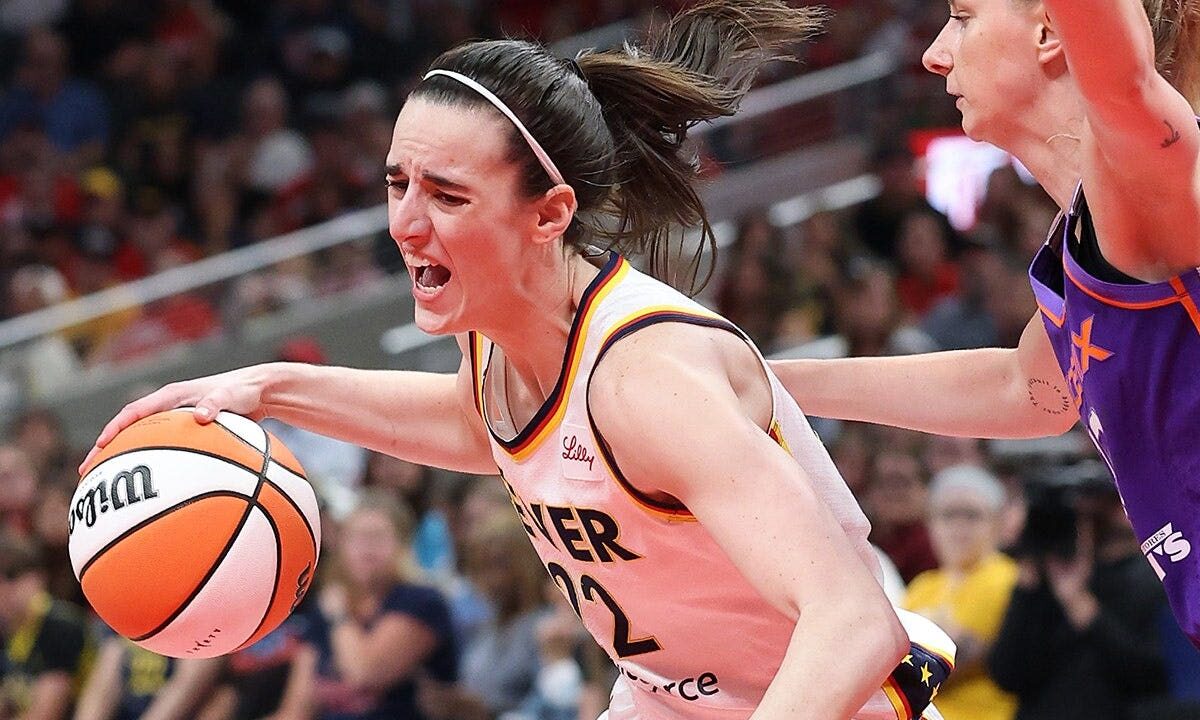
The Indiana Fever’s star Caitlin Clark exited Tuesday night’s 111-109 loss in Phoenix after a throat-area strike left her shaken. No foul was called on the play in real time; the WNBA subsequently reviewed the sequence, assessed a Flagrant Foul 2 and suspended Alyssa Thomas for “recklessly making contact with her fist to the throat area.” The Fever reported Clark did not play in the team’s next game as she continued to be evaluated.
What happened in Phoenix
Late in a tightly contested game against the Phoenix Mercury, a loose-ball scrum on the court resulted in contact between Alyssa Thomas and Caitlin Clark. Clark left the game following the contact, and the Fever ultimately fell 111-109. On-court officials did not call a foul on the play at the time, triggering immediate fan and media scrutiny when replay showed contact to Clark’s throat area.
After reviewing the play, the WNBA classified the act as a Flagrant Foul 2 and imposed a suspension on Thomas. The league described the incident as reckless contact to the throat; the disciplinary action came after the game and did not alter the final score.
Dakich’s comments on Caitlin Clark
On his OutKick program, commentator Dan Dakich sharply criticized the league and Fever leadership for how the incident was handled. He said, “It’s complete [expletive] the way this league is handling it,” and named Commissioner Cathy Engelbert and head of officials Sue Blanch in his critique. Those remarks were made on Dakich’s program and reflect his commentary rather than a league finding.
Dakich also raised concerns about officiating and hiring, framing part of his critique around what he described as a problem with DEI in officiating. He characterized the situation as evidence of “unqualified people” in positions that affect game management. Those statements are Dakich’s opinions and are reported here as attributed commentary; they are not presented as independently verified facts.
In addition to criticizing league leadership, Dakich urged more forceful public support for Clark from the Fever’s front office, praising coach Stephanie White while saying team executives should have been louder in defending their star during and after the incident.
League and Fever response
The WNBA’s disciplinary process resulted in a Flagrant Foul 2 ruling and a suspension for Thomas. League officials said the action met the threshold for reckless contact to the throat area, which prompted the postgame discipline. The Fever confirmed Clark did not play in the team’s next scheduled game and that her status would be re-evaluated as she recovered.
Beyond the formal discipline, Dakich publicly called on league and team leaders — including figures such as Amber Cox in the Fever organization — to show a more visible response. Those calls have fueled debate over whether public statements from executives or immediate in-game enforcement are more effective responses to dangerous contact.
Caitlin Clark’s status
The Fever reported Clark did not participate in the next game while she was evaluated after the incident. The team has not released a long-term injury timeline publicly; decisions about her availability for upcoming matchups will depend on medical reassessment and team discretion. For now, Clark’s absence was precautionary and tied to the immediate aftermath of the contact in Phoenix.
Player safety and officiating implications
The episode highlights two recurring priorities in professional sports: protecting players from dangerous contact and ensuring consistent, credible officiating. The WNBA’s postgame suspension signals that the league’s disciplinary channels can address incidents after review, but the gap between in-game calls and after-the-fact discipline raises questions about deterrence and immediate player protection.
Advocates for stricter in-game enforcement say that immediate ejection or stronger penalties during the contest better preserves player safety and deters future incidents. Others note that replay-based or postgame discipline, while necessary, cannot undo momentum shifts or prevent injury sustained before review is complete. Any claims that officiating quality is linked to hiring policies or DEI initiatives remain contested and should be understood as commentary unless supported by systematic league analysis.
For the Fever, the practical concern is protecting roster health while remaining within WNBA rules and appeals processes. For the league, the incident likely prompts internal discussion about clarifying in-game officiating guidance, replay usage, and the threshold for immediate ejection versus postgame discipline.
What comes next
Expect continued scrutiny of both the disciplinary precedent set by the suspension and whether the WNBA will alter or clarify in-game officiating protocols. Clark’s recovery timeline will shape the Fever’s immediate strategy; broader conversation about officiating consistency and player safety may follow as fans, pundits and league officials weigh lessons from the incident.
FAQ
Was Caitlin Clark injured and out of the next game?
Yes. Clark left the Phoenix game after the contact and did not play in the Fever’s following game, per team reporting. The Fever said she was being evaluated and monitored after the incident.
Did the WNBA punish Alyssa Thomas for the incident?
Yes. The league reviewed the play, assessed a Flagrant Foul 2 and suspended Thomas for what it described as reckless contact with her fist to the throat area.
What did Dan Dakich say about league leadership?
Dakich sharply criticized Commissioner Cathy Engelbert, head of officials Sue Blanch and some Fever executives for how the situation was handled on and after the court incident, arguing the league and team leadership should have responded more forcefully. Those comments are his opinions as aired on OutKick.
Source: Fox News/OutKick — Fox News/OutKick report.