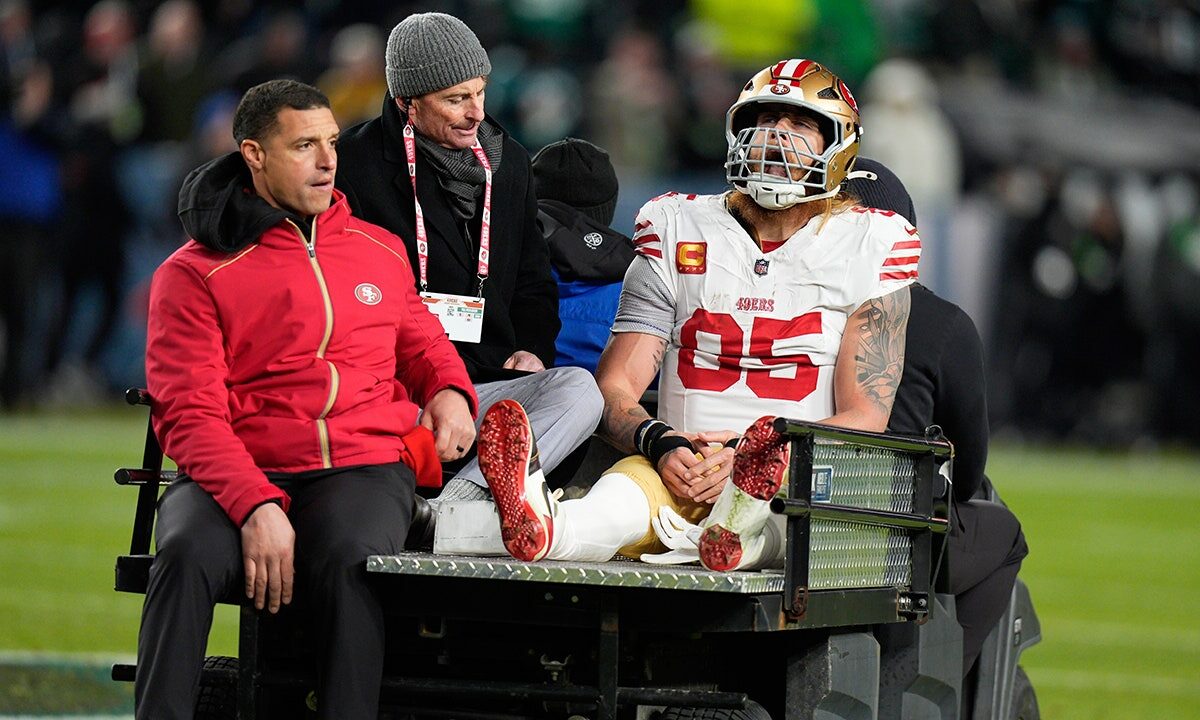
“We’ve made it clear that we prefer grass fields. We know it’s better on our bodies. And clearly, we know it’s possible based on everything that went into putting down grass fields for the World Cup in each stadium,” San Francisco 49ers tight end George Kittle said, touching off renewed attention to NFL grass fields and how the league evaluates surface safety.
The comments followed reporting that seven NFL stadiums installed natural grass to meet FIFA requirements for the World Cup this summer — a move players and the NFL Players Association say proves that grass can be brought to major U.S. venues when stakeholders prioritize it.
Kittle, the World Cup and seven stadiums
Kittle’s criticism centers on what he calls a double standard: stadiums will host temporary grass for international soccer but many NFL venues remain on synthetic turf for most of the year. Fox News reported seven NFL stadiums brought in natural grass systems for the tournament, a fact players point to when arguing NFL grass fields are feasible if the league and stadiums choose to prioritize them.
Kittle, who is rehabilitating from a torn Achilles suffered while playing on grass in Philadelphia, framed the issue as one of investment in players’ long-term health. His comments were amplified by the NFL Players Association, putting the spotlight back on negotiations over playing-surface policy and stadium capital plans.
Player preference and NFL grass fields safety debate
The NFLPA has repeatedly told the league that players overwhelmingly prefer natural turf. Executive Director Lloyd Howell has conveyed to league officials that a large majority of players favor grass; the union has cited a figure of 92% in public statements about player preferences.
On the other side, the league’s medical leadership has emphasized that the peer-reviewed and league-level analyses it relies on do not show a clear, statistically significant difference in rates of lower-extremity injuries or concussions that can be definitively attributed to surface type. As NFL chief medical officer Dr. Allen Sills put it in recent comments, there are no “statistically significant differences” that prove one surface is categorically safer than the other — a position the league uses to justify regulating both grass and turf rather than mandating one.
That contrast — strong player preference versus cautious interpretation of injury data — is central to the debate. Players point to experience and comfort, while the league cites aggregate injury studies and controlled measurements. Both perspectives inform how teams, players and medical staff approach practices, recovery protocols and roster decisions.
Where teams stand: turf, costs and MetLife example
Roughly half of NFL stadiums currently use synthetic turf, a choice teams often attribute to multiuse scheduling, durability and lower short-term maintenance overhead. Turf surfaces allow venues to host concerts, other sports and frequent events without the same recovery time natural grass usually requires.
MetLife Stadium — home to the New York Giants and Jets — is frequently mentioned in coverage as an example of the cost and logistics challenges tied to maintaining natural grass at a high-performance level. Fox News reports MetLife will host the 2026 World Cup final, a detail cited by critics who say high-use venues can install temporary grass for a single event but struggle to sustain natural turf year-round without major investments and schedule changes.
Teams and stadium operators must balance player preferences against capital costs, maintenance budgets, and venue versatility. Installing and upkeeping natural grass at NFL standards can mean significant one-time investment and ongoing labor and irrigation expenses that some franchises consider prohibitive given other financial priorities.
What the NFL is planning before 2026
Last year the NFL announced plans to distribute a library of approved, accredited field constructions and systems before the 2026 season. The stated goal is to raise the baseline quality and performance of playing surfaces across both natural and synthetic options.
Under the rollout plan, any new field installed after the library is published must meet the approved standards immediately; teams will have two years to bring existing surfaces into compliance. League briefings say the library will include both grass and turf options, and the NFL currently has no plan to mandate natural grass exclusively — instead both surface types will be governed by the new accreditation criteria.
League officials argue the approach is intended to reduce variability across venues and give teams time to schedule upgrades and budget for capital work rather than forcing abrupt, costly conversions.
Why this matters to players and teams
At stake are player health, contract value, availability and how franchises prioritize capital spending. Players argue that surface choice affects how they feel day-to-day, their recovery timelines and potentially the length of their careers. As Kittle said, “our bodies are our business,” a framing that centers personal welfare alongside competitive concerns.
For teams, surface decisions are a calculation: weigh the documented preferences of players and the potential for marginal injury risk reductions against the fiscal and operational realities of a stadium calendar that may demand more durable surfaces. Smaller-market clubs or multipurpose venues may find the economics of year-round grass particularly challenging.
The debate also intersects with contract negotiations and roster management. Availability and performance can influence contract valuations and a player’s earning potential; for that reason, surface policy has ripple effects well beyond individual preferences.
Key facts
- 7 — NFL stadiums reported to have installed natural grass for the World Cup (Fox News reporting).
- 92% — Share of players the NFLPA has cited as preferring grass fields.
- ~50% — Rough share of NFL stadiums that currently use synthetic turf.
- 2 years — Time teams will have to meet the NFL’s new field standards after a library of accredited fields is published.
How the league reconciles player preference, evolving medical evidence and financial realities will shape the playing-surface landscape through 2026 and beyond. For now, the NFL is moving toward standardized, accredited options rather than a blanket surface mandate — a compromise that keeps both turf and grass on the table while raising baseline expectations for safety and performance.
Source: reporting by Fox News. Read the original story: George Kittle puts NFL on blast as stadiums bend knee to FIFA for grass fields. Additional context on the NFL field-library plan is drawn from league announcements and press briefings.