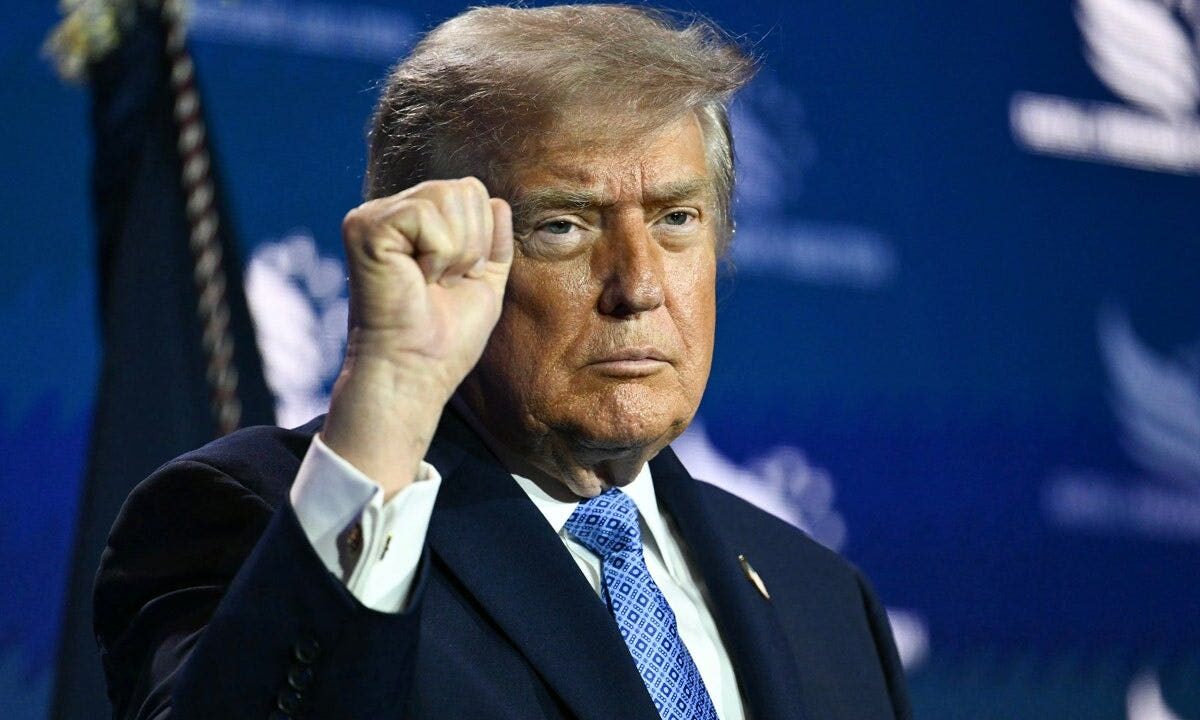
“These are not social democrats. These are hardcore, godless communists,” President Donald Trump said at the Faith & Freedom Coalition conference, a line that set the tone for his warnings about New York’s recent primaries and local policy decisions. Trump warns godless communists, he added, as he linked the primary upsets and a rent freeze to what he called an existential threat to American cities.
The speech blended sharp rhetoric with named endorsements and a local policy flashpoint: a vote by New York’s Rent Guidelines Board to freeze certain rents. Trump framed those developments as a wider signal of a leftward shift he said could spur urban decline.
Trump warns godless communists
Speaking to the Faith & Freedom audience, Trump repeatedly labeled recent winners in New York primaries “godless communists,” saying their rise represented more than a policy disagreement. “All communists are godless. They don’t believe in God,” he said, casting the change as a cultural and ideological threat rather than a narrow municipal dispute.
Trump tied his remarks to the nation’s upcoming 250th anniversary, arguing the moment should emphasize founding principles rather than what he described as an internal danger. He warned that if similar policies spread, they could produce deteriorating conditions in American cities — a prediction he presented as his view, not an established outcome.
New York primary results
Trump singled out electoral shifts in New York as evidence of the trend he described. Candidates backed by progressive organizers won several Democratic primaries, and the speech noted endorsements linked to the Mamdani-aligned movement.
Among the victories cited were candidates associated in reporting with that progressive wave. Trump named several races and cited wins he said showed a socialist surge within parts of the Democratic Party. He identified Brad Lander, Claire Valdez and Darializa Avila Chevalier as examples tied to that network in his remarks.
Local primaries have in recent cycles produced unexpected upsets as activist groups and new coalitions target incumbents. Those shifts can alter policy debates, staffing priorities and budget decisions at the municipal level — which is precisely the point Trump emphasized in connecting local races to broader governance concerns.
Rent freeze and city impact
Federal rhetoric met a concrete municipal action in the speech: Trump criticized the Rent Guidelines Board vote that froze rents, barring landlords from raising rents on new one-year and two-year leases. He portrayed the move as historic and consequential during his remarks.
Trump warned the freeze would accelerate building decline and prompt residents to leave, saying some properties could become “ghettos and slums.” Those predictions are presented as the president’s forecast; they are not proven outcomes. The long-term effects of rent regulations depend on enforcement, investment patterns and broader market conditions.
Housing-policy researchers observe mixed results from rent controls and freezes. Supporters say freezes protect tenants from sudden increases, preserving affordability for renters; critics argue caps can reduce maintenance and disincentivize new construction. The immediate effect of the recent board action is to cap rent increases on specified lease renewals, offering short-term relief to many tenants while raising policy trade-offs for landlords and developers.
Political implications and reactions
The speech is likely to resonate with voters already worried about crime, housing and city services, and it provides Republicans with a clear line of attack against Democratic officials who back rent limits or align with more progressive factions. That messaging aims to nationalize a local policy decision ahead of broader campaigns.
Democratic responses vary: some leaders defend tenant protections as urgently needed, while others emphasize increasing housing supply and targeted subsidies. The rhetoric from Trump and allies may sharpen intra-party debates about balancing tenant relief with incentives for property upkeep and new development.
How voters interpret the combination of primary upsets and municipal policy will shape campaign narratives in the months ahead. For Republicans, the message frames local policies as symptomatic of a broader governance failure; for Democrats, it raises the task of explaining policy intent and mitigating any unintended consequences.
What comes next
Expect the rent freeze and primary outcomes to be recurring themes in fall campaigns. Candidates will either defend the measures as protections for vulnerable renters or argue they risk long-term housing deterioration. Observers will watch vacancy rates, maintenance spending and permit filings for early signs of market response.
Policy analysts and municipal officials will likely monitor short-term tenant stability and longer-term investment trends. Political operatives will test whether alarmist language like “godless communists” mobilizes voters or deepens polarization in swing communities.
Background
New York’s Rent Guidelines Board meets periodically to set allowable rent adjustments for regulated units. Votes to limit or freeze increases are rare but can occur in response to economic stress or political pressure. Such actions typically spark debate over the best tools to secure affordable housing while maintaining serviceable building stock.
The president’s speech used those local developments to craft a broader argument about national direction, linking municipal governance to cultural and ideological themes that play well with his base.
Source attribution
This article draws on reporting from Fox News, which covered President Trump’s Faith & Freedom Coalition remarks and the related New York primary outcomes and Rent Guidelines Board vote. Original reporting and quotes are attributed to that source: Fox News.
Note: this piece relies primarily on the Fox News coverage of the speech and on public records about the Rent Guidelines Board vote. Claims about long-term city outcomes mentioned by the president are presented as his warnings and are not independently verified here; the real-world effects of rent policy depend on multiple economic and administrative factors.
FAQ
What did Trump say about godless communists?
At the Faith & Freedom Coalition conference, Trump repeatedly called recent Democratic primary winners “godless communists,” saying they represent an ideological threat and linking them to policies he said undermine cities.
Which socialist-backed candidates won in New York?
Reporting cited in the speech referenced candidates connected to Mamdani-aligned organizers, and Trump named figures including Brad Lander, Claire Valdez and Darializa Avila Chevalier as examples tied to that movement.
What is the Rent Guidelines Board decision and its short-term effect?
The Rent Guidelines Board voted to freeze rents, prohibiting landlords from raising rent on specified one-year and two-year leases. Short-term effects include immediate protections for tenants facing renewals; longer-term impacts are debated and depend on market responses and policy enforcement.