Adam McKay confirmed that a Talladega Nights sequel was discussed and that he had a written treatment, but the project never moved into production. In an interview with Business Insider, McKay said the idea would have taken Will Ferrell’s Ricky Bobby out of NASCAR and into Formula 1 — a cultural fish-out-of-water premise that underpinned the treatment.
Talladega Nights sequel idea, in brief
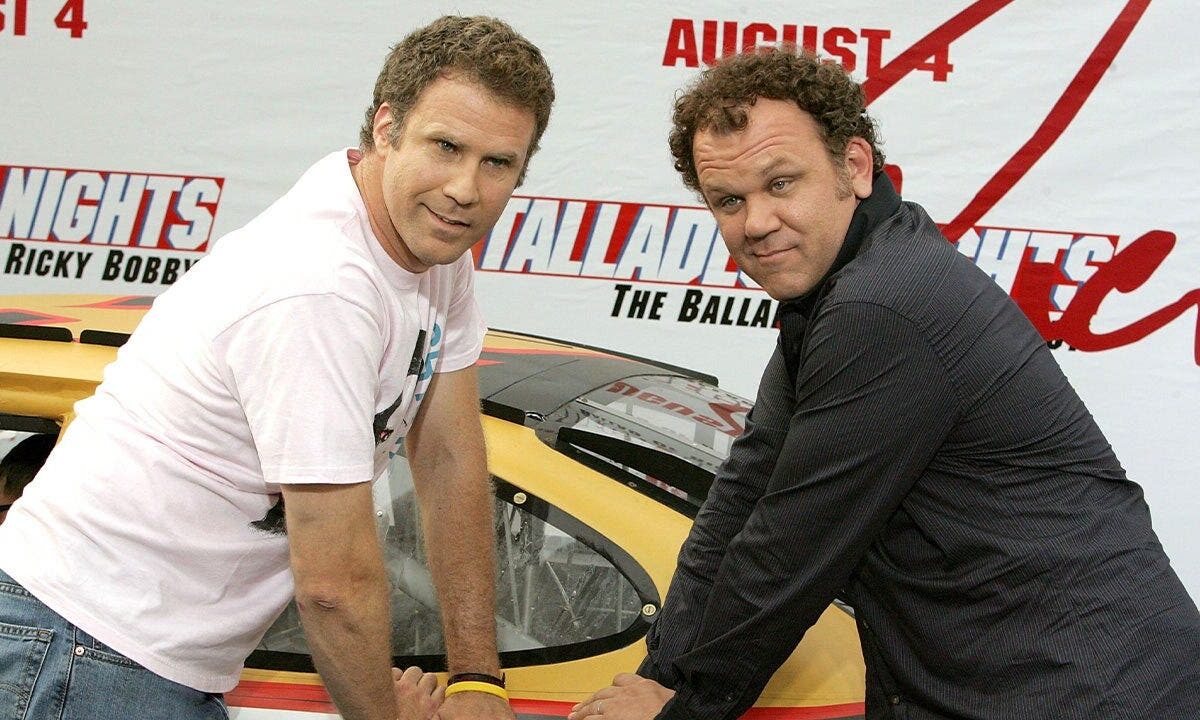
The Talladega Nights sequel concept, as McKay described it, would have transplanted the 2006 comedy’s loud, Southern, NASCAR-rooted protagonist into the tight, technical world of F1 racing in Europe. Talladega Nights: The Ballad of Ricky Bobby is widely remembered for Will Ferrell’s performance as Ricky Bobby and its broad take on racing culture; the proposed follow-up leaned on contrast-driven comedy: Ricky Bobby confronting the unfamiliar rules and social norms of European motorsport.
What Adam McKay said about the sequel
McKay spoke to Business Insider about the treatment. “We did have an idea for (a sequel to) ‘Talladega Nights,'” he said, and elaborated that the plan was to have Ricky Bobby “hook up with an F1 team” and race “in Denmark or the Netherlands.” He recounted one of the satirical beats: Bobby would feel out of place and describe the environment as if it were “a communist country because they have nationalized healthcare.”
McKay framed that line explicitly as a satirical device meant to generate culture-clash humor, not as a policy argument. In his telling to Business Insider, the nationalized healthcare reference was a comic conceit designed to reveal character and contrast American and European sensibilities, a creative choice rather than a factual or political claim.
Why the sequel was not made
Production realities, McKay said, were the chief obstacle. “The only reason we didn’t do it was it’s a lot of work to shoot race car stuff,” he told Business Insider. Staging convincing, safe, and cinematic race-car sequences—especially to capture the scale and speed of Formula 1—requires specialized crews, equipment, insurance, and often significant budget increases.
McKay also noted the state of his creative relationship with Will Ferrell when discussing why the project stalled. McKay said he and Ferrell have not collaborated since their earlier work together, which removed a ready creative partnership that might otherwise have helped carry a complicated sequel into production (Business Insider).
Combined, those factors—high technical and financial demands for race shooting plus changes in the key creative relationship—were sufficient to keep the sequel on the shelf rather than into development.
How the idea would have changed Ricky Bobby
The treatment sought to shift Ricky Bobby’s character from regional bravado to cultural satirist: the comedy would have relied on his exaggerated reactions to European norms and F1’s technical culture. McKay’s pitch used those moments to lampoon Ricky’s worldview and produce the film’s jokes through cultural mismatch.
McKay’s description makes clear that the nationalized-healthcare line was intended as satire—part of the film’s tonal strategy to mine comedy from cultural misunderstanding—not as a serious policy statement. Presenting that element transparently as a comedic conceit helps readers understand the creative intent behind a potentially sensitive gag.
At the same time, leaning heavily on fish-out-of-water tropes risked limiting character development if not paired with new stakes or deeper character arcs, a risk that may have factored into why the idea wasn’t pursued further.
Background: where the original stands
Released in 2006, Talladega Nights became a prominent comedy of its era and retains a devoted fan base. Its cast—Will Ferrell, John C. Reilly and Sacha Baron Cohen—helped make the film a lasting pop-culture reference for racing satire and outrageous character comedy. That legacy explains why any talk of a sequel attracts attention from fans and outlets covering entertainment milestones.
What this means for fans and the franchise
For fans, McKay’s comments confirm there was a concrete creative idea for a Talladega Nights sequel but no active production plan. The director’s remarks surfaced around the film’s anniversary and were widely reported in outlets including Business Insider and Fox News, which summarized McKay’s account.
That doesn’t rule out future revisits: studios and creators sometimes reapproach legacy properties under new conditions. But without a renewed McKay–Ferrell collaboration or a production strategy that reduces heavy race-sequence costs, a sequel in the exact spirit McKay described faces real obstacles. Any conversation about revisits should therefore be framed as possible, not imminent, and contingent on both creative alignment and feasible production logistics.
Source attribution and further reading
This report is based on Adam McKay’s comments to Business Insider and subsequent coverage by Fox News summarizing those remarks. For the full interview context and McKay’s quotes see Business Insider: Business Insider interview. For a summary piece referencing McKay’s remarks see Fox News: There were plans for a sequel to ‘Talladega Nights’ but maybe it’s good it didn’t pan out.
Reporting here relies on those sources for McKay’s quotes and the treatment details; speculative points about future franchise revisits are presented as possibilities contingent on creative and production changes.