Preseason chatter often crowns clubs before a ball is kicked — and that’s the setup behind disappointing preseason top-10 college football teams. Rankings are shorthand for expectations, but a season’s arc depends on more than recruiting stars or last year’s momentum.
Below: five notable preseason top-10 collapses of the 21st century, concise outcomes and the primary reasons each program fell short. The selections are drawn from reporting compiled by Fox News OutKick and contemporaneous coverage of each season.
Disappointing preseason top-10 college football teams: quick take
Preseason rankings lean on returning starters, recruiting and program trajectory. Still, injuries, coaching turnover, transfer-portal churn and a few damaging losses can turn optimism into disaster.
The five teams below illustrate common failure modes: early stumbles that snowball, roster gaps masked by recruiting hype, and coaching decisions that invite scrutiny.
Five teams that fell short
-
1. Oregon State, 2001
Outcome: Entered the year with national attention but finished 5-6 and missed a bowl, ending with diminished momentum.
Why it collapsed: Oregon State suffered early losses — three of the first four games — including a 38-7 defeat to UCLA that deflated confidence. Injuries and inconsistent quarterback play compounded problems, and the season closed with coach Dennis Erickson leaving for the NFL. Contemporary coverage shows the early losses set the tone for a midseason slide.
-
2. USC Trojans, 2012
Outcome: Started among the nation’s elite but lost five of their final six games and finished unranked, a sharp fall from preseason expectations.
Why it collapsed: USC’s roster still featured NFL-caliber talent, including quarterback Matt Barkley, yet late-season breakdowns and defensive lapses produced an unexpected freefall. Turnovers in key games and close losses erased the margin that talent alone had promised; the season became a cautionary example of how depth and in-game execution matter as much as star power.
-
3. Texas A&M, 2022
Outcome: Began ranked sixth nationally but missed postseason play after a midseason six-game skid left them short of bowl eligibility.
Why it collapsed: Texas A&M’s much-hyped recruiting haul raised expectations, but the Aggies stumbled immediately with an upset loss to Appalachian State in the opener. Inconsistency on offense and shaky defense followed. The season underscored the gap that can exist between recruiting rankings and immediate on-field results.
-
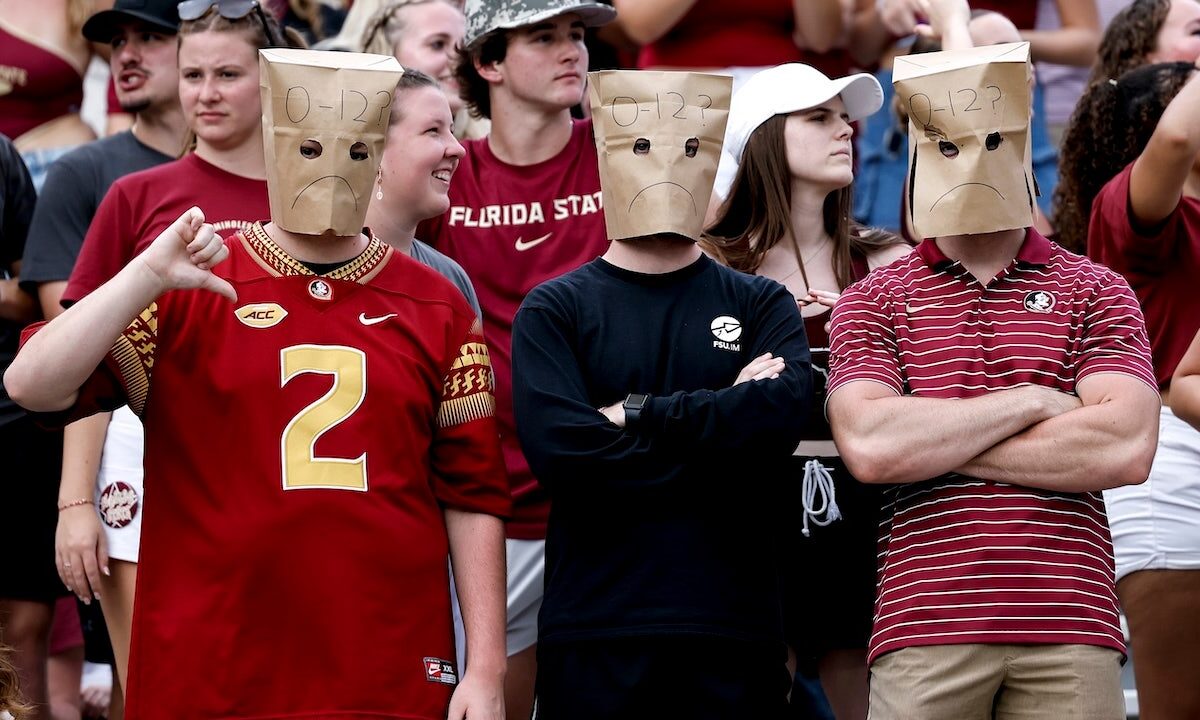
4. Florida State, 2024
Outcome: Entered the season inside the top 10, then fell to a 2-10 record and followed with a 5-7 campaign the next year.
Why it collapsed: Florida State’s slide combined turnover problems, injuries to key contributors and disruptive roster churn via the transfer portal. Coaching staff moves and adjustments failed to stabilize the team, turning a projected playoff contender into a program seeking answers.
-
5. Penn State, 2025
Outcome: After a promising 3-0 start, the Nittany Lions lost six straight and ultimately fired head coach James Franklin during the season amid mounting losses.
Why it collapsed: The run of close-game losses, unexpected upsets (including a defeat to winless UCLA), and late-season volatility turned what began as a title chase into a program crossroads. Administrators moved decisively when the season’s trajectory made recovery unlikely without leadership change.
Why top preseason rankings fail
Several recurring factors explain why preseason rankings often overstate a team’s prospects.
Roster changes: Graduation, NFL departures and the transfer portal can strip experience from key units. Even a top recruiting class rarely replaces seasoned starters immediately.
Coaching and schemes: New coordinators, schematic shifts or staff turnover can create growing pains. In some seasons, in-game decision-making becomes a decisive factor in close contests.
Injuries: Losing a starting quarterback or other impact players early in the year can force backups into extended roles and expose depth issues.
Recruiting hype vs. readiness: Highly ranked classes drive preseason optimism, but true team performance depends on cohesion and experience. As Fox News OutKick’s roundup notes, several of these disappointments involved teams whose recruiting or returning-star narratives outpaced on-field readiness.
Aftermath for coaches and programs
When top-ranked expectations fail, consequences are real and immediate. Coaches face contract scrutiny, booster pressure and, in some cases, job loss.
Examples from the list: Jimbo Fisher’s tenure at Texas A&M drew intensified debate after underperforming seasons; Mike Norvell at Florida State faced similar scrutiny as the program attempted to reset; and Penn State’s firing of James Franklin during the 2025 slide illustrates how administrations will act when a projected contender collapses.
Beyond coaching changes, missed bowl games and recruiting fallout can slow momentum for multiple seasons. Some programs rebound quickly with new leadership and strategic recruiting; others undertake longer rebuilds that require patience and institutional support.
Key takeaways
- Expectation risk: High preseason rankings increase scrutiny and shorten timelines for coaches.
- Value of depth: Depth and proven experience often matter more than a single recruiting class.
- Close games matter: Early upsets and tight losses can shift a season’s trajectory quickly.
FAQ
What happened with disappointing preseason top-10 college football teams?
Most collapses reflect a mix of roster turnover, coaching issues, injuries and a handful of damaging losses that undermine confidence and momentum.
Why does disappointing preseason top-10 college football teams matter?
Preseason rankings shape expectations, media narratives and recruiting. Collapses affect coaching security, program perception and recruiting momentum.
What happens next?
Programs typically reassess coaching staffs, roster construction and recruiting strategies. Outcomes range from quick recoveries to multi-year rebuilds depending on institutional responses and resources.
Source attribution: Fox News — The 5 most disappointing preseason top-10 college football teams of the 21st century