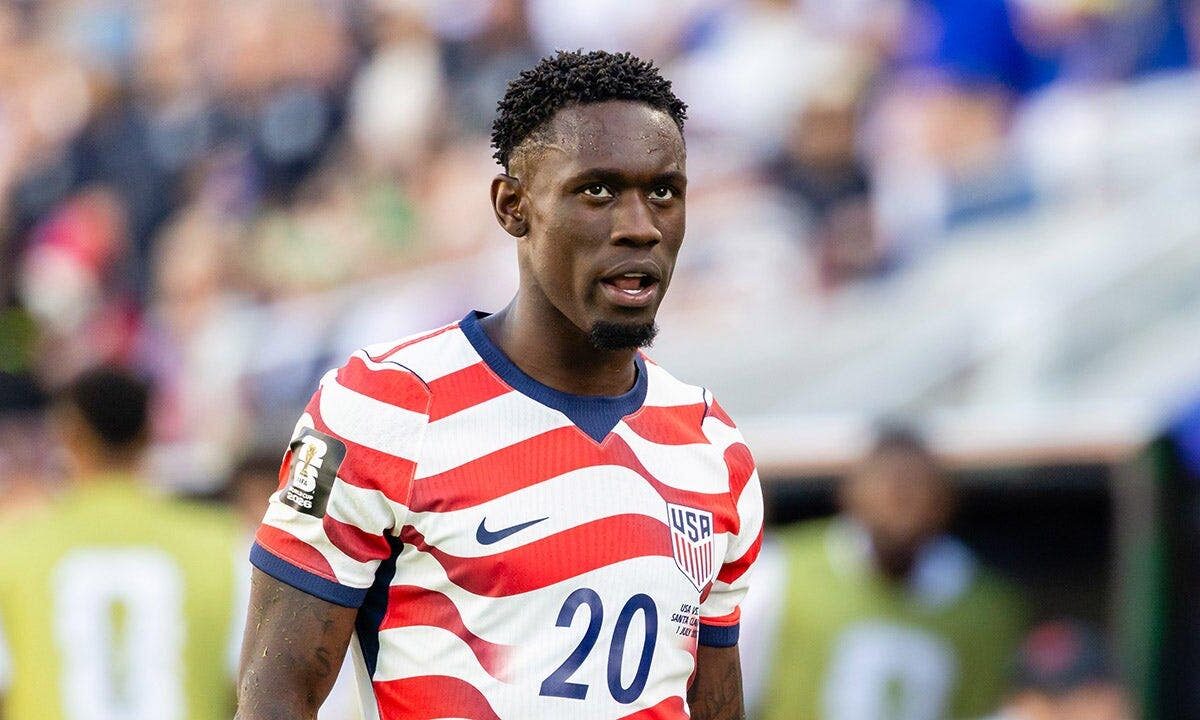
Folarin Balogun red card decisions have dominated reaction after the United States beat Bosnia & Herzegovina 2-0 to reach the World Cup round of 16. The sending-off followed a VAR recommendation that, critics say, relied on slow-motion angles rather than clear run-of-play evidence (source: Fox/OutKick).
The match finished 2-0, with Malik Tillman’s late free kick sealing the win and the U.S. advancing to the knockout stage (source: Fox/OutKick).
What happened: Folarin Balogun red card explained
Late in the match, Raphael Claus issued a straight red to Folarin Balogun after VAR prompted an on-field review. The referee changed the outcome following the VAR intervention, leaving the U.S. down to ten men for the match close and creating a suspension that carries into the round of 16 (source: Fox/OutKick).
Because the dismissal is a direct red, standard disciplinary procedures mean Balogun will likely miss at least the next match unless FIFA takes an unusual administrative action; teams do not normally overturn referee judgment calls through routine appeal channels (source: Fox/OutKick).
How VAR handled the tackle
Referee-analyst Andy Davies argued that the VAR recommendation relied heavily on slow-motion and still-frame angles, which he said should not be the primary trigger for a red-card review (analysis cited in Fox/OutKick).
VAR protocols, as commonly described, emphasize using angles that reflect the natural speed and context of the incident so that the review does not convert marginal or 50-50 challenges into red-card incidents when the on-field official did not observe a clear red at full speed. Critics say slow-motion can exaggerate perceived force or danger and therefore should be used cautiously as a clarifying tool rather than the trigger for escalation (source: Fox/OutKick).
Comparing calls: Messi incident and alleged double standards
Observers contrasted Balogun’s red with an earlier studs-up challenge involving Lionel Messi and Aissa Mandi that produced a free kick but no card or VAR review; that difference prompted an official complaint from Algeria about inconsistent officiating (reported in Fox/OutKick).
Players and pundits cited multiple examples across the tournament where similar contact did not lead to reviews, reinforcing a perception—whether fully warranted or not—of uneven application of VAR. Weston McKennie called the Balogun decision “questionable,” reflecting that shared sense of inconsistency (source: Fox/OutKick).
Appeal options and refereeing process
There is no routine route to successfully appeal subjective red cards issued after VAR reviews in World Cup play. FIFA can reopen disciplinary cases in exceptional or administrative-error circumstances, but overturning a judgment call is rare (source: Fox/OutKick).
The on-field referee, Raphael Claus, did not signal a sending-off before VAR intervened. Reports that Claus has been the subject of past inquiries should be treated as allegations unless supported by formal rulings or published findings; those earlier mentions do not prove misconduct in this match (source: Fox/OutKick).
What this means for the USMNT going forward
Practically, Balogun’s suspension forces the U.S. staff to adjust lineups and tactics for the round of 16. Losing a key striker in a single-elimination match alters substitution plans, formation choices and match management—factors that can be decisive in knockout soccer.
Politically and procedurally, the episode feeds public skepticism about VAR consistency and may increase pressure on FIFA and tournament VAR governance to clarify thresholds for review and to publish more transparent journals of VAR interventions. Greater transparency about which angles and replay speeds were used in a given recommendation could help rebuild trust.
Expert takeaway
Analysts emphasize two points: the first is technical—VAR should aim to replicate the on-field context, not let frame-by-frame replay alone determine severe sanctions. The second is institutional—clearer public communication from VAR overseers about why a review was initiated would reduce speculation and perceived double standards (source: Fox/OutKick).
FAQ
Can Balogun’s red card be appealed?
No routine appeal is likely to overturn a subjective referee judgment from a VAR-facilitated red; FIFA could act administratively in exceptional cases, but that is uncommon (source: Fox/OutKick).
Did VAR break protocol by using slow motion?
Experts like Andy Davies have argued the recommendation was driven by slow-motion and still frames and therefore conflicted with best-practice VAR principles; whether a formal breach occurred is for FIFA and VAR governance review (source: Fox/OutKick).
Will this decision affect USMNT in the next rounds?
Yes. The immediate competitive impact is the loss of Balogun for at least the next match, which forces roster and tactical adjustments. The USMNT’s broader tournament prospects depend on depth, matchup planning and in-game management in the knockout rounds.
Source: Fox News / OutKick