The claim: textbooks dull boys
The author of a recent opinion piece argues that contemporary social studies often reduce history to themes and abstractions — a problem he summarizes bluntly with the phrase “textbooks dull boys.” He cites the 1916 NEA Committee on Social Studies definition as a turning point that encouraged progressive-era curriculum designers to emphasize social analysis over punchy, character-driven episodes. In the author’s view, that long-running shift has left many classrooms short on the kind of vivid narratives that hook some learners.
To reconnect students — particularly boys who may respond strongly to action and moral choice — the author urges a return to “real American adventure stories” early in lessons. Framing history as moment-by-moment human decision-making, he suggests, creates an entry point for later critical discussion.
Real American adventure stories and boys
By “real American adventure stories,” the author means concise, dramatic retellings of true episodes that foreground choices, danger and consequences. Introducing a single gripping episode at the start of a unit can give boys a narrative hook that makes dates and themes meaningful. The technique is not a substitute for analysis; it is an engagement tool that can lead students into social studies material with more curiosity and attention.
Storytelling is widely used in teaching because narrative organizes information in memorable ways. The research linking storytelling to improved outcomes is mixed and context-dependent, but many educators report that well-chosen episodes increase short-term attention and recall. The author recommends pairing dramatic narratives with documents and activities so interest leads to evidence-based thinking.
Historical examples that pack a punch
The opinion piece uses three brief, classroom-ready episodes as examples. When sharing such vignettes, the author labels some details as narrative shorthand and attributes the scenes to the original sources or to his retelling.
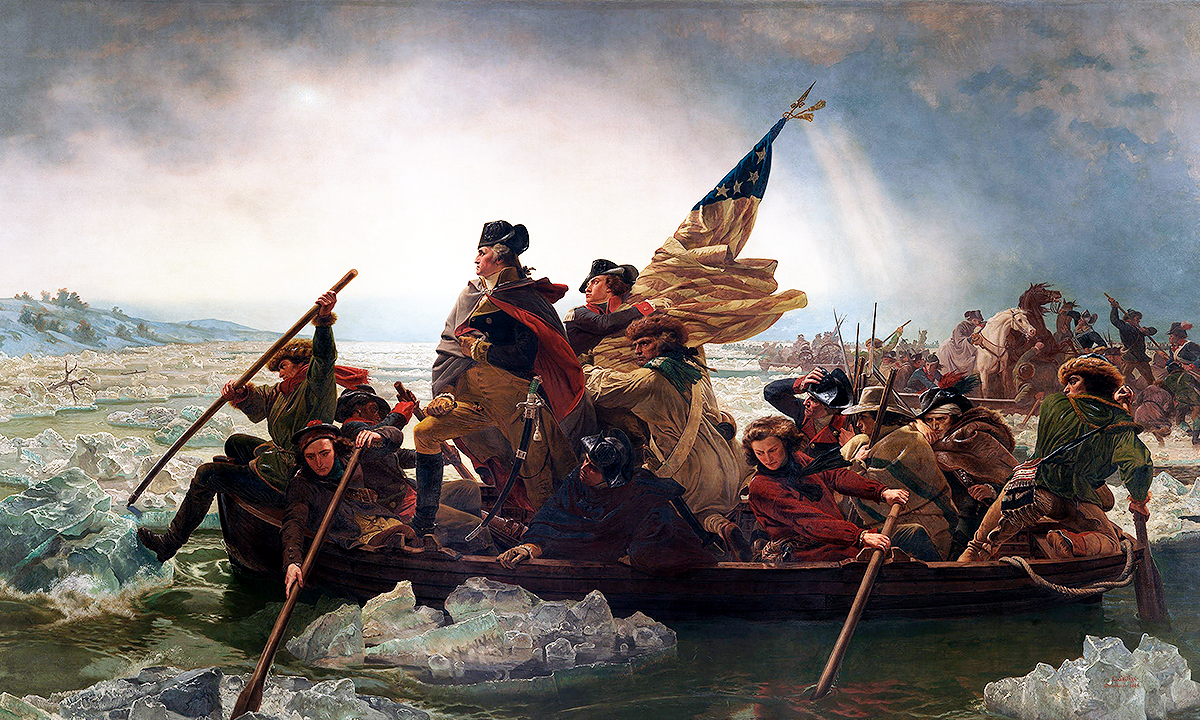
At the Battle of Monongahela (1755), the young George Washington is commonly reported to have had two horses shot from under him during the British defeat in the wilderness. The author notes this detail as a dramatic image that teachers can use to discuss leadership under pressure; he attributes the anecdote to the retelling in Frank Miniter’s Fox News opinion and to standard historical summaries rather than asserting an unverifiable single eyewitness text.
Thomas Edison’s boyhood story is another illustration. As recounted in the same Fox News piece, Edison was once called “addled” as a child and later sold newspapers on a train; an on-board experiment reportedly started a small fire, which led a stationmaster to mentor him in telegraphy. The author uses that chain of events — failure, mentorship, applied skill — to show how a compact narrative can introduce themes of invention and resilience while noting the anecdotal nature of such accounts.
For frontier drama, the author cites Davy Crockett. He presents the commonly repeated paraphrase, often rendered in popular histories as “You may all go to hell, and I will go to Texas,” as a memorable hook rather than a verbatim citation. That popular paraphrase and Crockett’s role at the Alamo are used to open discussions about westward expansion, political conviction and contested legacies; the author flags the paraphrase as a folkloric line rather than an exact primary-source quotation.
How parents and teachers can use these stories
Practical, low-effort steps can bring adventure stories into homes and classrooms without sacrificing critical thinking. The author suggests beginning small and building activities that marry drama and evidence.
- Start with one scene: Tell a two- to three-paragraph account of an episode before assigning analysis.
- Three quick follow-ups:
- Role-play a decision the protagonist faced (5–10 minutes).
- Map the episode to orient students geographically.
- Ask two evidence questions: What primary source would you want to see? What other perspective is missing?
- Use short primary excerpts: Let a diary line or newspaper blurb anchor the story in a source.
- Family extension: Parents can read a short chapter aloud, ask what choices a figure made, and suggest a hands-on project (build a simple telegraph, sketch a battlefield map, visit a local exhibit).
The author has compiled ready-to-use narratives in a book titled “Cool Heroes for Boys – 20 True Tales of Adventure” as a practical resource for parents and teachers who want prewritten episodes. He also encourages parental pushback where local curricula consistently omit dramatic episodes, recommending that parents request supplementary materials or volunteer to run a storytelling session.
Practical cautions
Reintroducing adventure must not become glorification. Teachers should avoid oversimplifying violence or erasing marginalized perspectives. Every dramatic vignette should be paired with contextual prompts: Who benefited and who was harmed? What sources disagree? How does a short story fit into broader social developments?
Finally, the author emphasizes that the argument is opinion-driven: the Fox News column presents interpretation and practical suggestions rather than a systematic empirical demonstration that storytelling alone will close achievement gaps. Educators should blend narrative engagement with active learning and assessment to measure impact in their own classrooms.
Conclusion
“Real American adventure stories” can be a pragmatic tool to spark interest in social studies, especially when used as an introduction to evidence-based discussion. With careful contextualization and respect for multiple viewpoints, brief, well-chosen narratives can make civic history feel immediate and worth investigating.
Source attribution
This article summarizes and responds to an opinion piece by Frank Miniter published on Fox News. Specific anecdotes about Washington, Edison and Crockett are presented as recounted in Miniter’s column and in common historical summaries; readers seeking the original framing can read Frank Miniter’s opinion at Fox News for full context.
Frank Miniter, Fox News — “Tell real American adventure stories to teach boys heroes”
Additional historical background references: 1916 NEA Committee on Social Studies definition (cited in the opinion) and standard histories of the Battle of Monongahela, Thomas Edison, and the Alamo for classroom source selection. Where specific anecdotes are used here, they are attributed to Miniter’s retellings and to widely circulated historical summaries, and are presented as illustrative rather than exhaustive documentation.