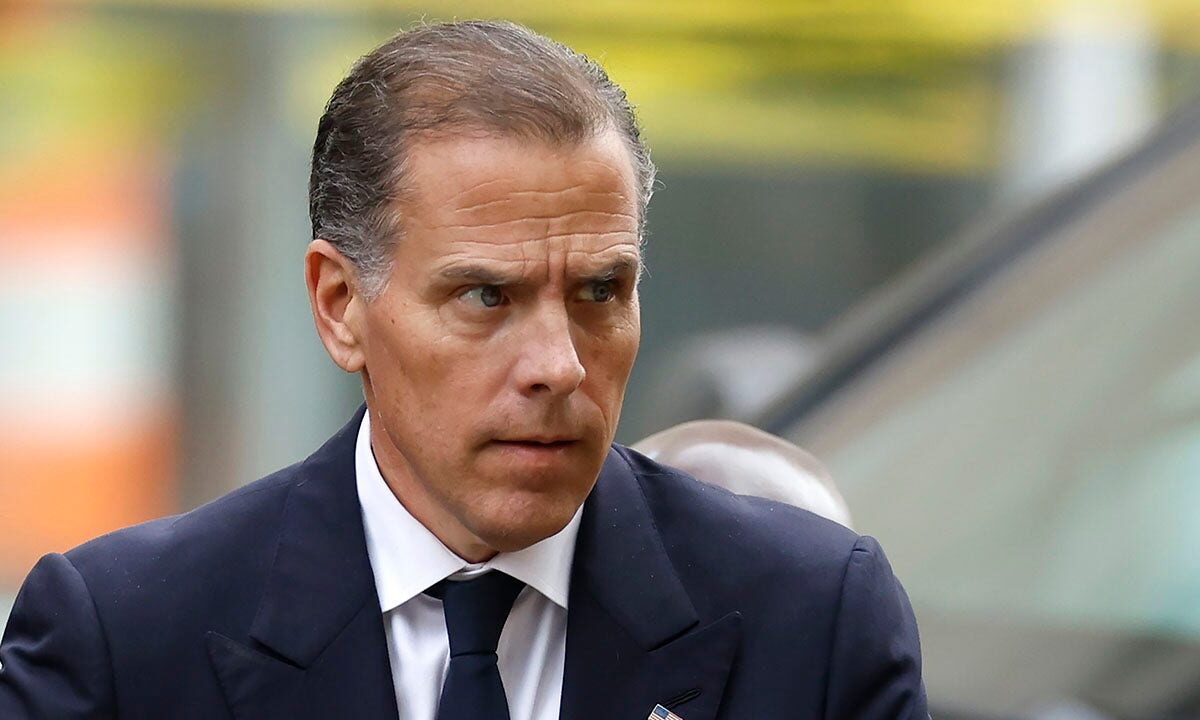
“My take is this… the single greatest mistake of my father’s administration was the leadership of Merrick Garland,” Hunter Biden said on the I’ve Had It podcast, sharply criticizing Attorney General Merrick Garland and the Department of Justice. The comment came during a wide-ranging interview with host Jennifer Welch that pressed Biden on prosecutorial choices and presidential pardons.
Quick summary
Hunter Biden told host Jennifer Welch that he believes Merrick Garland’s tenure as attorney general was the “greatest mistake” of President Biden’s administration. He argued the Justice Department under Garland showed restraint on certain high-profile matters, and he criticized charging choices that, in his view, treated different political figures unequally.
What Hunter Biden said about Merrick Garland
On the program, Hunter Biden faulted Garland’s leadership and said responsibility ultimately rests with President Joe Biden because the president appointed him. He described Garland as a “moderate” whose approach he saw as overly cautious and said that dynamic influenced how the DOJ weighed prosecutions.
Welch repeatedly pressed Biden on perceived discrepancies in enforcement, and Biden said the department “didn’t prosecute Trump,” framing that outcome as part of the broader critique. He used blunt language to express disappointment in decisions he viewed as failing to hold some actors to account in the same way others were treated.
The interview mixes first-person perspective and opinion. The statements are remarks from the podcast and are presented here as Biden’s views rather than independent findings or legal conclusions.
Allegations about Merrick Garland and DOJ handling
Biden characterized the Jan. 6 attack on the Capitol as a planned effort and suggested that prosecutors and leadership should have treated it as such. He argued that the Justice Department’s handling of both Jan. 6–related cases and investigations touching his family reflected a prosecutorial posture that prioritized restraint over aggressive pursuit.
Those comments include the claim that Garland “failed to prosecute Trump,” a characterization that reflects Biden’s interpretation of public events and prosecutorial choices. This article does not verify new facts about DOJ decision-making; it reports Biden’s assertions as expressed on the podcast.
The Department of Justice operates with charging discretion, and legal experts differ over when restraint or aggressive charging is appropriate. Some observers say restraint protects long-term institutional credibility; others argue that failing to pursue certain charges can deepen perceptions of unequal treatment. Those policy debates help explain why Biden’s remarks have drawn attention.
Pardon and legal context
Biden also referenced his own legal situation. Public records show President Joe Biden issued a pardon covering Hunter Biden for any offense he “has committed or may have committed” from Jan. 1, 2014, to Dec. 1, 2024, granted during the president’s final weeks in office. That pardon removes federal exposure for the covered period but does not adjudicate separate investigations or prosecutions involving other individuals.
The existence of a pardon for the interviewee does not, by itself, validate or invalidate claims about how the DOJ handled other matters. Reporting here limits itself to statements made on the podcast and to public records confirming the pardon; it does not create or confirm criminal allegations against third parties.
Political fallout and why it matters
Criticism of Merrick Garland from the president’s son is a political talking point likely to be seized by opponents and amplified in partisan media. It underscores how perceptions of Justice Department independence — whether accurate or not — shape public debate and electoral messaging.
Conservative commentators and some Republican officials have long argued the DOJ applied different standards to political allies and opponents; Democrats and some legal scholars counter that professional prosecutors are constrained by evidence and legal standards. Biden’s public rebuke adds a personal dimension to that ongoing national discussion.
For the White House, the remarks complicate efforts to present an image of impartial governance. For voters and policymakers, they highlight the continuing salience of questions about prosecutorial discretion, the limits of pardons, and how accountability is pursued in politically charged cases.
Background and what comes next
The podcast interview is part of a broader series of public conversations involving family members of elected officials that can shift media focus and political attention. Observers say follow-up coverage may include deeper looks at specific prosecutorial decisions, commentary from legal experts, and responses from DOJ officials or the White House.
At this stage, no new indictments or court filings are reported here; the episode stands as a public airing of grievances and perspectives that will likely be referenced in future political debates, editorial coverage and commentary about the Justice Department’s role in politically sensitive matters.
Source attribution
This story is based on the interview and reporting from Fox News. Source: Fox News.