The IRGC ambush Piranshahr is reported to have killed six Peshmerga near the village of Qizqapan on Wednesday night, the Democratic Party of Iranian Kurdistan (PDKI) told Fox News Digital. Iranian state media, citing the Islamic Revolutionary Guard Corps (IRGC) and reported by Reuters, said the Guards killed five alleged militants after they entered Iranian territory.
The clash marks a fresh escalation in a week of violence across Iran’s Kurdish-majority west, where Kurdish fighters and Iranian security forces have traded deadly incidents. Accounts of the encounter differ sharply; Reuters and PDKI provide differing casualty totals, and independent on-the-ground verification was not available at publication.
IRGC ambush Piranshahr: What happened near Piranshahr
PDKI’s U.S. representative, Hejar Berenji, told Fox News Digital the incident occurred Wednesday night in Qizqapan, a village near Piranshahr in West Azerbaijan Province. Berenji described the event as an ambush by a “large and heavily equipped IRGC force” against a PDKI unit on a political and organizational mission.
Iran’s Revolutionary Guards, speaking to state media and cited by Reuters, said they intercepted and killed five members of what they called a banned opposition group after the fighters crossed into Iranian territory in mountainous border areas near Piranshahr. Reuters reported the IRGC statement but noted it could not independently verify the casualty figures.
Casualties and identified fighters
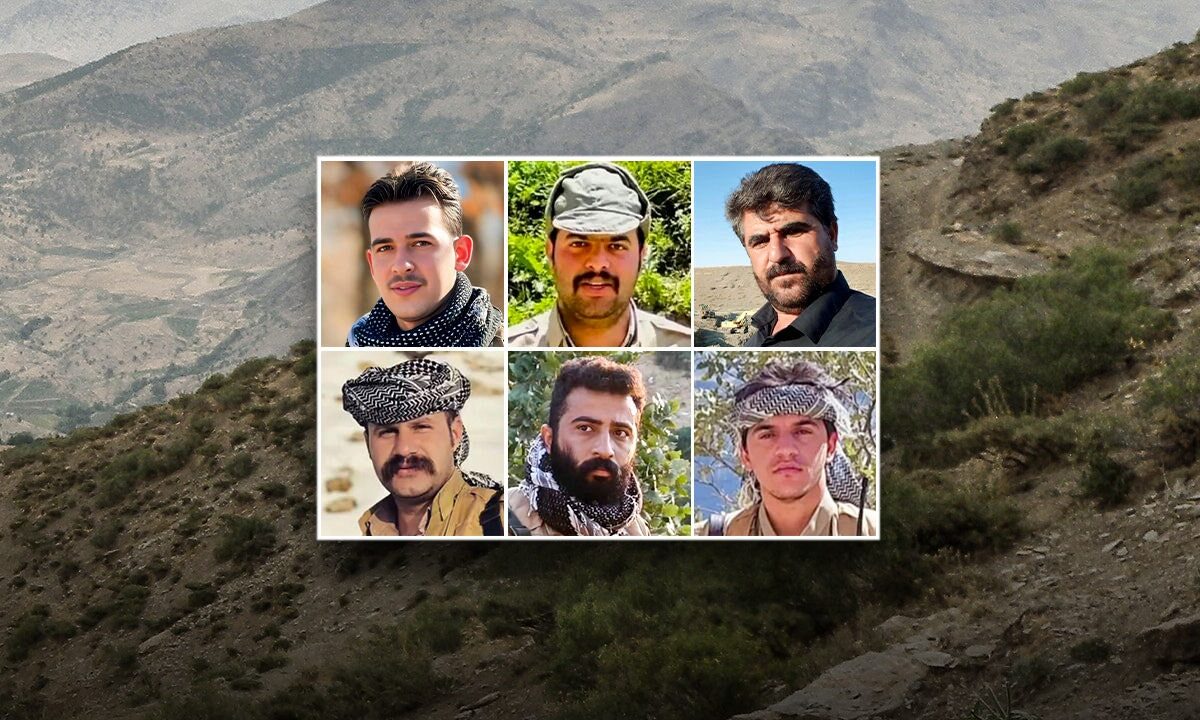
The PDKI identified six Peshmerga killed in the clash. Those named by Berenji are:
- Karo Hormuziari
- Fardin Changizi
- Mohammad Khaki
- Abdullah Mohammadpour
- Twana Osmani
- Mohammad Amin Bayezidi
PDKI and Kurdish representatives say six fighters were killed. The IRGC’s statement, as carried by state media and reported by Reuters, put the number at five. Those differing totals have not been independently confirmed; the only corroborating external report for the IRGC count is Reuters’ account of the state media statement, while the PDKI list of names comes from the party’s representatives to Fox News Digital.
Conflicting accounts and claims
Both sides present sharply different narratives. The PDKI described the incident to Fox News Digital as an unprovoked ambush on a unit engaged in noncombat political work. Berenji framed the event within a broader pattern of what he described as Iranian repression against Kurdish communities.
The IRGC said the group was intercepted after entering Iranian territory, portraying the operation as a defensive action against militants. Reuters carried the IRGC statement citing state media; that reporting provides Tehran’s version but did not independently verify the exact casualty list provided by PDKI.
Observers caution the two versions cannot be reconciled without independent on-the-ground verification. Fox News Digital has reached out to Iran’s mission to the United Nations for comment.
Regional context and recent clashes
The incident comes amid a wider uptick in violence across western and northwestern Iran. Majeed Gly, president of the American Kurdish Committee, told Fox News Digital the recent clashes “are operations” and “seem to be deep inside,” and said the region has seen more than 850 attacks since February; that estimate is attributable to Gly.
Human rights group Hengaw separately reported a recent attack in Kermanshah Province in which two IRGC members were killed and two were wounded; that incident was claimed by a newly formed Kurdish armed group, Hengaw said. Such reporting contributes to a pattern of multiple, localized claims and counterclaims across the Kurdish-populated border areas.
Analysts say the incidents reflect both long-standing Kurdish grievances inside Iran and a recent perception among some Kurdish groups that Tehran’s control has weakened. Those views, voiced by Kurdish representatives, emphasize years of alleged repression, executions and crackdowns that have driven cycles of insurgency and counterinsurgency.
What comes next
Expect continued exchanges of accusations and competing casualty tallies in the near term. If violence persists or intensifies, it could complicate diplomatic efforts and raise tensions with neighboring Iraq, where many Kurdish opposition networks maintain bases or political offices.
U.S. and regional officials have in the past discussed Kurdish groups as potential pressure points against Tehran, but such dynamics are fluid and dependent on outside backing and local calculations. For now, the immediate trajectory will hinge on whether either side escalates operations or pursues restraint.
Background and broader implications
The PDKI is one of Iran’s oldest Kurdish opposition movements and has been involved in decades of intermittent conflict with Tehran. Iranian authorities long have labeled armed Kurdish factions as separatist or terrorist threats; Kurdish groups and human rights advocates describe a history of targeted repression by the state.
Recent clashes have prompted international attention because of the potential for wider instability along Iran’s western borders and the possibility of spillover into Kurdish-populated areas of Iraq and Turkey. Analysts warn that continued tit-for-tat attacks risk further civilian harm and regional friction.
FAQ
Who are PDKI and the Peshmerga?
The Democratic Party of Iranian Kurdistan, or PDKI, is a long-standing Kurdish opposition party; “Peshmerga” is a term commonly used for Kurdish fighters. The PDKI has a history of armed and political activity against the Iranian state and is viewed by Tehran as an opposition force.
What do Iranian and Kurdish sources say about the clash?
PDKI representatives told Fox News Digital that six Peshmerga were killed in an IRGC ambush near Qizqapan on Wednesday night. Iranian state media, citing the IRGC and reported by Reuters, said five members of an opposition group were killed after entering Iranian territory. Both accounts are presented as competing claims; independent verification of the casualty list is not available.
Could this spread into wider cross-border fighting?
While officials and analysts warn that further escalation could inflame tensions along Iran’s borders, external backing and local decision-making will shape outcomes. Past cycles show the risk of spillover exists, but direct cross-border war is not an automatic result of isolated clashes.
Source: Reporting by Fox News Digital. Original article: Fox News – Six Kurdish fighters killed in IRGC ambush as clashes spread across western Iran. Additional reporting referenced: Reuters and Hengaw statements as noted in the text.