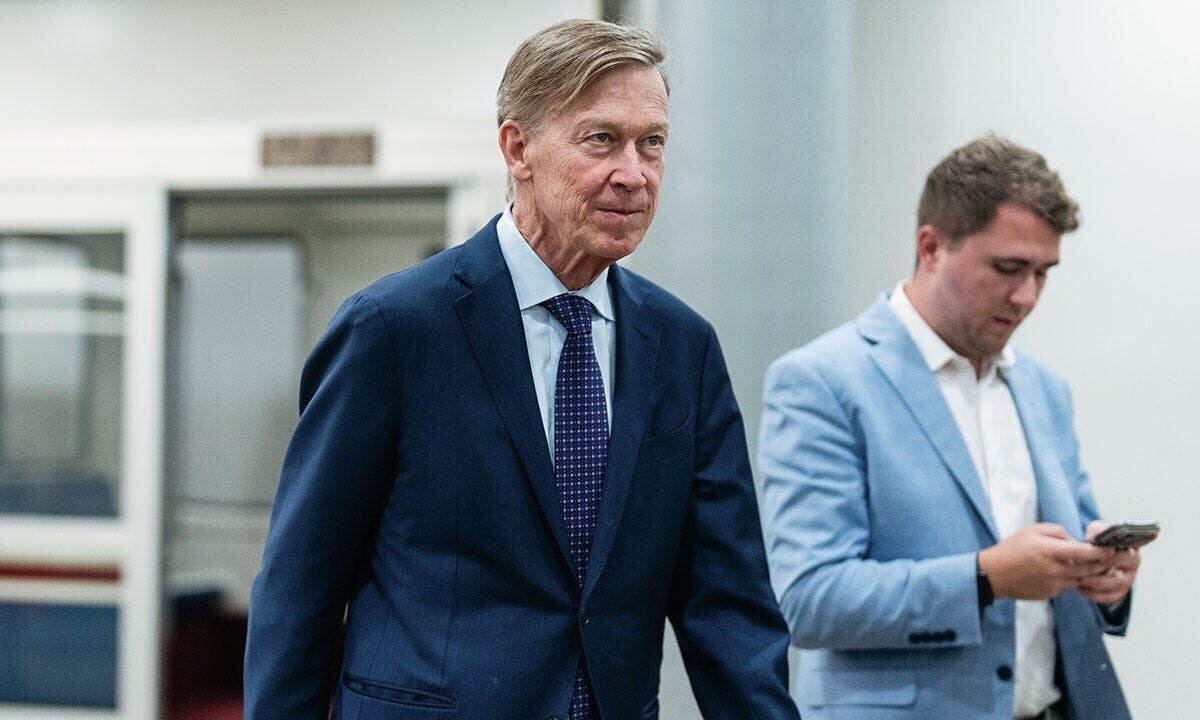
John Hickenlooper defeated state Sen. Julie Gonzales in Colorado’s Democratic primary Tuesday and will advance to face Republican Mark Baisley in the November general election. “This will be my final Senate campaign,” Hickenlooper said, framing his win as a vote for experience and pragmatic governance (Fox News).
The result is being read as a notable hold for moderates in a state where progressive activists had hoped to expand their influence. Observers say the outcome underscores local dynamics in Denver and other population centers that favored Hickenlooper’s long-running name recognition and centrist appeal (Fox News).
John Hickenlooper wins Democratic primary in Colorado
John Hickenlooper, the former Denver mayor and two-term Colorado governor, clinched the Democratic nomination over Julie Gonzales, who ran as part of the progressive wave challenging established Democrats (Fox News). Hickenlooper emphasized steady leadership and a track record governing Colorado when he addressed supporters after the result (Fox News).
Gonzales centered her campaign on sharper opposition to Republican priorities and criticized Hickenlooper’s moderate positions, including votes and stances she argued were insufficiently robust against Republican nominees and national GOP policy aims (Fox News). Despite energized progressive turnout in pockets of the state, those forces were not enough to overcome Hickenlooper’s broad statewide recognition on primary night (Fox News).
Why Hickenlooper held off the progressive challenge
Hickenlooper’s victory reflects several structural advantages for a moderate incumbent-style candidate in Colorado. His multi-decade profile—mayor of Denver and two-term governor—created familiarity with suburban and mountain-area voters who often decide midterm contests (Fox News).
Campaign strategy also played a role. Hickenlooper framed the contest around experience and pragmatic problem-solving, a message that resonated with independent voters and Democrats wary of sharp ideological shifts. Party strategists noted his ability to position himself as a steady steward of Colorado priorities rather than a lightning-rod partisan (Fox News).
Conversely, Gonzales energized progressives with calls for a more aggressive stance against Republican policies, but organizers faced the usual hurdles of fundraising, name recognition outside core districts, and converting activist energy into wider primary turnout (Fox News). Local voting patterns in Denver and other population centers favored the centrist message on the ballot (Fox News).
What this means for the November matchup with Mark Baisley
With the Democratic nomination settled, Hickenlooper will face Mark Baisley, the Colorado state senator who secured the GOP nomination, in November’s general election (Fox News). That pairing sets up a conventional battleground contest: Hickenlooper’s broad name recognition and record of statewide governance versus Baisley’s conservative résumé and messaging from the Colorado GOP (Fox News).
For Democrats, keeping Hickenlooper on the ticket preserves a candidate who can appeal to suburban swing voters and independents in a competitive state. For Republicans, Baisley’s path will likely focus on nationalizing the race and mobilizing conservative turnout in exurban and rural counties (Fox News).
Analysts say the general election will be fought over turnout patterns, suburban swings, and how both campaigns pitch issues like the economy, public safety and local concerns in Denver and other population centers (Fox News).
Progressive momentum and local reactions
The defeat of Gonzales is interpreted by many as a pause in the recent progressive surge that produced primary wins elsewhere this cycle. While progressive groups point to organizational gains and stronger issue messaging, Colorado’s primary shows those gains can be uneven and highly dependent on local coalitions and campaign resources (Fox News).
Local reaction was split. Progressive activists described the result as a reminder of the logistical and fundraising challenges in displacing established figures. Meanwhile, moderate Democrats and party officials framed the outcome as evidence that a centrist, experience-focused message can still prevail in closely contested states like Colorado (Fox News).
National observers will watch whether progressives recalibrate strategy toward building broader statewide infrastructures capable of sustaining primary challenges in future cycles (Fox News).
Quick facts and next steps
- Primary result: Sen. John Hickenlooper defeated state Sen. Julie Gonzales in the Democratic primary (Fox News).
- Next major date: The general election is set for November 2026; Hickenlooper will face Republican Mark Baisley (Fox News).
- Who remains on the ballot: John Hickenlooper (D) and Mark Baisley (R) are poised to contest the fall race (Fox News).
Campaigns now shift to a longer general-election calendar focused on fundraising, targeted advertising, and voter outreach across Colorado’s suburban and mountain communities (Fox News).
Source: Fox News (reporting on the Colorado Democratic primary).
FAQ
What happened with John Hickenlooper?
Hickenlooper beat progressive state Sen. Julie Gonzales in the Democratic primary and will advance to the November general election against Republican Mark Baisley (Fox News).
Why does John Hickenlooper matter?
As a former Denver mayor and two-term Colorado governor, Hickenlooper brings statewide recognition and a moderate record that appeals to swing voters in a competitive state like Colorado (Fox News).
What happens next?
The campaign now shifts to the November 2026 general election, where Hickenlooper and Mark Baisley will compete over turnout, messaging and fundraising in key Colorado districts (Fox News).