A federal judge on Thursday issued a preliminary injunction blocking the Philadelphia mask ban federal officers sought to impose, preventing the city from enforcing several new rules against federal agents. U.S. District Judge Chad Kenney’s order pauses enforcement of provisions in Bill No. 260060 that would have limited masks, concealed identification and use of unmarked vehicles by officers interacting with the public.
The Justice Department sued last month, arguing the measure was unconstitutional as applied to federal personnel; the department said the ordinance interfered with federal law-enforcement functions. Kenney’s order, which takes effect immediately, found the city could not directly regulate federal operations under the Constitution’s Supremacy Clause and granted the Justice Department the preliminary relief it sought.
Philadelphia mask ban federal officers
Kenney’s injunction focuses on the constitutional boundary between sovereign federal authority and municipal regulation. In his written opinion the judge said the city’s effort to limit how federal agents present themselves in public amounted to an effort to “sidestep the Constitution’s clear mandate,” calling direct municipal regulation of federal operations “blatantly impermissible.” Those phrases echo arguments the Justice Department offered in its complaint, which said the ordinance would obstruct federal enforcement duties.
What the ordinance would have done
Bill No. 260060 was approved by Philadelphia City Council earlier this year and became law after Mayor Cherelle Parker allowed it to take effect without signing it. The measure applied to state, local and federal officers and included several notable rules aimed at how officers identify themselves and operate in the field.
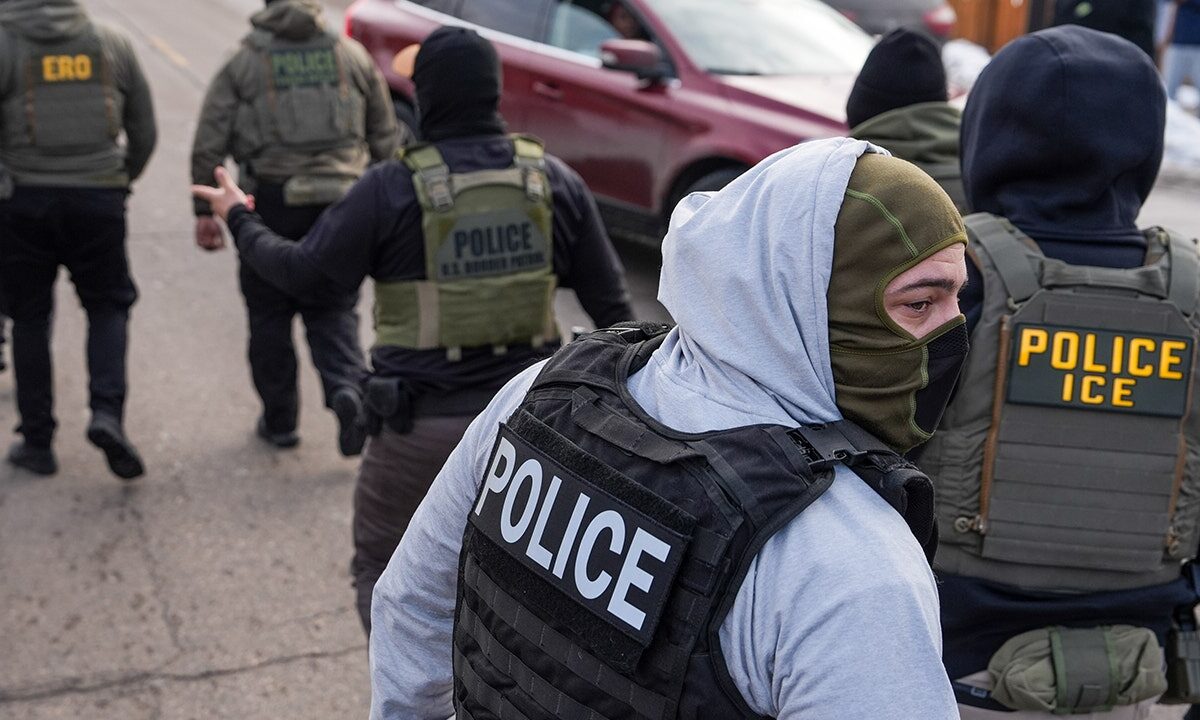
The ordinance would have prohibited covered officers from wearing masks or other coverings that conceal identity while engaging with the public, subject to enumerated exceptions for medical masks, religious coverings, necessary tactical equipment and hazardous conditions. It also required officers to display visible badges and, in many situations, use marked vehicles rather than unmarked ones. Violations were subject to civil and criminal penalties under the local law.
Justice Department case and legal reasoning
The Justice Department sued, arguing the Philadelphia law was a direct and unconstitutional attempt to regulate federal agents’ conduct. DOJ lawyers told the court that permitting cities to control how federal officers conceal their identities or whether they use marked vehicles would allow municipalities to interfere with federal operations and impede law-enforcement objectives.
In granting the preliminary injunction, Judge Kenney applied the familiar standards for urgent relief, finding that the Justice Department demonstrated a likelihood of success on the merits and that federal operations could suffer irreparable harm if the law were allowed to be enforced against federal officers. The judge relied on the Supremacy Clause, saying federal prerogatives cannot be displaced by conflicting local law. His reasoning tracked precedents in which courts have barred states and cities from enacting rules that meaningfully constrain federal law enforcement.
The ruling comes against a backdrop of other legal challenges. The Justice Department has successfully challenged comparable local and state restrictions in recent cases, including measures in Virginia and California, and has filed suit challenging a similar New Jersey ordinance. DOJ officials have framed those efforts as necessary to preserve the ability of federal agencies, including immigration enforcement teams, to carry out operations safely and effectively.
Local officials and reaction
Mayor Cherelle Parker, a Democrat, declined to sign the ordinance as it passed City Council, saying the city solicitor’s office had flagged serious legal concerns. City Council voted to approve Bill No. 260060, after which the measure became law under municipal rules when the mayor allowed it to take effect without her signature.
Supporters in City Council described the ordinance as a response to federal immigration-enforcement tactics and as an attempt to enhance public accountability when officers interact with residents. Critics, including the Justice Department, said the law imperiled federal missions and could hinder agencies such as ICE from conducting certain operations. Kenney’s opinion specifically referenced the mayor’s reluctance to sign the bill, noting her remarks and the solicitor’s advice as part of the local record.
The Justice Department issued a statement praising the court’s ruling and said it would continue to challenge laws that, in its view, obstruct federal enforcement and endanger officers and public safety. Reuters contributed reporting on the litigation and local reaction; Fox News reported the court’s decision and published the DOJ comments cited here.
What comes next and wider implications
The injunction is preliminary, meaning the legal fight is likely to continue. Philadelphia may seek to defend the ordinance and press the case in district court, and either side could appeal Kenney’s order to the U.S. Court of Appeals for the circuit that covers the Eastern District of Pennsylvania. The Justice Department can ask an appeals court to fast-track review or to stay any effort to apply the law to federal officers while litigation proceeds.
Beyond Philadelphia, the decision reinforces a pattern in which federal courts have pushed back on municipal and state efforts to constrain how federal officers dress, identify themselves or use certain vehicles and equipment. For federal immigration enforcement and other agencies that sometimes rely on unmarked vehicles or operational anonymity for officer safety or investigatory purposes, the ruling preserves those options at least while courts consider the underlying constitutional questions.
Practically, the injunction leaves the city’s rules in place for state and local officers unless separate litigation or orders alter that status. It also signals that other jurisdictions considering similar ordinances could face swift federal challenges and that courts are likely to weigh Supremacy Clause principles heavily in those contests.
For the court’s order and the Justice Department’s public statement as reported, see the Fox News report: Judge blocks Philadelphia law targeting masked federal officers, and the Justice Department press releases page at justice.gov/opa/pr. District court filings and the full order are available through the federal court docket for the Eastern District of Pennsylvania and PACER at pacer.uscourts.gov. Reuters contributed reporting.
Source attribution: Reporting from Fox News; Reuters contributed.