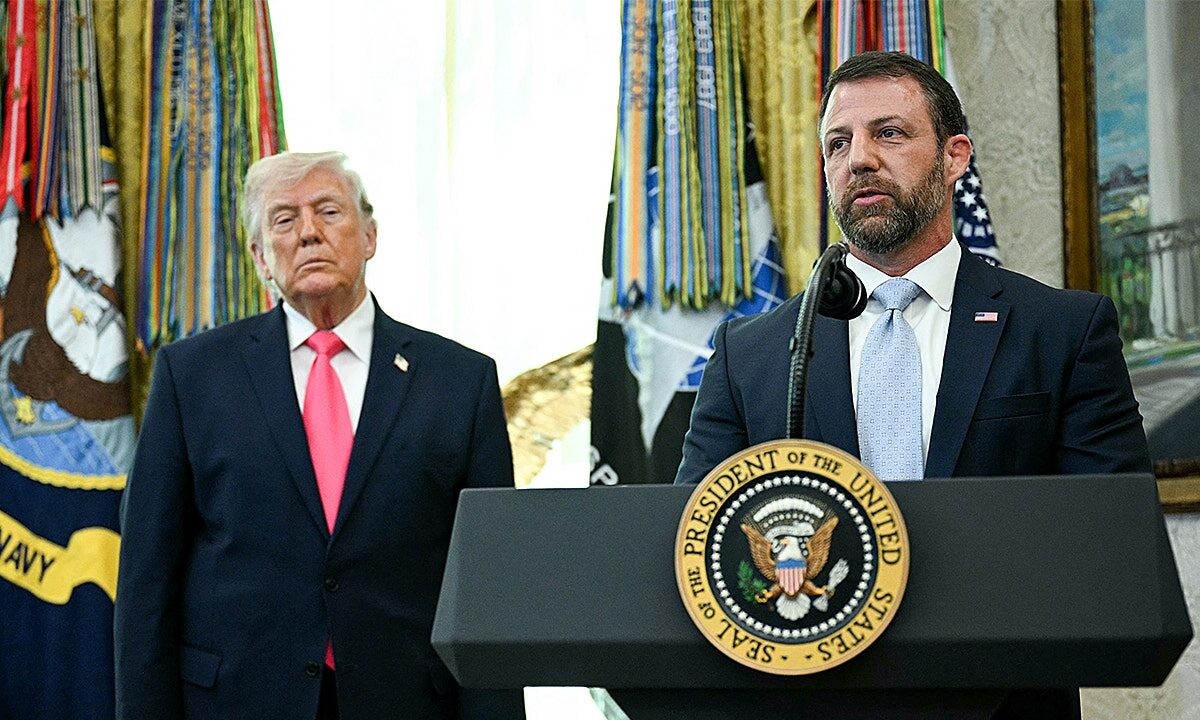
“How shameful is that?” Homeland Security Secretary Markwayne Mullin said Friday after criticizing ABC and NBC for declining to carry President Donald Trump’s primetime election-security address on their broadcast feeds. Mullin accused the networks of withholding material Americans deserved to hear as the administration released previously classified intelligence.
“Why wouldn’t they want to inform the American people?” Mullin asked, arguing the choice prevented over-the-air viewers from seeing what he described as an important national security briefing. His comments came during a public appearance and were first reported by Fox News.
Mullin blasts ABC NBC: what he said
Mullin repeatedly framed the networks’ editorial decisions as an abdication of their public-information role. “ABC and NBC not carrying that,” he said, suggesting the networks had chosen to limit coverage of the address rather than present the administration’s material in full.
He pressed lawmakers and media executives to explain the editorial choices. “Why are they calling themselves a news outlet if they’re not actually trying to put the news out there?” Mullin asked, urging congressional oversight and legislative remedies he said would ensure broader access in the future.
Which networks aired the speech
Coverage varied across outlets. Fox News carried the address in full on its cable channel. CBS broadcast part of the remarks before cutting away. CNN did not carry the speech live on its linear cable channel, according to reporting.
ABC and NBC did not carry the address on their over-the-air broadcast feeds, though both made the speech available on streaming platforms and branded online channels. A streaming outlet referenced in reporting as “MS NOW” aired part of the remarks before cutting away, the report said.
The net effect left some viewers relying on local broadcast signals without access to the full primetime address unless they switched to cable or an online stream. Network decisions reflected a mix of programming judgment, verification concerns and corporate editorial policy, as companies balance audience reach with news-gathering responsibilities.
Trump’s claims and the SAVE America Act
President Trump used the address to announce the release of previously classified intelligence and to allege foreign efforts to obtain American voter data. He framed the materials as evidence of vulnerabilities in parts of the nation’s voting systems and argued that disclosure was necessary for transparency.
During the address, the president urged Congress to pass the SAVE America Act, a proposal described by administration officials as imposing federal voter-identification and proof-of-citizenship requirements. Supporters say the measure would strengthen election security; critics argue it could restrict access and raise constitutional and administrative questions.
Those assertions were presented as the president’s claims in the speech; independent verification is pending. Journalists and outside analysts are reviewing the declassified materials and related intelligence assessments to determine how they bear on the president’s allegations.
Media access, FCC limits and legal reality
Both the president and Mullin suggested regulatory consequences for networks that chose not to show the address live. The president went as far as to say, “Fraud like this should mean a revocation of their licenses,” language echoed by some allies who argue for sanctions when networks limit coverage of major presidential statements.
Legal experts caution, however, that the Federal Communications Commission licenses individual broadcast stations rather than national networks. That distinction means any enforcement or license-revocation path would typically proceed station by station, involve administrative hearings and be subject to judicial review.
Station-level licensing, ownership rules and First Amendment protections create procedural and legal obstacles to an immediate, nationwide revocation of a network feed. Any FCC action would likely be drawn out, require substantial evidentiary records and could trigger extensive litigation before any change in broadcast authority could occur.
What comes next and likely reactions
Expect a political push from sympathetic lawmakers for congressional hearings and letters demanding explanations from network executives about the editorial choices. Mullin and other Republicans have signaled they will press committees to examine whether networks fulfilled their duties to provide public access to presidential statements.
Networks that declined to carry the address are likely to defend their decisions on editorial and verification grounds, pointing to the need to assess claims based on declassified materials before presenting them unfiltered on broadcast. Independent verification of the intelligence claims will be central to how the issue is judged by policymakers, regulators and the public.
Observers say the dispute will play out across legal, journalistic and political arenas: potential congressional inquiries, continued media scrutiny of the declassified documents, and public debate over whether lawmakers should change broadcast regulations or pursue other remedies.
Background and broader stakes
The clash highlights enduring tensions about media gatekeeping and the role of broadcast outlets in making presidential statements available to the broadest audience. Supporters of full broadcast coverage say the public benefits when a president addresses national security and election integrity on network television; critics counter that networks must weigh editorial responsibility and verification before amplifying specific claims.
How the facts in the newly released documents hold up under independent review will shape whether the matter escalates into formal oversight or legislative action, or remains a partisan media dispute.
FAQ
Why didn’t ABC and NBC air the speech on broadcast?
Both networks chose not to carry the address on their over-the-air broadcast feeds but made it available on streaming platforms. Networks cited editorial judgment and verification concerns; companies have issued public statements explaining their decisions in varying detail.
Can the FCC revoke a network’s license over coverage choices?
The FCC licenses individual local stations rather than national networks, so revoking a national network’s ability to broadcast nationwide is not a simple or immediate step. Any enforcement action would likely involve station-level reviews, administrative procedures and potential court challenges.
What is the SAVE America Act and what would it change?
The SAVE America Act, as cited by the president, would push for federal voter-identification and proof-of-citizenship requirements. The bill’s provisions would be debated in Congress; supporters say it would bolster election security while opponents warn of access and constitutional concerns.
Source: Fox News – DHS chief Markwayne Mullin blasts ABC, NBC over ‘shameful’ decision to skip Trump election speech.