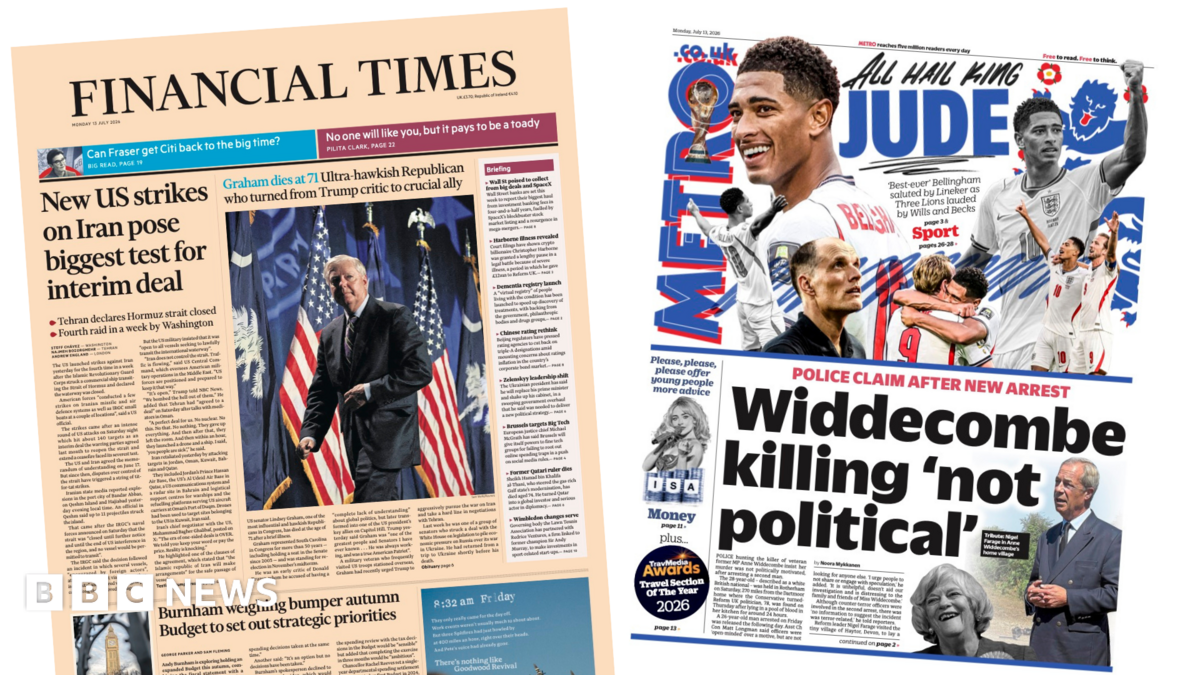
The front pages in Monday’s newspapers lead on two national stories: speculation about a Burnham ‘bumper Budget’ and fresh reporting on the Ann Widdecombe murder. The BBC’s roundup of the papers (13 July 2026) brings both headlines together and is the primary source for this summary.
The papers’ accounts are being reported as press-led coverage rather than confirmed official announcements; where the BBC attributes a detail to a specific paper or briefing, that attribution is noted in the text below. Readers should treat press descriptions as provisional until ministers or police make formal statements.
Burnham ‘bumper Budget’ details
According to the BBC’s papers summary, several national titles lead with the notion of a so-called Burnham “bumper Budget”. The phrase, as used in the press, signals a fiscal package described by commentators and briefers in articles collated by the BBC — not a formal Treasury release.
Papers discuss the possibility that the package could include larger-than-expected spending announcements, one-off measures or targeted interventions aimed at easing cost pressures and stimulating local growth. Reported elements in newspaper coverage include potential increases in funding for public services, discretionary investment pots, or time-limited reliefs; the BBC notes these as the kinds of measures papers are suggesting rather than confirmed commitments.
The press framing implies the package would be more expansive than routine adjustments, with some articles emphasising its potential political and economic impact. The BBC’s roundup highlights that the “bumper” label comes from editorial interpretation of briefings and commentary; it is not presented by the BBC as an official description from a government department.
Officials typically confirm fiscal plans via Treasury statements, Chancellor remarks or published Budget documents. As the BBC coverage makes clear, readers should look for those formal announcements for authoritative detail on spending figures, timing and the legal or administrative mechanics of any measures the papers mention.
Widdecombe murder: what the papers report
Separately, several front pages carry early reporting on the murder of Ann Widdecombe. The BBC’s papers roundup records that some newspapers describe the case as “not political”; the roundup emphasises this is how certain papers have chosen to characterise the developing story, not a forensic finding from investigators.
Papers report that police have identified and questioned a suspect, and that early coverage in the press refers to an apparent absence of a political motive. The BBC summary cautions that descriptions of motive or intent remain unverified at this stage and should be treated as press reporting rather than confirmed investigative conclusions.
The BBC’s coverage underscores that police statements, custody records or Crown Prosecution Service decisions are the authoritative sources on suspect identity, evidence and any determination of motive. Newspaper wording reflects editorial decisions made during early reporting rather than final legal findings.
Given the sensitivity of criminal investigations, the BBC notes standard cautions: press descriptions of motive or suspect background are provisional until investigators publish evidence or prosecutors charge an individual. The papers’ headline characterisation of “not political” should therefore be read as a report of how editors have presented the story to readers rather than as an independent confirmation.
What this means and what to watch next
Both storylines are likely to develop through official channels over the day. For the Budget angle, watch for Treasury briefings, statements from finance ministers or an officially published Budget document; those will provide the verified details, timescales and legal bases for any measures the papers describe.
On the Widdecombe case, expect formal police updates, potential custody and charging records, and — if relevant — Crown Prosecution Service announcements. These primary sources will clarify whether there is evidence of motive, how the suspect is being dealt with legally, and whether the case will proceed to court.
Newsrooms will typically follow up with more forensic reporting once official material is published. The BBC’s papers roundup is useful for tracking what the press is leading with, but it is not a substitute for Treasury or police communications. Readers should prioritise statements from those authorities for confirmed facts.
Next steps
Expect three immediate milestones: an official budget clarification from Treasury or ministers if the fiscal story has substance; police briefings or CPS filings on the Widdecombe investigation; and expanded coverage from national outlets as primary documents or press conferences become available. The BBC article that summarised these front pages remains the central source for the examples cited here.
Source and attribution
This article summarises the BBC News roundup of Monday’s papers (13 July 2026). For the original BBC coverage, see: The Papers: Burnham’s ‘bumper Budget’ and Widdecombe murder ‘not political’ — BBC News. All descriptions in this piece that reference specific headlines or characterisations are attributed to the BBC’s roundup or to the newspapers cited within that roundup.
What to watch next: follow official Treasury channels for Budget confirmation and police/CPS statements for updates on the Widdecombe investigation. Rely on those primary sources for verified facts rather than early press descriptions.