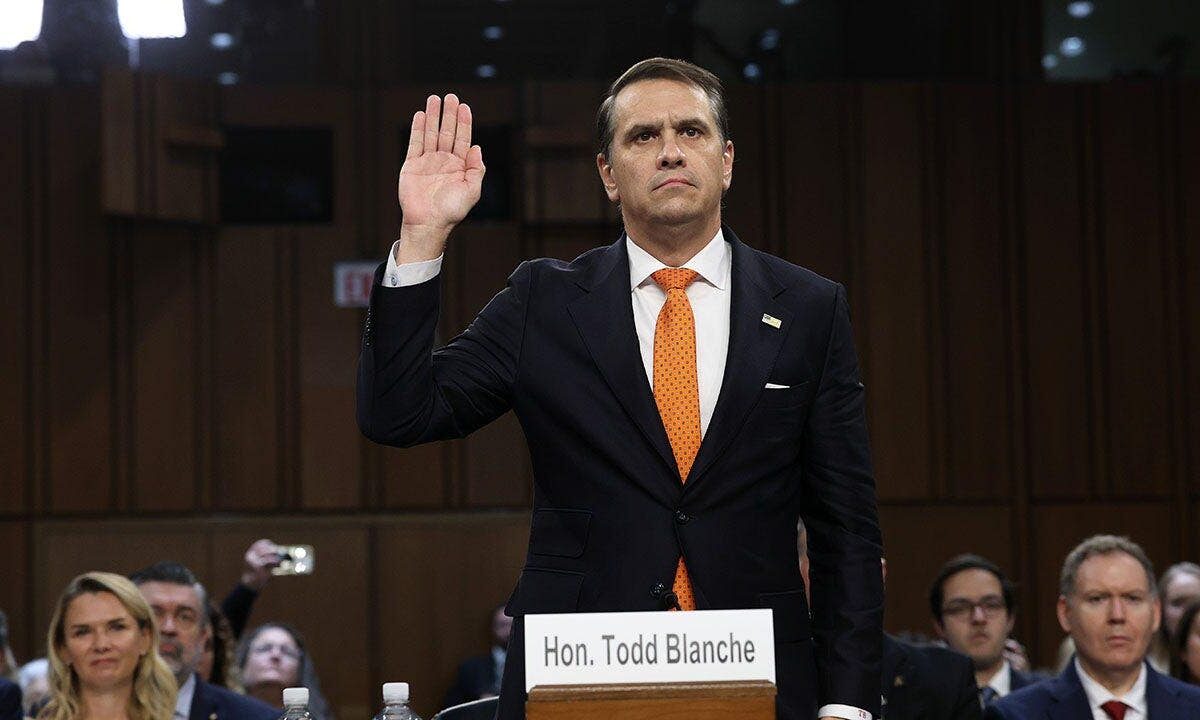
Acting Attorney General Todd Blanche, the Trump AG pick, faced a second straight day of Senate questioning as committee Republicans signaled they are not ready to endorse his confirmation. Lawmakers pressed Blanche on the Department of Justice’s independence, the handling of millions of Epstein-related documents and the status of a nearly $1.8 billion anti-weaponization settlement.
Why key GOP senators are not committing to Trump AG pick
Two Senate Republicans on the Judiciary Committee—Sens. Thom Tillis of North Carolina and John Cornyn of Texas—told colleagues they remain undecided. Both described outstanding questions rather than flat opposition, but their hesitation means Blanche lacks a clear pathway to an easy committee recommendation.
Cornyn said he needed more information before making a decision. “The hearing is not even halfway done. And so, you know, I don’t have to make a decision now, so I’m not,” he said, signaling he would reserve judgment as the process unfolded.
Tillis focused much of his questioning on the anti-weaponization settlement and whether the administration intended to rely on the fund. He said Blanche’s answers left him unsure the settlement’s future was settled, and he pressed for legislative clarity before committing to a vote.
The nearly $1.8 billion anti-weaponization fund
Senators spent significant time on a settlement created under an IRS agreement that resulted in a fund approaching $1.8 billion. Blanche told the committee the settlement remains “enforceable,” but he also said it was not actively moving forward under current DOJ actions.
That mixed message worried some Republicans. Cornyn and Tillis pressed Blanche on the fund’s origins and whether the administration or the department intended to activate or rely on it. Blanche said he would work with lawmakers on legislation if needed, but that pledge did not remove all doubts about the settlement’s ultimate status.
Lawmakers on both sides noted the broader stakes: how the settlement is treated could affect claims tied to alleged government “weaponization” of authorities and shape public confidence in outcomes tied to high-profile probes.
Epstein Files and DOJ oversight questions
Democrats pressed Blanche on the department’s handling of millions of documents connected to Jeffrey Epstein, focusing on survivors’ access and broader transparency. That line of questioning aimed to test Blanche’s views on accountability and whether he would prioritize disclosure where appropriate.
Sen. Dick Durbin raised concerns about Blanche’s prior work representing President Trump, arguing that past private representation could create perceptions of partiality. Other Democrats emphasized the need for robust protections to prevent political interference in prosecutorial decisions.
Blanche repeatedly pointed to his prosecutorial background and experience in senior DOJ roles as a basis for his commitment to independence, but skeptics said they needed firmer, written assurances or policy commitments before they could support confirmation.
Near-term vote scenarios and what to watch
The committee has not announced a firm markup or floor schedule. Several outcomes remain possible: the panel could advance Blanche with a narrow or split vote, delay action pending written follow-ups, or decline to report the nomination favorably if enough senators withhold support.
Key dynamics to watch:
- Cornyn and Tillis: If either moves to oppose, the committee path narrows sharply.
- Follow-up requests: Written answers or additional documents could be required before any markup.
- Party margins: A few defections or absences could change the committee calculus and floor prospects.
Possible near-term timeline (contingent and not scheduled):
- Immediate: senators request written follow-ups or additional documents in the days after the hearing.
- Short term: the committee could set a markup in the coming week or two if questions are answered.
- Medium term: a floor vote would depend on committee action and Senate leaders’ priorities; timing remains uncertain.
If Blanche secures the committee’s recommendation, floor consideration would follow the Senate’s calendar. If the committee stalls or reports unfavorably, the nomination could face further delay or negotiation.
Why it matters
The choice of attorney general shapes DOJ priorities, guidance for prosecutors, appeals positions and how the department handles high-profile investigations. Lawmakers said the hearing was as much about assessing Blanche’s legal views as it was about testing whether he would maintain the department’s institutional independence.
For the public, the hearing underscored how confirmation fights can influence perceptions of impartiality and the long-term direction of justice policy.
Background and political context
Blanche has served in senior Justice Department roles and represented President Trump in private practice. Supporters point to that experience as qualifying; critics say his ties to the president raise conflict concerns. The nomination arrives amid heightened scrutiny of the Justice Department’s role in politically charged matters.
FAQ
Will Todd Blanche be confirmed as attorney general?
There is no certainty. Two key Republican senators on the committee have not committed to supporting him and have requested more information. The committee’s vote and any eventual floor outcome will hinge on whether those outstanding concerns are resolved.
What is the $1.8 billion anti-weaponization fund and is it moving forward?
The fund resulted from a settlement tied to an IRS agreement and is intended to address claims of government “weaponization.” Blanche said the settlement is enforceable but not currently moving forward; senators pressed for clearer, binding commitments about its future.
How did senators question Blanche about the Epstein Files?
Lawmakers asked about the DOJ’s release and handling of millions of documents related to Jeffrey Epstein, focusing on survivor access, transparency and whether the department would take further action. Democrats used that questioning to probe Blanche’s approach to accountability.
Source: Fox News — https://www.foxnews.com/politics/trump-ag-pick-hangs-thread-key-gop-senators-refuse-commit
Next steps: senators may request written responses, schedule follow-up questioning, or set a committee markup once outstanding issues are addressed. Committee leaders control the timing of any markup.