The Tyler Robinson hearing in Utah opened with a recorded interview of Lance Twiggs that prosecutors say underscores key admissions and links to physical evidence.
In the video, Twiggs — a former roommate and intimate partner of the accused — told investigators that Robinson “wishes he hadn’t done it,” according to testimony played in court. Prosecutors relied on that recording alongside messages and exhibits as they outlined what they say supports moving the case toward trial.
What prosecutors showed: quick evidence summary
Courtroom testimony and exhibits introduced during the hearing included the following, as described by prosecutors and reported from the transcript:
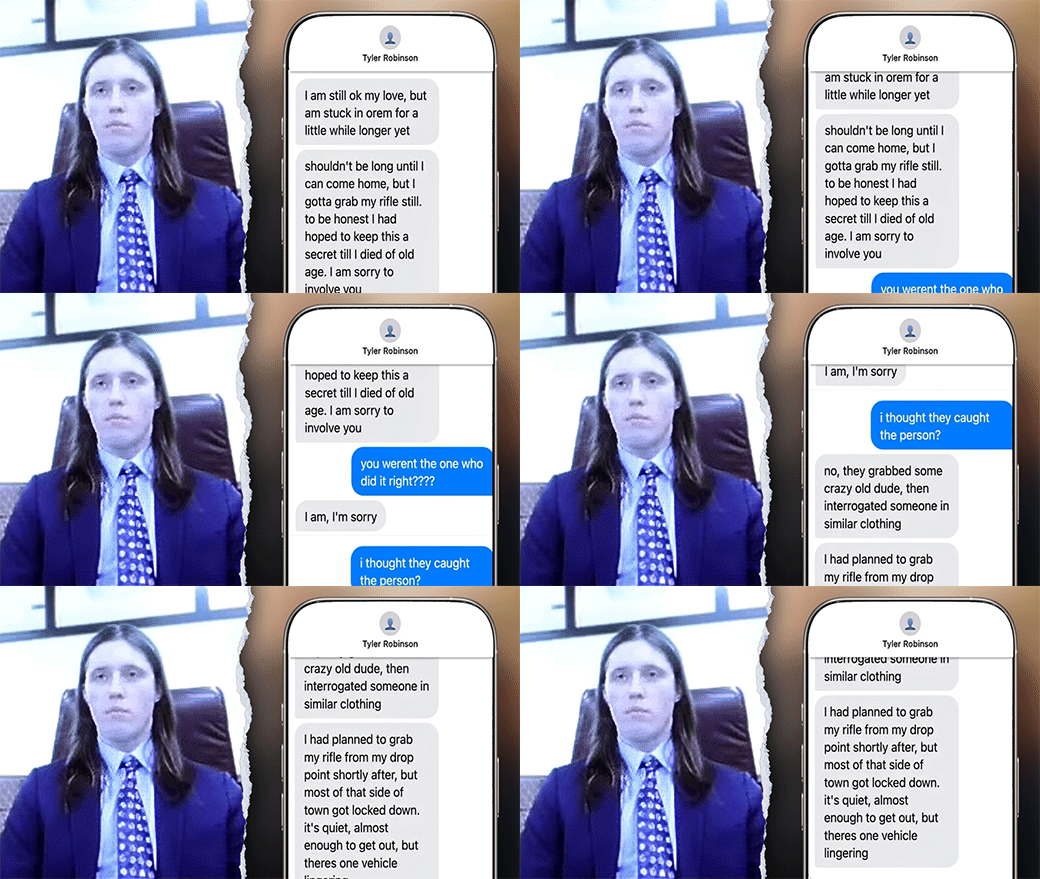
- Text messages prosecutors say contain an alleged admission and a direction to Twiggs about a note hidden under a keyboard.
- A full-page handwritten note shown in court but barred from being photographed by the judge; prosecutors read passages into the record.
- Cartridges and a spent casing recovered from the suspected weapon that prosecutors say bear engraved messages.
- References to a Dremel tool in the weeks before the shooting and testimony that the tool may have been used to engrave bullets.
Prosecutors characterized these items as corroborating elements of their case. Defense attorneys sought redactions and the judge limited what could be publicly shown or photographed during the preliminary hearing.
Tyler Robinson hearing: key Twiggs interview moments
The recorded interview was a focal point of the fourth day of the preliminary hearing. Twiggs, who is cooperating and has not been charged, told investigators he spoke in person with Robinson about comments Robinson allegedly made the night before the killing.
In the recording Twiggs said he asked Robinson whether what he had said was true, and that Robinson “started crying a little bit and said he wishes he hadn’t done it.” Prosecutors read that line into the record during their presentation.
Twiggs also described conversations about a Dremel tool and engraving bullets, saying Robinson asked if they had the tool because he wanted to “create messages on bullets,” according to the transcript played in court and reported by Fox News. Prosecutors told the court they recovered casings and cartridges with engravings consistent with that claim.
Identification and witness detail
Twiggs told investigators he identified the person in an FBI wanted poster as looking like Robinson, but he qualified that identification on the recording. He said camera quality made a definitive match difficult and limited his certainty to items like shoes and sunglasses.
The recording was played rather than Twiggs testifying in person. Prosecutors said Twiggs had been briefly placed under FBI protection and has since left the state.
Timeline of Sept. 10 and related movements
Prosecutors used Twiggs’ statements to sketch movements around Sept. 10, the day of the Utah Valley University shooting. Key timeline points presented in court included:
- Twiggs said Robinson left early that morning, telling others he had a “long drive to work.”
- Twiggs said he woke up around noon or 1 p.m. that day; that timing was noted in court testimony and drew audible reactions from family members in the gallery.
- Prosecutors said Robinson remained in the area until after midnight on Sept. 11, based on witness accounts and investigative records introduced at the hearing.
Next legal steps and potential penalties
Judge Tony Graf Jr. indicated he would not make an immediate probable-cause ruling at the close of the current preliminary hearing. Instead, both sides were allowed to file briefs addressing the legal issues raised by the evidence and by the judge’s in-court rulings.
Oral arguments are scheduled for Sept. 1, when the judge will hear those briefs before deciding whether there is enough probable cause to send the case to trial. If the judge finds probable cause, the accused — who has not yet entered a plea — could be bound over for trial.
The prosecution has said the defendant could face the death penalty if convicted on the charges now being considered at the preliminary stage.
Short analysis: what the evidence aims to show
Prosecutors appear to be using the Twiggs interview to connect alleged admissions, contemporaneous text messages and physical items associated with the suspected weapon. The handwritten note and the claimed engravings are presented as indicators of alleged intent and planning, while text-message evidence is used to tie timing and state of mind to the days before the shooting.
Defense counsel has pushed for redactions and contested how evidence is presented at the preliminary hearing, prompting the judge to delay a decision until after briefing and oral argument. That procedural pause is common in complex cases where both sides contest admissibility and scope.
Background
The hearing is a preliminary step to determine whether the case should proceed to trial. Twiggs’ recorded statements were played as part of a broader prosecution effort to establish links between the accused and the Utah Valley University shooting; the court limited public display and photography of some exhibits during the session.
Source attribution
This report relies on court testimony and exhibits described in Fox News’ coverage of the hearing and on the transcript excerpts played in court. For full coverage and the courtroom transcript references cited here, see the Fox News account linked below.
FAQ
What did Lance Twiggs say in the interview?
Twiggs told investigators that Robinson “wishes he hadn’t done it,” according to the recording played in court. He also described conversations about engraving bullets, saying Robinson wanted to “create messages on bullets,” per the transcript reported by Fox News. Twiggs qualified an on-record identification from an FBI poster because of camera quality issues.
What physical evidence did prosecutors display?
Prosecutors presented text messages they say include an alleged admission, read passages from a full-page handwritten note (which the judge barred from public photography), and showed cartridges and a spent casing they say were engraved. They also referenced the earlier discussion of a Dremel tool that could have been used to make engravings.
When is the next court date and what will happen then?
Both sides will file briefs addressing legal challenges and evidentiary issues. Oral arguments on those briefs are set for Sept. 1, at which point Judge Tony Graf Jr. will decide whether there is probable cause to bind the case over for trial.