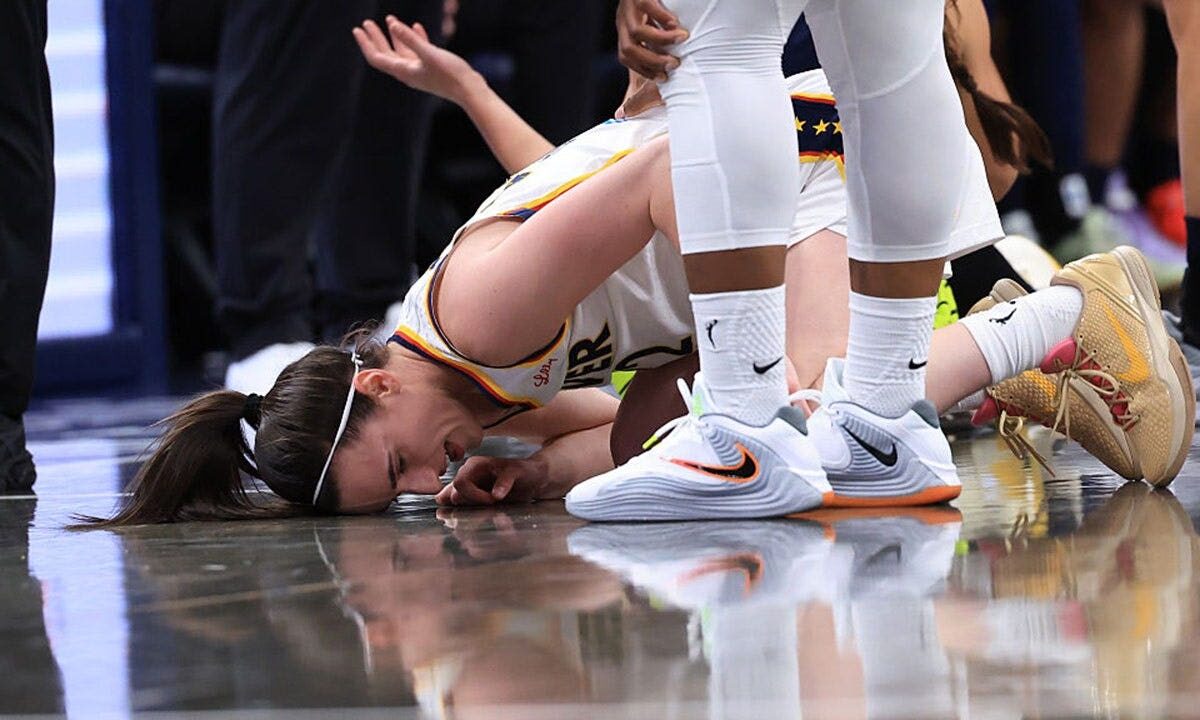
A late-night CNN panel and several high-profile player comments have renewed attention on Caitlin Clark and why she draws intense reactions inside the WNBA and beyond. The broadcast included a direct objection from host Cari Champion, and the exchange framed a wider debate about privilege, marketing and the media’s role in shaping star athletes.
CNN debate and key quotes — Caitlin Clark
The CNN panel moment that pushed this story back into public view featured host Cari Champion saying, “To suggest that it is intentional or that people are being racist towards her leaves out a long history of women who have supported this league and started this league who were Black. It’s very disrespectful to them.” Champion’s line has been widely quoted and set the tone for subsequent discussion.
The opinion piece driving much of the reaction was written by Bobby Burack for Fox News/OutKick; it argued Clark’s high profile and choices about public advocacy have complicated perceptions inside the league. That piece is interpretive and contains contested claims that require independent verification.
Why Caitlin Clark draws strong reactions
At the center of the dispute is the question of why Clark, a high-profile White rookie guard, has attracted both intense fandom and a subset of pointed criticism. Some critics frame the reaction as rooted in race and image: they say Clark benefits from a marketing advantage that is not equally available to all players. Supporters of Clark say her on-court performance, timing and media attention explain her profile.
Neither explanation alone accounts for the full debate. Media interest, endorsement markets and fan behavior intersect with long-standing conversations about race, gender and representation in sports, making simple conclusions difficult.
Players on privilege and marketing
Several players and commentators have raised the idea of marketing privilege. Cameron Brink has said in interviews that there can be “a privilege for the younger White players of the league,” noting that appearance and marketability sometimes factor into promotion. Paige Bueckers has also referenced the WNBA’s Black pioneers, saying the league was “built on a lot of Black women” and arguing for attention to equitable coaching and promotional pathways.
Those remarks are often cited to suggest some resentment stems from perceived disparities in endorsements and visibility. At the same time, many players emphasize professional respect for Clark’s play even as they raise concerns about unequal opportunities for other players.
Arguments about race, media coverage and counterpoints
Commentators such as Jemele Hill and Bomani Jones have weighed in on how public expectations differ by race, arguing that White public figures are increasingly expected to demonstrate active anti-racist stances rather than simply avoid overt racism. Academic voices that explore racial dynamics in public life — including work by Ibram X. Kendi and others — are often referenced in these broader conversations.
Counterarguments stress that multiple factors drive Clark’s prominence: her scoring, style of play and the coincidence of timing with growing interest in the WNBA. Some critics of the race-based framing say portraying Clark solely as a beneficiary of racial privilege risks oversimplifying both her choices and structural issues in sports marketing.
What this may mean for the WNBA
The debate has implications for league image, fan growth and player equity. Observers worry that visible factionalism could affect efforts to broaden the WNBA’s audience. Others see the moment as an incentive for the league and sponsors to review how visibility, endorsement access and coaching pipelines are allocated.
Public commentary has included specific demographic claims — for example, a widely circulated 70% figure describing the share of WNBA players who are Black or LGBTQ+ — but that percentage is not confirmed here. Reporters and readers should verify such statistics with official WNBA or league diversity reports rather than repeating contested numbers as fact.
Caitlin Clark’s stance in context
Clark has largely emphasized basketball in public statements and has not positioned herself as a leading activist on race or LGBTQ+ issues. Commentators differ on whether that choice should be read as neutrality, a personal boundary, or a missed opportunity for leadership. Many observers note that athletes choose varied ways to engage with social causes and that public expectations are not uniform.
How the league, media and sponsors respond to varied player approaches will shape future debates over representation and responsibility in professional sports.
Source attribution and context
This analysis draws heavily on an opinion column by Bobby Burack published on Fox News/OutKick and on public remarks made on a CNN panel where Cari Champion spoke directly to the issue. Several player interviews and public statements — including comments attributed to Cameron Brink and Paige Bueckers — have contributed to the discussion. Commentary from media figures such as Jemele Hill and Bomani Jones has informed the broader cultural framing.
Readers and editors should treat interpretive and contested claims cautiously: verify demographic statistics with official WNBA sources, corroborate any allegation of physical hostility or assault before reporting it as fact, and consult primary interviews, league statements and independent reportage when possible.
References
- Bobby Burack, “Here is the real reason why they hate Caitlin Clark so much,” Fox News / OutKick. https://www.foxnews.com/outkick-sports/real-reason-why-they-hate-caitlin-clark-bobby-burack
- CNN panel segment featuring host Cari Champion (broadcast commentary; search CNN archives for the July 2026 panel segment referenced in coverage).
- WNBA official site for demographic and league information: https://www.wnba.com
- Public player interviews and social posts by Cameron Brink and Paige Bueckers (various outlets and platforms; consult original interviews for exact wording).
- Commentary and analysis by Jemele Hill and Bomani Jones on race, public expectation and athletes (various outlets).
Editors’ note: This piece synthesizes opinion and reported remarks. It avoids repeating unverified numeric claims as fact and flags allegations that require independent corroboration. Verify direct quotes and demographic statistics with primary sources before republication.
Frequently asked questions
Did WNBA players say they hate Caitlin Clark?
Some coverage frames strong reactions from certain players as hostility, but there is no verified, league-wide or unanimous statement that players “hate” Clark. Remarks vary by individual and context.
Is race a factor in Clark’s popularity and media attention?
Commentators disagree. Some point to race and image as factors in marketability; others emphasize performance, timing and media dynamics. The issue is complex and requires verification of endorsement and demographic data.
How has Caitlin Clark responded to calls for activism?
Clark has primarily presented herself as a basketball player rather than a public activist. Whether that choice should be judged positively or negatively is a matter of public debate and personal perspective.