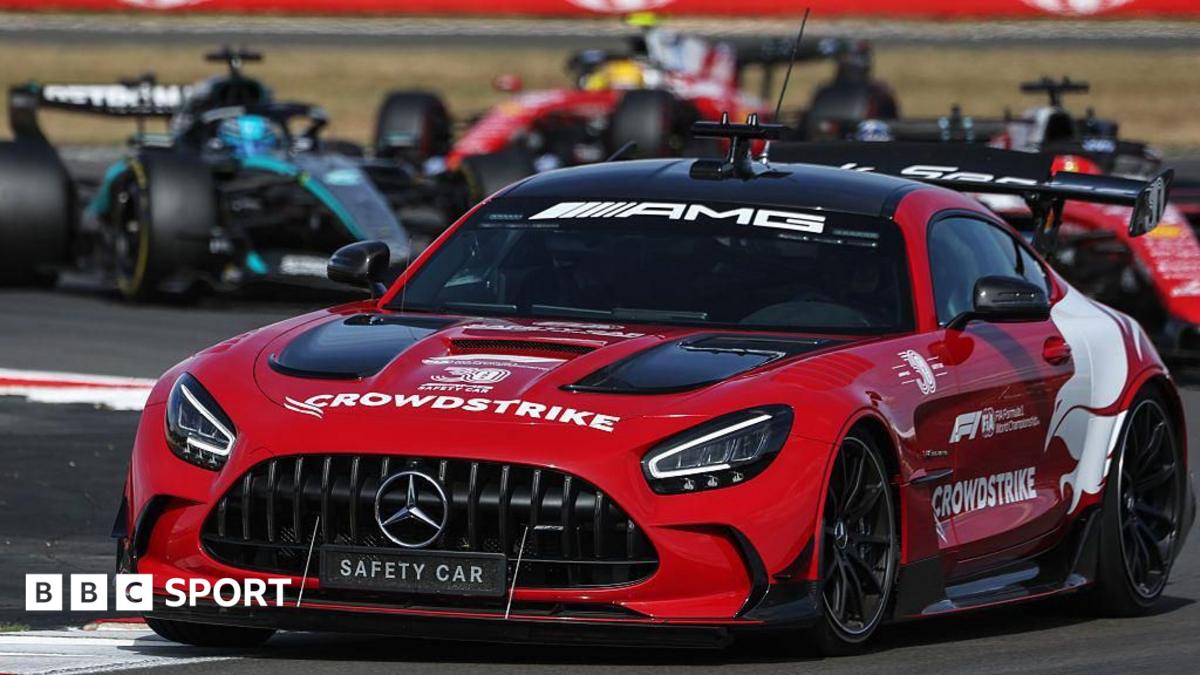
The British Grand Prix safety-car finish at Silverstone is the focus of a reader Q&A by BBC Sport’s Andrew Benson. His answers set out why the race ended under the safety car and why that outcome remains a matter for debate rather than settled fact.
In short: Benson frames the idea that Formula 1 “missed a trick” as a claim from readers and commentators, not as proven wrongdoing by race control. The Q&A explains the rule framework and the operational constraints that shaped the late-race decision.
Quick summary: British Grand Prix safety-car finish
The key takeaway from Andrew Benson’s Q&A is that the finish under the safety car at Silverstone resulted from how race control applied the regulations and from unavoidable timing and safety constraints. Benson emphasises that while fans can reasonably debate whether a different approach was possible, the explanation offered in the Q&A is grounded in the rules and the race director’s duties.
What the Q&A says about the British Grand Prix safety-car finish
In the Q&A, Andrew Benson goes through reader questions one by one, paraphrasing concerns and offering his reading of the situation. Many readers asked why the race could not return to green-flag racing; Benson answers that those hopes are understandable but that the sequence of events often leaves little safe opportunity for a restart.
Benson notes readers who argue there were missed opportunities, but he repeatedly stresses that stronger claims must be tied to evidence of a rules breach or misapplication. Throughout, the Q&A treats the “missed trick” idea as a viewpoint rather than a concluded finding about race control.
How the rules affected the finish
Formula 1’s sporting regulations give the race director authority over safety-car deployments, the treatment of lapped cars and the timing of restarts. Those procedures are designed first and foremost around safety: marshals, recovery crews and trackside responders must be able to clear incidents without undue risk.
When an incident occurs near the end of a race, the available time to clear debris, return vehicles to safe locations and allow lapped cars to unlap themselves can be minimal. Benson’s Q&A explains that applying the lapped-car procedure or waiting for a fully safe restart can add laps or delay the finish, and race control may judge that keeping the safety car on is the safer, procedurally correct option.
Different viewpoints and the main claim that F1 “missed trick”
One headline claim emerging in the Q&A is that F1 “missed a trick” by not engineering a late restart or by handling the safety-car period differently. Benson presents this chiefly as a reader argument and balances it with the counterpoint that operational realities and the rulebook constrain race control’s choices.
Supporters of the “missed trick” view emphasise fans’ desire for more on-track action and suggest creative solutions might have produced a green-flag finish. Critics stress that safety and consistent rule application must come first, and they caution against reading the Q&A’s discussion as evidence of procedural failure.
What comes next
After Silverstone, the immediate things to watch are any formal questions from teams, official comments from the FIA or published clarifications from race control. Benson suggests tracking statements from the race director or the FIA to see if the incident prompts any technical clarifications or rule wording adjustments.
Longer term, rule reviews or off-season clarifications are possible if debate continues about whether the regulations deliver the sporting spectacle fans expect while preserving safety. BBC Sport is likely to report further developments or responses arising from this Q&A and any follow-up from officials.
FAQ
Why did the British GP end under the safety car?
The race ended under the safety car because race control judged there was not enough safe time to clear the incident, move recovery vehicles and marshal the track for a safe restart, as explained in Andrew Benson’s Q&A.
Did F1 miss an opportunity by running the safety-car finish?
That is the central claim from some readers. Benson treats it as a reasonable viewpoint but highlights that operational limits and the rulebook can mean a restart was not practical; he frames it as debate rather than settled fact.
How do the rules affect late-race safety-car restarts?
The rules give the race director discretion to manage safety-car periods, including procedures for lapped cars and when it is safe to restart. Those processes, combined with the need to ensure marshals and recovery crews can operate safely, determine whether a late restart is feasible.
Source attribution: BBC Sport — Andrew Benson’s full Q&A on the British Grand Prix safety-car finish is available at the original article: https://www.bbc.co.uk/sport/formula1/articles/c30y2r72dg6o?at_medium=RSS&at_campaign=rss