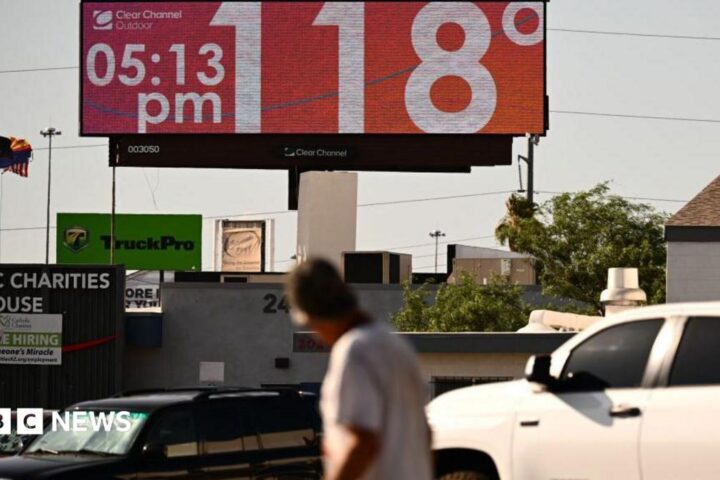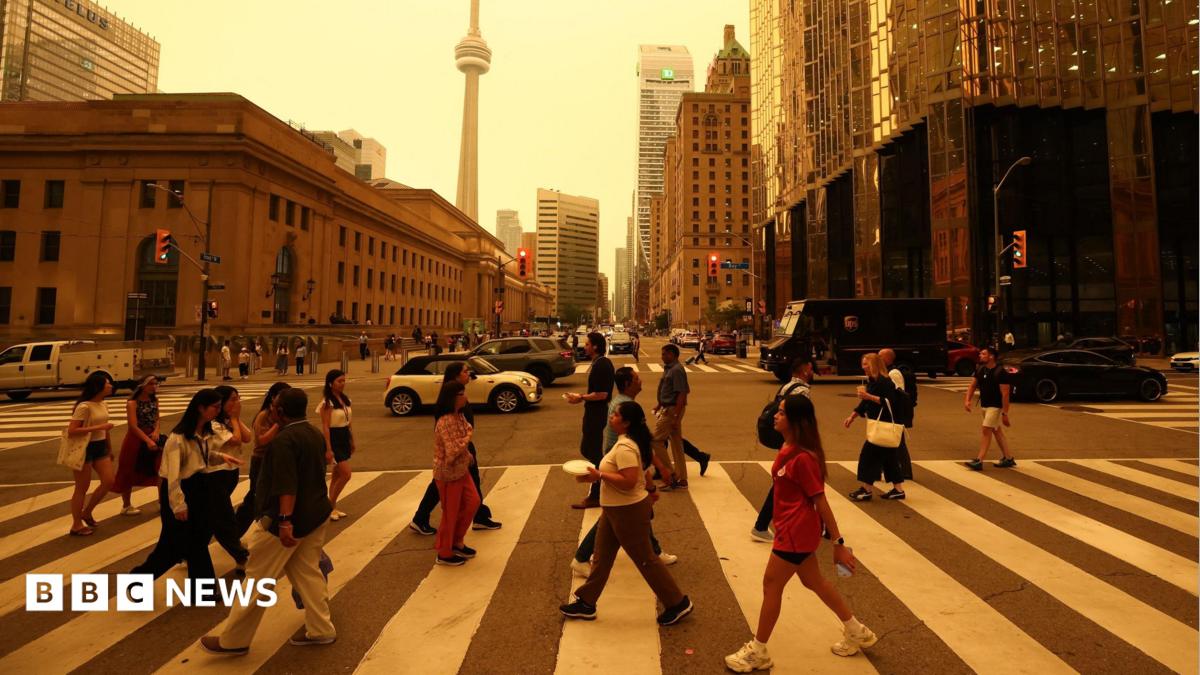
Ontario wildfires have produced widespread smoke that has blanketed cities in Canada and the United States, creating hazardous air conditions in some regions, according to BBC News – World. The plume has reduced visibility, raised air pollution readings and prompted health advisories in multiple jurisdictions.
This article explains what is known about the fires and the smoke, which communities were reported as affected in the BBC coverage and by local advisories, and clear steps residents can follow to reduce exposure. It draws on reporting from BBC News and official health and weather guidance.
Quick summary of the Ontario wildfires
Wildfires burning in Ontario have grown and produced large smoke plumes that have traveled long distances. Fire activity combined with prevailing winds has carried haze and fine particulate pollution into populated areas across provinces and into parts of the United States. BBC News reported that the smoke has blanketed US and Canadian cities and prompted air-quality alerts in some locations.
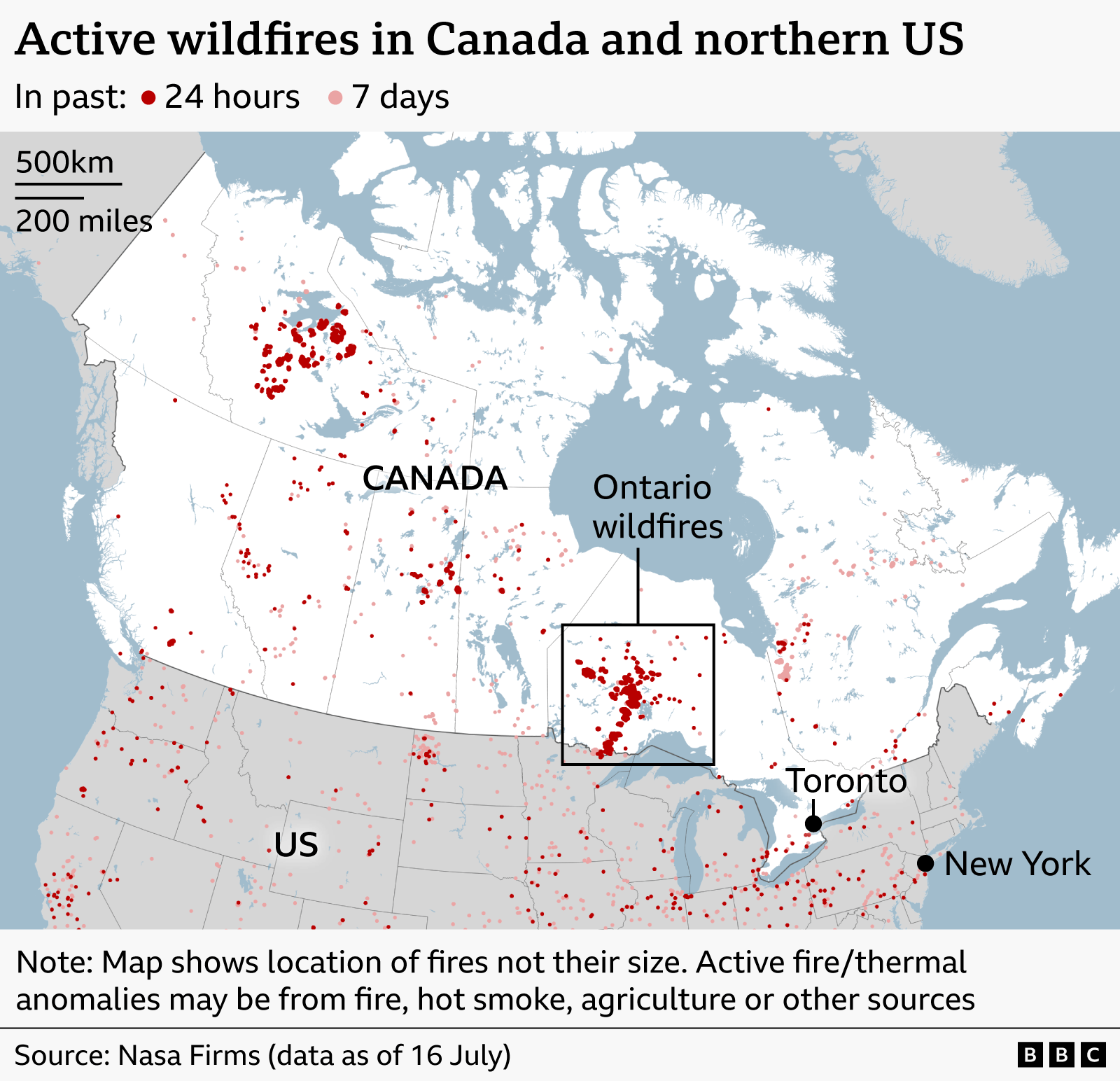
Fire and weather agencies are tracking fire progression and air forecasts as conditions evolve. Officials typically update wildfire status and advisories multiple times a day; check local wildfire-service pages and meteorological forecasts for the latest timing.
Air quality and health risks
Smoke from wildfires contains fine particles (PM2.5) that are small enough to penetrate deep into the lungs. BBC described the smoke as “dangerous” in areas where particle levels are high; public-health agencies use air quality indexes (AQI) to communicate risk.
Short-term exposure to elevated fine-particle levels can cause irritation of the eyes, nose and throat, worsen asthma or chronic lung disease, and increase cardiovascular risk in vulnerable people. Children, older adults and people with pre-existing respiratory or heart conditions are most at risk.
Local AQI tools provide near-real-time guidance. When AQI shows elevated or unhealthy readings, health officials commonly advise limiting outdoor activity, using well-fitting N95/KN95 respirators for necessary outdoor exposures, and improving indoor air filtration.
Cities affected and cross-border impact
BBC reporting and local advisories named several population centres and regions seeing smoke. In Canada, reporting highlighted impacts in Ontario — including Toronto and Ottawa — and noted smoke was visible across parts of Quebec. In the United States, local reports and air-quality maps showed haze reaching parts of New York state and New England in some areas; individual communities seeing smoke can change quickly with wind shifts.
- Canadian locations reported: Toronto and Ottawa were specifically mentioned in coverage, with additional smoke observed in neighbouring parts of Quebec.
- US locations reported: parts of New York state and New England states saw haze and elevated particulate counts in local readings and reports.
Because wind patterns and fire behaviour change rapidly, these lists can update hourly. For the most current, location-specific guidance, check local public-health pages and air-quality maps (for example regional government air-quality dashboards or national services such as Environment Canada and US AirNow).
Practical steps residents should take
If you live in or near areas experiencing smoke, consider these precautions to reduce exposure.
- Stay indoors when air quality is poor. Close windows and doors and limit time spent outdoors during peak smoke periods.
- Use masks appropriately: properly fitted N95 or KN95 respirators reduce inhalation of fine particles for short periods outdoors. Cloth masks are not effective against fine wildfire smoke particles.
- Improve indoor air: run air purifiers with HEPA filters if available. Set HVAC systems to recirculate air where possible and use furnace filters rated MERV 13 or higher if the system supports them.
- Monitor air quality: check your local AQI tools frequently. Many agencies update forecasts and AQI hourly during smoke events to help time outdoor activities when levels improve.
- Protect vulnerable household members: keep children, older adults and people with lung or heart conditions away from smoky air and have a plan to seek medical care or cleaner air if symptoms worsen.
If you experience difficulty breathing, chest pain, fainting, or other severe symptoms, seek medical attention promptly. Follow any evacuation or health instructions from local authorities.
What comes next and where to watch for updates
Short-term outlook depends on fire progression and weather. Cooler, wetter conditions or a change in wind patterns can reduce smoke production and improve air quality within hours to days. Conversely, hot, dry, and windy weather can increase fire activity and extend smoke travel over longer distances and durations.
Forecasts and advisories are updated frequently — often multiple times a day for wildfire status and hourly for air-quality readings. For ongoing updates, rely on official sources: your local health department, provincial or state wildfire services, Environment Canada or the Canadian wildfire service pages, and US services such as state wildfire agencies and the US EPA/AirNow air-quality maps. These organisations publish forecasts, air-quality alerts and any evacuation or safety advisories.
Frequently asked questions
Is the smoke dangerous to my health?
Yes — smoke can be dangerous, particularly for people with heart or lung conditions, older adults, children and pregnant people. BBC described the smoke as dangerous in affected areas. Use AQI to assess local risk and follow public-health guidance on reducing exposure.
Which cities are currently affected?
BBC reporting and local advisories named cities such as Toronto and Ottawa in Canada and noted haze reaching parts of New York state and New England in the United States. Because conditions change quickly, check local air-quality maps and health advisories for up-to-date, location-specific information.
How long will the smoke last and where to get updates?
Duration depends on how fires evolve and on weather changes; smoke episodes can last from hours to several days. For updates, follow local health departments, provincial/state wildfire services, and national meteorological and air-quality agencies for hourly AQI updates and the latest safety instructions.
This report is based on coverage by BBC News – World. For the original reporting, see BBC News – World: https://www.bbc.co.uk/news/articles/c5ywdl9ne3yo. For location-specific advisories and forecasts, consult local public-health departments, provincial/state wildfire services and national air-quality tools such as Environment Canada and US AirNow.