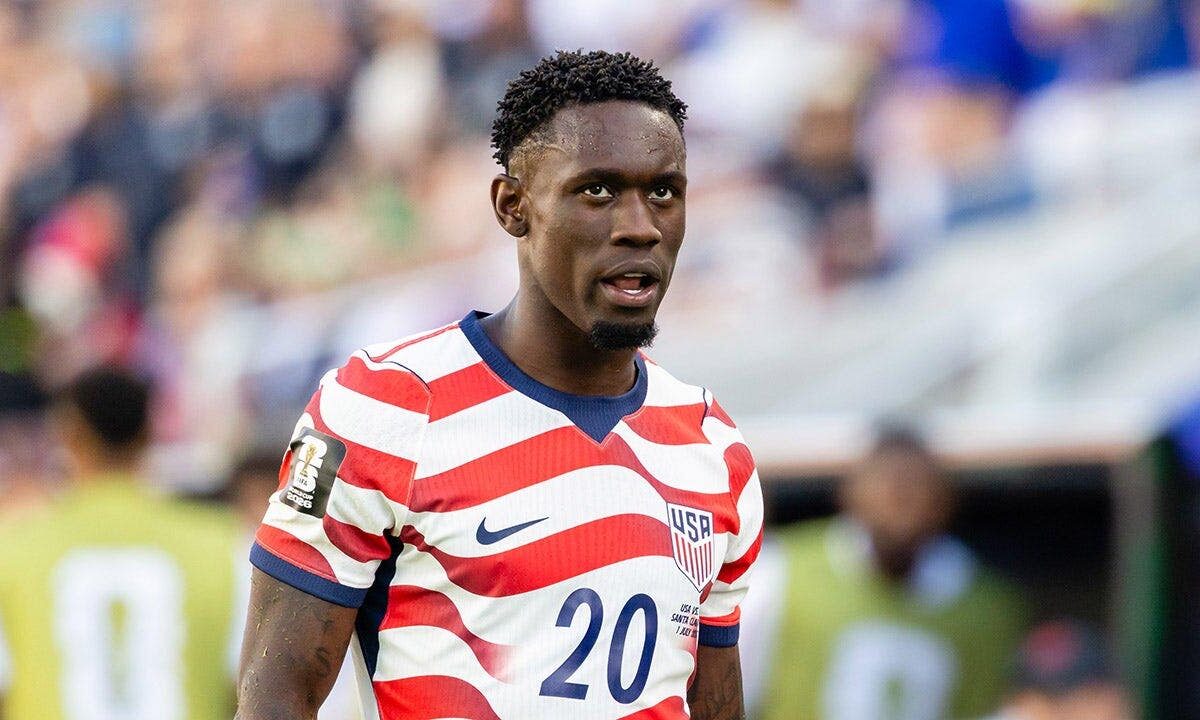
Folarin Balogun will be available for Team USA after FIFA suspended the automatic one-match ban that followed a VAR straight red card, a ruling that has provoked intense media debate ahead of the World Cup Round of 16. The reversal — granted under Article 27 of FIFA’s disciplinary code — means the red card remains on the match report while the one-match suspension is paused pending further review, keeping the forward in contention for the upcoming match against Belgium.
What happened to Folarin Balogun
In the U.S. victory over Bosnia and Herzegovina, a VAR review upgraded an on-field decision to a straight red card for Folarin Balogun after contact with a Bosnian defender. Referees applied VAR protocols to determine serious foul play–type criteria, and the match report recorded the sending-off that normally triggers an automatic one-match ban under FIFA rules for a straight red.
That automatic suspension, if enforced immediately, would have ruled Balogun out of the Round of 16. Instead, FIFA’s disciplinary committee used an established procedure to pause the ban while it examines footage, referee reports and any appeals or further disciplinary steps.
FIFA ruling and Article 27
FIFA’s disciplinary committee cited Article 27 in suspending the immediate enforcement of the one-match ban. In practice, Article 27 allows the committee to stay an automatic sanction while the case is reviewed and while any formal disciplinary proceedings proceed. The ruling does not expunge the red card from the official match record; it temporarily prevents the mandatory match suspension from taking effect.
That procedural pause gave the U.S. team clarity in finalizing its squad for the knockout stage and permitted coaches to select from their preferred attacking options without awaiting the outcome of a fast-moving internal review.
Reports of political and legal pressure
After the decision, several U.S. outlets reported additional context that linked outside conversations and legal posturing to FIFA’s handling of the incident. Fox News published reporting that said President Donald Trump spoke with FIFA President Gianni Infantino to argue the punishment was unjust; that account is attributed to Fox News and has not been independently verified here.
OutKick’s coverage, tied to founder Clay Travis, reported that a group including Trump, financier Howard Lutnick and Andrew Giuliani consulted with lawyers around the use of slow-motion replay that led to the red card. Those reports are sourced to OutKick and associated public posts; they are presented here as reported allegations and remain unconfirmed by FIFA or the parties named.
News organizations have varied in how they present these claims: some treat them as corroborated developments while others frame them as unverified lines of reporting. Readers should treat reported conversations and legal moves as allegations until corroborated by primary documents, official statements or multiple independent sources.
Why it matters
Critics warn the reversal risks a perception that powerful actors can influence disciplinary results. ESPN columnist Mark Ogden argued that allowing Balogun to play creates a risk that any U.S. success could be seen as “tainted,” suggesting the decision could damage the tournament’s integrity if precedent allows outside pressure to affect outcomes.
Defenders of the committee’s move counter that using Article 27 to pause enforcement addresses what some view as an excessive or mistaken on-field judgment, and that ensuring the best possible interpretation of the laws of the game is part of FIFA’s remit. Fox News coverage framed the suspension as a correction of an overly harsh call and pushed back on the notion that outside pressure dictated the result, emphasizing differences of interpretation across outlets.
The exchange underscores two concurrent debates: how VAR and slow-motion replay should factor into disciplinary decisions, and how transparent FIFA’s processes are when politically charged coverage surrounds an incident involving a high-profile national team.
Reactions, what comes next and background
Sporting reactions have largely focused on readiness. Team USA’s staff and players have said they will prioritize preparation for Belgium, stressing tactics and team balance over media noise. Coaches typically avoid public commentary about pending disciplinary matters, and that reticence has limited on-record quotes from the U.S. technical staff beyond affirmations of focus on the match.
Procedurally, FIFA’s disciplinary committee may issue written findings after reviewing all materials. Any formal sanction or exoneration could come after the tournament, and it would be documented in FIFA’s disciplinary communications. If additional evidence or appeals surface, the record could be updated, which is why the committee elected to pause the automatic match ban using Article 27 rather than apply it immediately.
Source attribution
This article is based on reporting from Fox News and references commentary originally published by ESPN. The Fox News account discussing reported communications and media reaction is linked here: Fox News. The ESPN column by Mark Ogden referenced in coverage is here: ESPN. Claims about conversations involving President Trump, Gianni Infantino or other named individuals are reported by those outlets and are noted here as such; they are not independently verified by this article.
FAQ
Will Folarin Balogun be available for the Round of 16 match?
Yes. FIFA’s disciplinary committee suspended the automatic one-match ban under Article 27, which permits Balogun to be available while formal proceedings continue.
Did President Trump speak to FIFA President Gianni Infantino?
Fox News reported that President Donald Trump spoke with Gianni Infantino and argued the punishment was unjust. That account is attributed to Fox News and has not been independently confirmed here.
What is Article 27 and why was the ban suspended?
Article 27 allows FIFA’s disciplinary committee to suspend the immediate enforcement of an automatic sanction while a case is reviewed. The committee used it to pause the one-match ban so the player could remain available pending further examination.