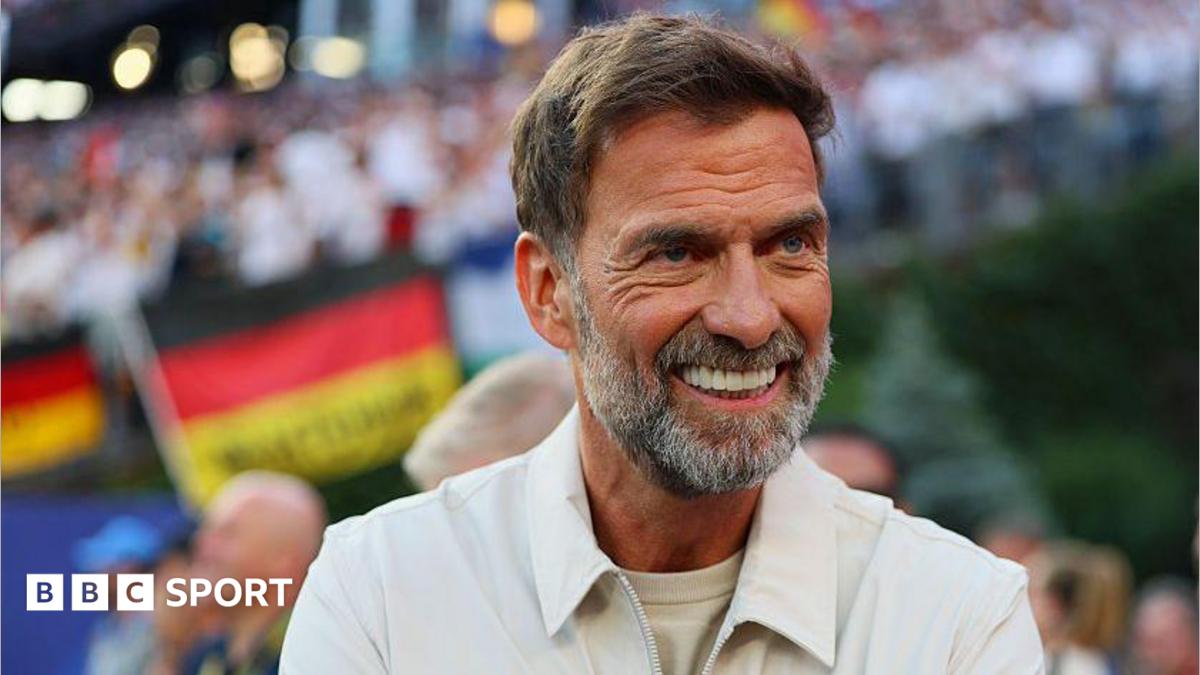
BBC News reports that Jurgen Klopp has agreed a “deal in principle” to become the new head coach of Germany’s men’s national team, after Julian Nagelsmann’s resignation. The phrase “deal in principle” indicates that broad terms have reportedly been agreed, but the arrangement remains contingent on final contract terms and formal confirmation by the German Football Association (Deutscher Fußball-Bund).
The BBC report, published on 2026-07-11, presents the development as a significant potential change for the national side while stressing that the appointment is not yet a completed, signed contract. Until the federation issues an official statement or a contract is published, this should be regarded as a reported agreement in principle rather than a finalised appointment.
Jurgen Klopp: Quick facts
- Who: Jurgen Klopp, the former Liverpool boss.
- What: Reported “deal in principle” to take charge of Germany’s men’s national team.
- When: Reported on 2026-07-11.
- Why: The report follows the resignation of Julian Nagelsmann.
- Source: BBC News – Top Stories (see source attribution below).
What the report says and next steps
The BBC uses the specific term “deal in principle” to describe the status of talks between Klopp and the German federation. In practice, this typically means that the parties have agreed on broad terms—such as the intention to appoint and general responsibilities—but that details remain to be finalised. Those details commonly include contract wording, official signatures, and the formal publication of terms by the federation.

Remaining procedural steps likely include final contract negotiations, agreement on the structure of Klopp’s technical staff, and a public announcement from the Deutscher Fußball-Bund. The timeline for these steps can vary; the BBC emphasises that a completed, signed contract has not yet been presented in public.
Because the report is contingent on those formalities, media outlets and supporters should treat the development as credible yet provisional. Only a federation release or verified contract will confirm the appointment beyond reasonable doubt.
Why this change matters for Germany
A managerial change at this level matters for several reasons. First, a new head coach sets the strategic and tactical direction the team will follow into upcoming qualification campaigns and tournaments. Second, coaching changes often prompt reviews of player selection, scouting priorities and training methods. Third, high-profile appointments alter public expectations and media scrutiny, which can affect team morale and federation planning.
For the Germany men’s national team, any incoming coach will need to address both immediate match preparation and longer-term squad development. The distinction between club and international management—less frequent training windows, different player availability and tournament cycles—means adaptation will be a key question for observers should the appointment be finalised.
What the deal could mean and immediate implications
If the reported deal in principle is converted into a signed contract, immediate priorities typically include clarifying the length and scope of the contract, announcing key backroom appointments, and setting out an early schedule for camps and friendlies. The federation and coach usually outline initial objectives and how they intend to bridge any gap between current form and future targets.
Even before a contract is finalised, the prospect of a new coach can create short-term shifts: staff recruitment conversations may begin, and stakeholders—including players, clubs and sponsors—will start to gauge the likely direction. Nevertheless, until contractual signatures are exchanged, such activity remains preparatory rather than definitive.
Klopp’s record and fit for the role
Jurgen Klopp is widely recognised for his achievements at club level, most notably during his time at Liverpool. He is known for building teams with a clear tactical identity, intensive pressing style and strong player relationships. Those attributes are often cited as reasons federations consider him for major roles: the capacity to instil a coherent playing philosophy and to galvanise both squad and supporters.
How well a club-proven approach adapts to the constraints of international management will be closely watched. International coaching involves less day-to-day contact with players and a reliance on periodic camps and matches; success therefore depends on translating principles into efficient short-term interventions and effective selection policies.
What comes next
Key milestones to watch for are a formal announcement from the German Football Association, publication of contractual terms, and confirmation of the coach’s intended technical staff. Media coverage should clarify contract length, reporting on any clauses or performance targets only when these are officially disclosed.
Until such confirmation arrives, the situation remains a report of agreement in principle. Supporters and commentators should expect incremental updates rather than immediate, full clarity on all details.
Source and how to interpret it
This article is based on a BBC News – Top Stories report published on 2026-07-11. The BBC piece describes a “deal in principle” between Jurgen Klopp and the German federation and notes that the report follows Julian Nagelsmann’s resignation. The wording used by BBC indicates the arrangement has not yet been completed as a signed contract and remains contingent on final formalities.
Read the BBC’s original report for the source wording and context: BBC News – Top Stories (2026-07-11).
Source: BBC News – Top Stories. This article treats the BBC report as the primary source and emphasises that the reported agreement is subject to formal confirmation.