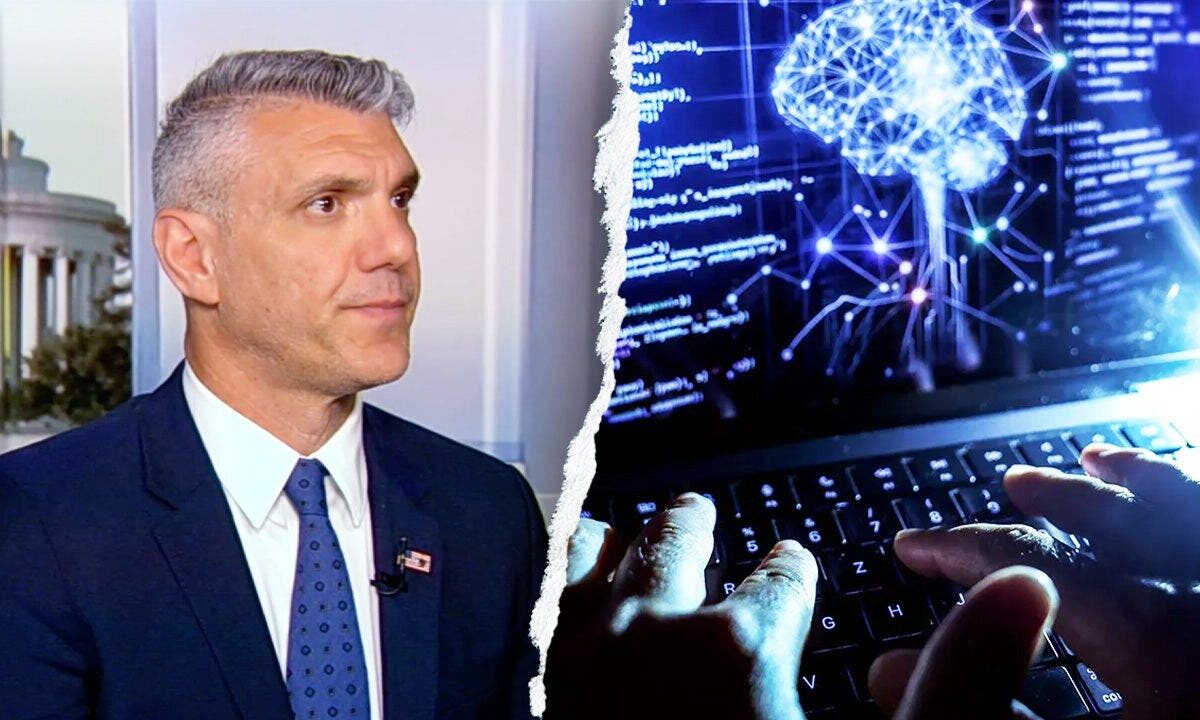
AI-enabled fraud is moving faster than federal defenses, a SentiLink expert told lawmakers this week. At a Government Operations Subcommittee hearing, David Maimon described how criminals combine deepfake faces, AI-generated documents and automated campaigns to defeat identity checks and siphon benefits intended for taxpayers.
Maimon warned these operations are no longer isolated scams but an organized infrastructure able to shift across programs and states, making detection and enforcement harder.
How AI-enabled fraud works
Fraud operators start with harvested data or purchases from underground markets, then use AI tools to generate matching photos, forged IDs and synthetic documents. Those artifacts are paired with phishing, automated filing and scripted call-center tactics to scale attacks.
That method undermines common identity controls. Liveness checks — selfie photos or short video prompts meant to prove a real person is present — can be spoofed by synthetic faces or replayed content. As Maimon put it, “It’s difficult to prove that you’re not essentially using AI while verifying your identity with documents and liveness tests and selfie images.”
Evidence from SentiLink’s probe
Maimon described SentiLink investigators infiltrating online markets. “We were able to infiltrate thousands of markets where fraudsters are operating, where you can find identities and stolen checks, you can find tutorials of how to engage in fraud against the government or target financial institutions across the country,” he told the subcommittee.
He cited a probe into suspected Medicaid schemes that flagged roughly $2 million in billing while on-site checks found many claimed staff and operations did not exist. That example illustrates how virtual deception can be paired with sham physical operations to extract funds.
These findings reflect SentiLink’s investigative conclusions shared with lawmakers and are presented as expert statements pending independent audits or enforcement records.
Why government defenses lag
Maimon told the committee that defenses are fragmented across agencies. “Criminals exploit the seams between agencies precisely because our defenses are built program by program, while their infrastructure is built to move across all of them,” he said.
Technical limits compound institutional gaps: systems that rely on single recent images or one-off document checks are vulnerable to synthetics, and agencies do not always share signals, standards or cross-program detection tools.
Policy fixes and industry steps
Maimon urged combining technical and policy reforms. He recommended deprioritizing sole reliance on images and liveness tests in favor of “historical signals” — long-term, cross-checked records and behavioral baselines that are harder for AI to fabricate.
Other steps discussed include sharing anonymized fraud indicators across agencies, building verifications that weigh historical and geolocation data, increasing audits for high-risk providers, and strengthening enforcement to raise the cost of large-scale operations.
“Every dollar we protect from organized fraud is a dollar that stays available for the people Congress intended to help,” Maimon told lawmakers, underscoring the fiscal and programmatic stakes.
FAQ
How does AI-enabled fraud work in practice?
Operators buy or harvest stolen personal data, then use AI to create matching documents, synthetic faces or deepfake video. Those artifacts are combined with phishing and automation to file claims, open accounts or cash checks.
Can liveness checks stop deepfakes and AI faces?
Not reliably on their own. Witnesses at the hearing said liveness tests and single-image checks can be spoofed. Effective defense typically requires layered signals, including historical records and cross-system correlation.
What can taxpayers do to protect their digital identity?
Monitor accounts for unexpected activity, enable multi-factor authentication where available, and be cautious about sharing personal data. If contacted about a benefit or account change, use verified agency phone numbers or portals to confirm.
Source and attribution
This article summarizes testimony at the House Oversight Committee’s Government Operations Subcommittee hearing “Emerging Fraud Threats and the Evolving Fraud Landscape.” Reporting and quotes are drawn from Fox News Digital’s coverage and testimony provided by SentiLink. For the original reporting, see: Fox News Digital.
Assertions about AI-generated faces, billing estimates and the scope of law enforcement findings are presented as expert statements from SentiLink and have not been independently verified by this outlet.