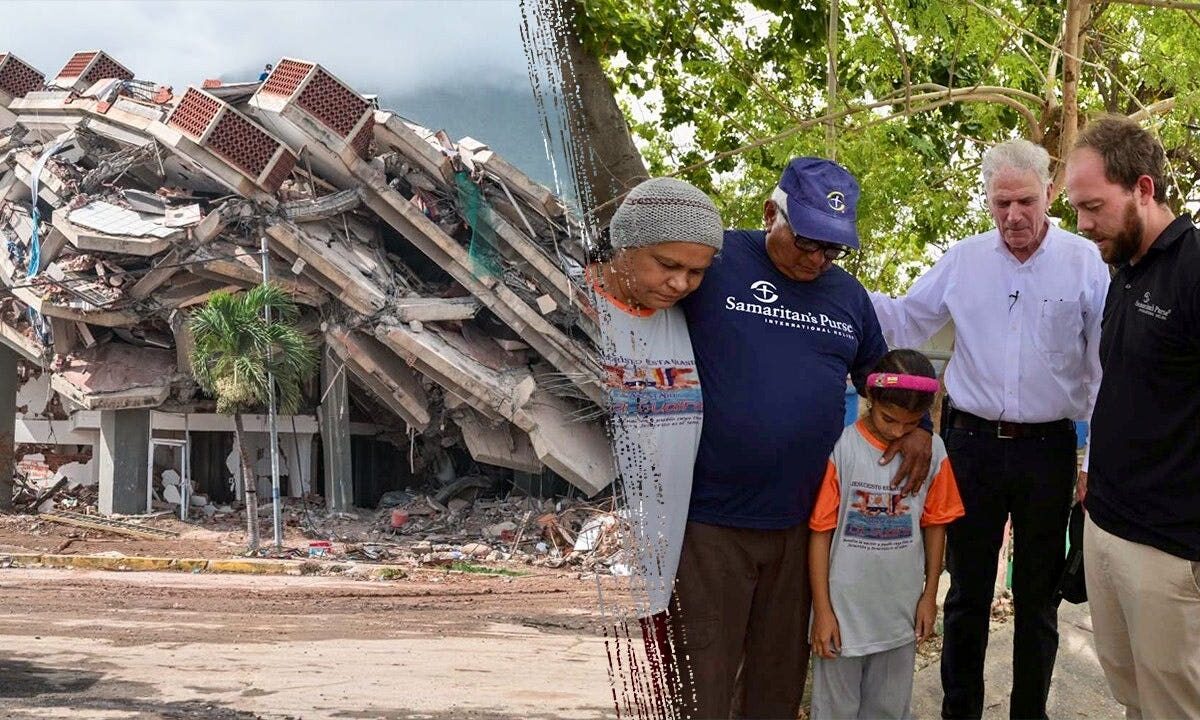
Franklin Graham visit Venezuela brought Samaritan’s Purse’s emergency response into focus when he and his daughter, Cissie Graham Lynch, toured a field hospital near La Guaira that has treated more than 2,500 patients. The visit highlighted clinical work, water production and a series of airlifts supplying tents, medical gear and shelter materials in the wake of strong June quakes.
Franklin Graham visit Venezuela: on the ground
Graham and Lynch met medical staff, logistics teams and local church partners operating in La Guaira. Samaritan’s Purse said more than 170 Disaster Assistance Response Team members are deployed across La Guaira, Playa Grande and Caraballeda. The organization reported six Boeing 767 airlifts carrying 295 tons of relief supplies and two desalination units producing more than 154,000 liters of clean water.
Samaritan’s Purse said its aircraft were among the first non-military flights to arrive after the quakes; independent verification of that timing was not provided to reporters.
Field hospital operations in La Guaira
The field hospital is configured for urgent surgical and trauma care where local hospitals were overwhelmed. Staff describe two operating rooms on-site, a pharmacy and a laboratory to process basic testing and guide treatment decisions.
Surgeons at the facility are performing orthopedic procedures to repair crush and fall injuries and treating wound infections that developed where care was delayed. Medical teams reported that nearly every patient arriving has lost a family member or close friend, increasing demand for both clinical and psychosocial support.
Relief logistics and airlifts
Samaritan’s Purse reported six Boeing 767 flights delivered roughly 295 tons of supplies, including tents, tarps, solar lights, blankets, hygiene kits, cooking sets and Spanish-language Bibles distributed through field teams and church partners. Two desalination units set up by the response have produced more than 154,000 liters of potable water for clinics and communities where municipal systems were damaged.
Teams also installed mobile clinic modules and deployed generators to maintain power for critical equipment. Logistics staff said prioritization has focused on surgical supplies, infection-control materials and fuel to keep generators and water units operating in coastal towns.
Human impact and survivor accounts
Survivors treated at the hospital described sudden collapse, prolonged entrapment and the loss of neighbors and relatives. One man who said he was pinned beneath rubble after his apartment fell in called the experience “terrifying” and described being trapped for nearly two days before rescue.
Another patient spoke about the comfort of combined medical and spiritual care: “The doctors pray with me. That’s beautiful when they get on their knees and pray with me. I love that.” Samaritan’s Purse leaders emphasized those interactions as part of their dual medical and pastoral approach.
Cissie Graham Lynch recounted meeting a local pastor who had lost several congregation members yet continued to serve those displaced. “I was deeply impacted by the pastor’s willingness to keep serving despite loss,” she said.
Context and casualty figures
The U.S. Geological Survey reported two powerful earthquakes, measuring magnitudes 7.2 and 7.5, struck Venezuela on June 24. The quakes occurred seconds apart and caused widespread structural damage along coastal communities.
Venezuelan authorities announced that the tremors killed more than 5,000 people and injured more than 16,000; those counts are the official figures reported by local authorities and may be revised as recovery and accounting continue. The casualty and injury totals cited here reflect the figures released by Venezuelan officials and reported in the Fox News account linked below.
La Guaira and nearby Caraballeda are coastal municipalities that sustained heavy damage to housing, hotels and infrastructure. Both areas rely on coastal road links and local ports for supplies; disruptions to those routes have complicated relief movements and amplified needs for mobile clinics and delivered water.
What comes next for relief teams
Samaritan’s Purse said it has installed four emergency clinic modules so far and expects a fifth module to open soon to expand outpatient and surgical capacity. Teams plan continued rotations of medical staff, restocking of essential supplies and coordination with local partners to reach communities in La Guaira, Playa Grande and Caraballeda.
Relief priorities listed by staff include continued surgical and wound care, infection control, consistent clean-water distribution and temporary shelter for displaced families. Logistics teams emphasized maintaining fuel and power for generators that support clinics and desalination units.
The visit by Franklin Graham and his daughter underscored the relief group’s combined focus on medical care and spiritual support. Samaritan’s Purse also said more than 10,200 families have received emergency supplies through distribution efforts in the area.
As teams prepare additional clinic capacity and continue distribution of essentials, response leaders stressed recovery will be prolonged and will require ongoing access to medical supplies, safe water and shelter.
Source: Fox News — EXCLUSIVE: Franklin Graham visits emergency hospital caring for Venezuela earthquake victims. Original reporting: https://www.foxnews.com/faith-values/exclusive-franklin-graham-visits-emergency-hospital-caring-venezuela-earthquake-victims