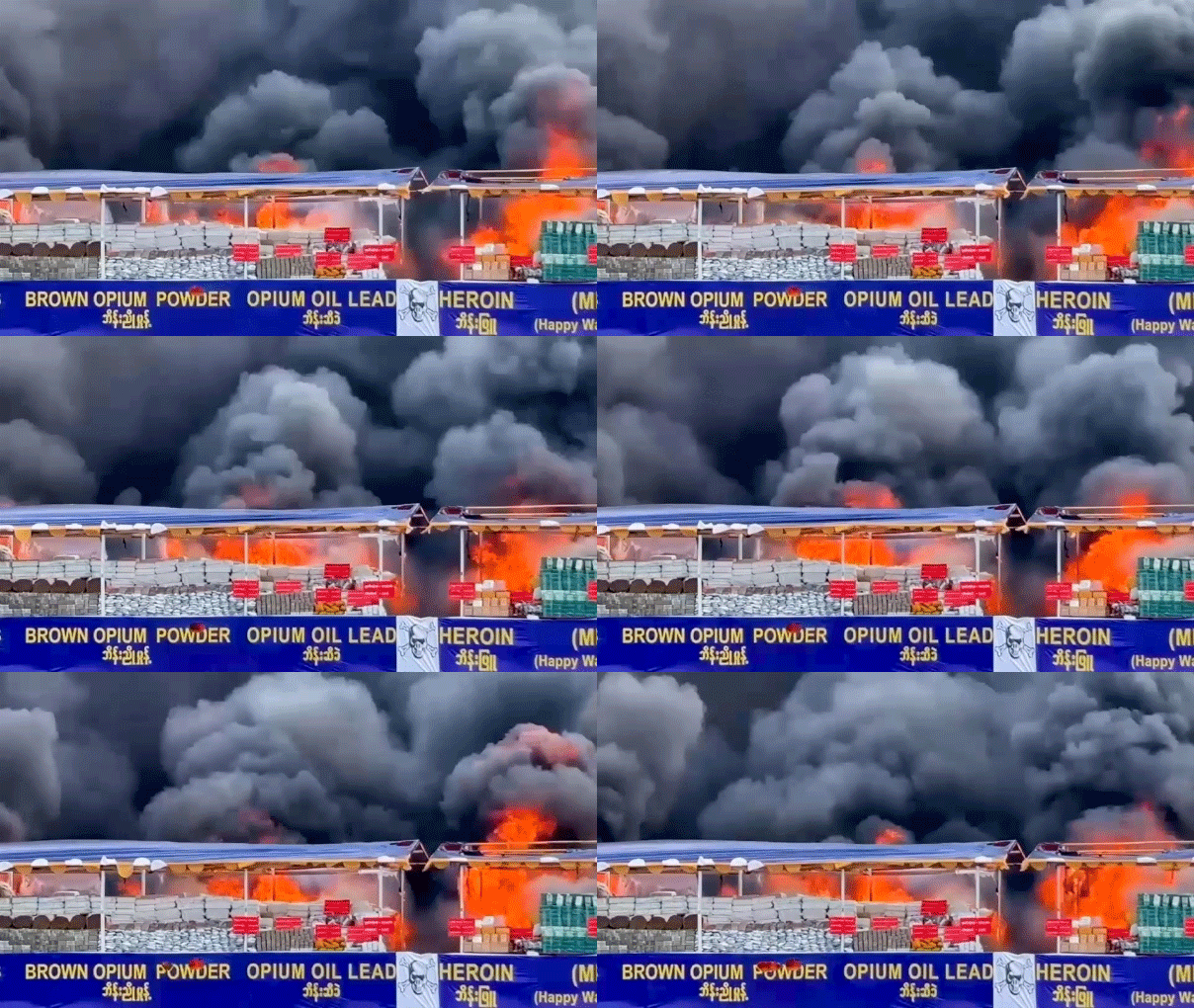
Video released Friday shows a towering inferno in Yangon as a Burma drug burn consumed piles of seized narcotics estimated at about $600 million. Thick black smoke and bright flames rose over the site as authorities pushed sacks and packages of drugs into open fires, footage shows, a spectacle timed to coincide with the U.N. International Day Against Drug Abuse.
Thick black smoke rises from piles of seized drugs burned in Yangon, according to the footage and official statements. The images are stark: rows of evidence bags, boxes and wrapped bundles moved toward the blaze, then engulfed.
Burma drug burn: scale and types destroyed
Authorities and reporting place the total value of the narcotics set alight at about $600 million and said the haul included more than 50 tons of material seized around the country. In Yangon, Police Lt. Col. Aung Myat Soe of the city’s Anti-Narcotics Police Force told reporters that roughly $321 million worth of 31 different types of drugs were incinerated.
Officials and the footage identified a wide range of substances: processed heroin and multiple forms of methamphetamine, opium, ketamine, marijuana and crystal meth. The operation was described by authorities as one of the largest public destructions of seized drugs in recent years.
Police and government statements said the street-value estimate destroyed in Yangon was more than double the total reported last year, a change officials used to highlight intensified enforcement. Those comparative figures come from official releases and media reporting.
Official claims and key quotes
Police Lt. Col. Aung Myat Soe described the burn as a visible demonstration of anti-narcotics action in an urban center. He specifically cited the Yangon incineration and the dollar value attributed to the destroyed items when speaking with reporters.
The military government additionally released statements claiming what it called exceptionally large seizures earlier this year, including the dismantling of drug-making equipment and shipments from multiple sites in northern Shan state. Those assertions are presented here as government claims reported by news organizations.
The Associated Press contributed reporting that corroborated the existence of the footage and quoted experts and officials on context for the seizures and the burn.
Why Burma is a major source of illegal drugs
Myanmar (Burma) has long been a major node in regional drug production and trafficking, historically forming part of the Golden Triangle alongside Laos and Thailand. Northern areas such as Shan state have been central to cultivation, processing and clandestine production — activities that supply markets across East and Southeast Asia.
Experts quoted by The Associated Press and international observers say multiple factors help explain the rise in large seizures and reported production. Among them: prolonged political turmoil since the 2021 military takeover, fractured local control in some border areas, and the involvement of armed groups that may profit from or facilitate illicit economies. United Nations agencies have also noted a global trend toward synthetic drugs such as methamphetamine, which are cheaper to produce and easier to transport in concentrated form.
These conditions do not uniformly mean government claims are independently verified; rather, the claims and the broader assessments come from a mix of official statements, independent reporting and international monitoring bodies.
Regional impact and what comes next
Public, large-scale destructions of seized drugs serve a few purposes for authorities: they remove evidence and contraband from circulation, create a visible sign of enforcement for domestic audiences, and demonstrate compliance with international anti-drug observances. But analysts caution such acts are largely symbolic if not paired with sustained investigation and prosecution that can break trafficking networks.
Neighboring countries and international agencies will likely watch for shifts in trafficking routes — overland corridors through border states, maritime shipments, and cross-border smuggling into markets such as China, Thailand and Malaysia. Observers will also look for whether arrests, indictments and international cooperation follow the publicized seizures, as those downstream steps are key to disrupting networks.
What comes next: tracking whether seizures translate into lasting disruption of supply chains, whether further disclosures identify responsible networks, and whether independent monitors confirm the scale and origin of the shipments authorities say were recovered.
Key takeaways
Public footage from Yangon shows a large, government-run destruction of seized drugs estimated at roughly $600 million in street value and more than 50 tons of material. Confiscated items reported by authorities included heroin, methamphetamine, opium, ketamine, marijuana and crystal meth. Officials said the Yangon total exceeded last year’s reported figures; experts told The Associated Press that political unrest and shifting markets complicate enforcement and may contribute to rising production and seizures.
FAQ
What was destroyed in the Burma drug burn?
Authorities and footage show bags and packaged consignments of heroin, methamphetamine (including crystal meth), opium, ketamine and marijuana were pushed into open fires and burned. Officials described a wide mix of processed and raw forms of narcotics among the seized items.
How much were the seized drugs worth?
Officials estimated the total value of the destroyed narcotics at about $600 million. Police Lt. Col. Aung Myat Soe told reporters that in Yangon alone roughly $321 million worth of drugs — across 31 types — was incinerated. The $600 million figure is the broader, national estimate reported by authorities and media.
Why are drug seizures rising in Burma according to experts?
Experts cited by The Associated Press point to several factors: ongoing political unrest since 2021, fragmented territorial control in some border regions, and the prominence of organized armed groups that can be involved in illicit economies. International agencies also note growth in synthetic drug production, which can be more compact and profitable, aiding trafficking and market expansion.
Source attribution
This article is based on footage and reporting published in the Fox News report and on reporting and expert commentary from The Associated Press. Statements by Police Lt. Col. Aung Myat Soe of Yangon’s Anti-Narcotics Police Force are cited as direct police statements made to reporters. Government assertions about large seizures and equipment removed from sites in northern Shan state are presented here as claims made by official sources; independent verification of every government claim was not available in the public reporting.
Source: Fox News — original report and video: https://www.foxnews.com/world/600-million-heroin-meth-seized-drugs-fire-burma. Additional reporting and context from The Associated Press. Quotes from Police Lt. Col. Aung Myat Soe are attributed to his comments to reporters during the Yangon operation.