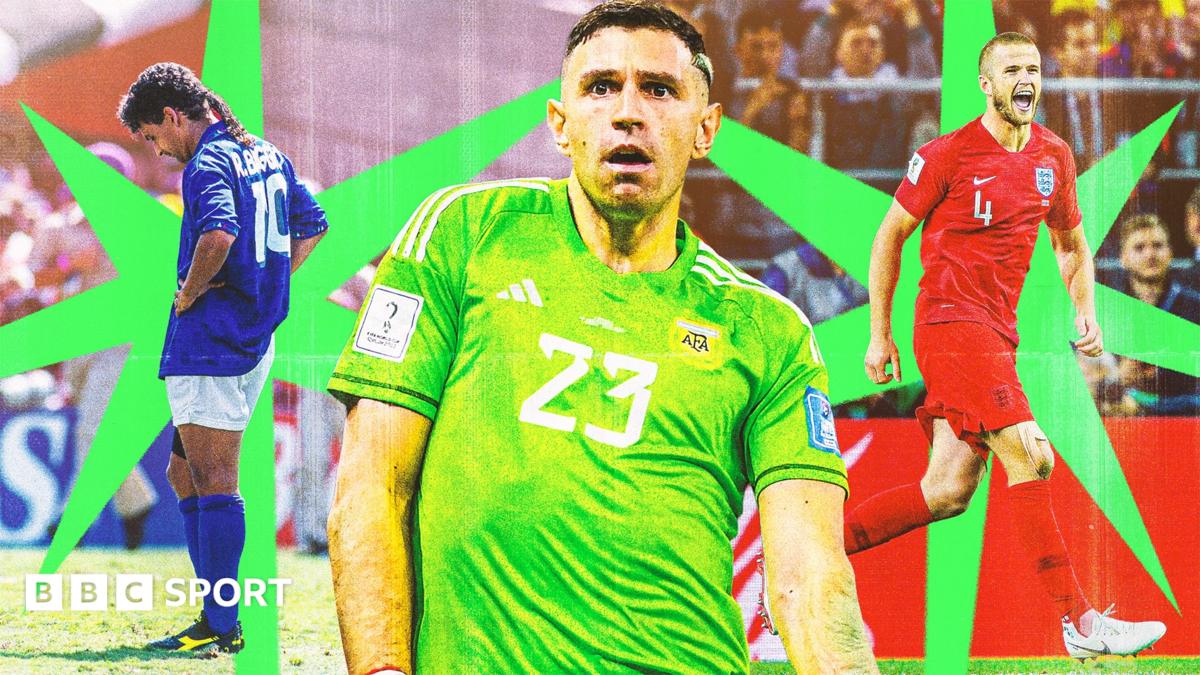
Summary: A comprehensive review of every World Cup penalty taken in shootouts shows clear, repeatable patterns in World Cup penalty shootout outcomes. The BBC Sport analysis demonstrates that small technical and psychological edges — in placement, routine and reading opponents — regularly shift results.
The World Cup penalty shootout is far from pure chance. When every tournament penalty is reviewed together, consistent trends emerge that teams can practise and plan for: where to place shots, how keepers behave under pressure, and how order and momentum influence the final outcome.
Quick findings on World Cup penalty shootout patterns
The BBC Sport dataset summarises decades of shootouts and highlights a few immediate, actionable points for coaches and players:
- Most shootout penalties are converted, but a meaningful minority are saved or missed; these non-conversions concentrate in predictable situations.
- Placement and routine typically outperform raw power: accurate corner strikes and steady procedures under pressure have higher success rates.
- Goalkeepers who combine study of run-ups with timely commitment increase their chance of making decisive saves, even if guessing early can be risky.
- Turn order and psychological momentum matter: teams that build early leads force higher-stakes kicks later, increasing errors.
- These patterns come from a BBC Sport review covering every World Cup penalty taken in shootouts and form the basis for the practical advice below.
By the numbers: World Cup penalty shootout stats
The BBC analysis aggregates every penalty taken in World Cup shootouts to reveal outcome patterns without listing every case. Broadly, the largest share of penalties are scored, while saves and misses form a distinct minority concentrated by shot location, height and keeper reads.
| Outcome | BBC Sport summary |
|---|---|
| Converted | Majority of penalties are scored; successful kicks generally combine a clear target and composed execution. |
| Saved or missed | Saves and misses concentrate when kickers aim central or high under pressure, or when keepers correctly anticipate direction. |
| Keeper advantage | Pattern-reading and early commitment sometimes produce saves, but balanced positioning against well-placed shots is decisive. |
What kickers should do
Translating the BBC Sport analysis into practical steps for takers produces a ranked checklist of priorities. These are tactical choices supported by the aggregate data rather than new claims about particular matches.
- Pick a target before you run. The single biggest error is hesitation. Decide on your corner and visualise the contact before the run-up.
- Prioritise placement over raw power. When execution is consistent, placement into the corner reduces the keeper’s reaction window and lowers the chance of a save.
- Refine vertical variation. Use low, driven shots when a keeper tends to dive late; use high, well-placed shots when the keeper commits low. Practice both to know which you can hit reliably.
- Standardise a pre-kick routine. Repetition under fatigue and pressure builds the composure the BBC review shows correlates with success.
- Plan order strategically. Balance early assured takers to build momentum, and reserve at least one very reliable finisher for late, high-pressure kicks.
Goalkeeper trends
Goalkeepers follow a mix of study, patience and occasional early commitment. The BBC data shows certain behaviours that increase save probability when executed well.
- Study opponent cues. Run-up angle, hip rotation and planting foot offer subtle signals; keepers who use them successfully increase their save share.
- Stay balanced initially. Many successful saves come from goalkeepers who remain central and commit only when they have conviction.
- Use early guesses sparingly. Early dives do produce stops in a portion of kicks, but they also hand easy goals when the guess is wrong; weigh the risk in match context.
- Manage the mental game. Calm demeanour, small time management and consistent routines can unsettle kickers and tilt close contests.
Key takeaways
- World Cup penalty shootout outcomes show repeatable patterns rather than pure randomness.
- Kickers: commit to a target, favour placement, and practise pressure routines.
- Goalkeepers: study run-ups, stay balanced, and use early commitment selectively.
- Team order and momentum influence later kicks; sequence takers to manage pressure across the shootout.
- Practical preparation — simulated shootouts, fatigue training and data-led scouting — consistently helps teams perform better.
Practical closing note for coaches and players: incorporate targeted placement drills, replicate fatigue in practice shootouts and set a clear penalty order before the match — these steps, drawn from the BBC Sport review, yield measurable improvements in high-pressure scenarios.
Methodology and source
This article summarises themes from a BBC Sport analysis that reviewed every World Cup penalty taken in shootouts. The claims above reflect that aggregated review and do not introduce new factual assertions beyond the BBC dataset.
Source: BBC Sport — How to win a World Cup penalty shootout (BBC Sport analysis of every World Cup penalty in shootouts).
Frequently asked questions
How often are World Cup shootout penalties missed?
The BBC review shows that while most penalties are converted, a meaningful minority are saved or missed; frequency varies by tournament context and pressure. For exact counts and examples, consult the BBC piece linked above.
Should kickers aim for power or placement?
Aggregate patterns in the BBC data favour placement when a kicker can reliably hit a corner. Power helps only if combined with accuracy; otherwise it increases the chance of a save or a miss.
Do goalkeepers move early in World Cup shootouts?
Some do and get rewarded in a portion of cases. The BBC analysis highlights that the best-performing keepers mix study of cues with measured commitment rather than relying solely on early guesses.
Article based on BBC Sport’s review of every World Cup penalty taken in shootouts. For the full breakdown and original data, see the BBC source above.