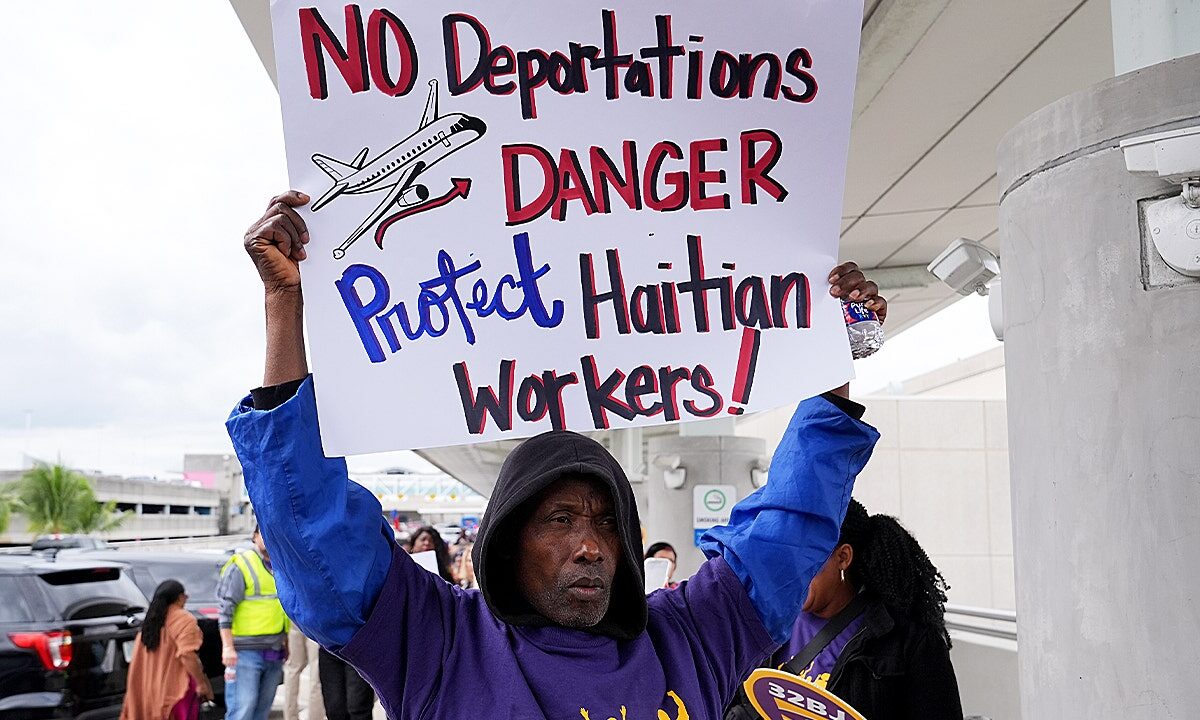
The Supreme Court’s decision in Mullin v Doe allows the administration to move forward with plans that could end temporary protected status (TPS) for some Haitian and Syrian residents. The ruling narrows a program intended as short-term humanitarian relief and raises immediate legal and local questions for communities and individuals who have relied on TPS and related work authorization.
This analysis explains what the court decided, who is likely to be affected, local impacts in Springfield, Minneapolis and Harrisonburg, political reactions, and policy options for federal and local leaders.
What the Supreme Court decided
In Mullin v Doe, the Supreme Court ruled in a way that clears the legal path for the executive branch to terminate certain TPS designations under existing immigration law. The opinion centers on the scope of executive authority to designate or end TPS and how courts should review those determinations.
The ruling itself does not order deportations. Rather, it limits a legal mechanism that has allowed nationals of designated countries to remain and work lawfully while the designation is in effect. Any move from that legal change to enforcement, loss of work authorization, or removal proceedings will depend on follow-on actions by federal agencies and additional litigation.
Temporary protected status: who is affected
Temporary protected status is an emergency designation available when a country faces armed conflict, environmental disaster, or other extraordinary conditions. Nationals from a designated country who register with U.S. Citizenship and Immigration Services can receive work authorization and protection from removal while the designation is active.
The Mullin v Doe outcome places TPS beneficiaries from some countries, including Haitian and Syrian nationals cited in recent coverage, at greater risk of losing those protections if the administration moves to terminate the designations. Many beneficiaries have relied on TPS and associated work permits for years; the court’s decision makes the future of those authorizations uncertain and likely contested in the courts.
Local impacts: Springfield, Minneapolis, Harrisonburg
Springfield, Ohio: The Fox News reporting cited local residents and business owners who said the town experienced rapid demographic change. Residents quoted in that piece described what they called a large inflow of Haitian arrivals; one claim reported was roughly 20,000 new residents in a city of about 50,000. That numerical claim is reported from local sources in the Fox News piece and has not been independently verified by Nonstop News; it should be read as a residents’ claim rather than an established census change.
Minneapolis, Minnesota: Larger metro areas such as Minneapolis often absorb newcomers through diverse housing markets and nonprofit resettlement networks. Local advocates in major metro regions have told national outlets that housing demand and service needs in such cities differ from smaller towns. Those distinctions matter for planning, but specific arrival figures and impacts vary by locality and should be confirmed with municipal data.
Harrisonburg, Virginia: The coverage presents Harrisonburg as a managed refugee resettlement site where new arrivals are paired with language and job training programs. That model — smaller, coordinated placement with services — is offered as one approach to support integration and reduce community disruption. The description of Harrisonburg’s program in the Fox News piece is framed as an example of local resettlement practice rather than a universal model.
Political reaction and claims
The decision generated sharply divergent responses. Democratic lawmakers and immigrant advocates criticized the ruling for its humanitarian implications. Zohran Mamdani is quoted in the Fox News piece calling the decision “an attack on immigrants” (quoted in David Marcus, Fox News).
Conservative lawmakers and commentators argued that extended TPS designations had, in practice, acted as long-term residency in many cases and pointed to local strains as evidence. Rep. Brandon Gill (quoted in David Marcus, Fox News) asserted that some beneficiaries arrived by indirect routes and were resettled in Midwestern towns rather than coastal areas. Those are contested political claims and should be treated as such while independent verification is sought.
To balance perspectives, other national outlets such as Reuters and the Associated Press have separately reported on the legal and administrative questions raised by Mullin v Doe and on the broader debate over how to handle TPS. Readers should note the difference between on-the-ground resident accounts reported in opinion or local coverage and independently verified demographic data.
Policy options and next steps
With the court’s ruling in place, several policy paths remain open. The administration may move to terminate particular TPS designations, which would likely trigger fresh litigation and possible stays. Federal agencies could also phase changes in over time for work authorization, creating different timelines for employers and service providers.
Congress can act to provide a legislative solution — for example, by offering more permanent status to specific groups or creating new legal pathways. Alternatively, lawmakers could fund and expand managed resettlement programs that emphasize language training, job placement and housing assistance to reduce localized disruption.
At the local level, governments and nonprofits can plan for transitional services, legal aid clinics, and partnerships with employers. Advocates note that well-resourced, coordinated local responses reduce strain and improve outcomes for newcomers and host communities.
What communities and migrants can expect next
Any practical effect of the ruling will play out over months and perhaps years. TPS recipients facing termination may seek injunctions or requests for stays in the courts. Agencies could choose a phased approach to ending work authorization, and enforcement could be prioritized in stages.
Local civic leaders should communicate likely timelines, legal rights, and available supports. Individuals with TPS or other immigration concerns should seek legal advice to understand options and possible relief.
Source attribution
This article draws primarily on an opinion piece by David Marcus in Fox News (“‘Permanent’ temporary status is bad for refugees and worse for America”) and the public statements and local reporting cited there, including quoted comments attributed to Zohran Mamdani and Rep. Brandon Gill (quoted in David Marcus, Fox News). Additional reporting on the legal and administrative questions surrounding TPS has appeared in national wire coverage from outlets such as Reuters and the Associated Press.
Original source: Fox News — DAVID MARCUS. Nonstop News has framed and summarized these materials for legal and local analysis. Where specific local population figures were reported in source coverage, we have flagged them as claimed by residents or local sources rather than independently verified by Nonstop News.