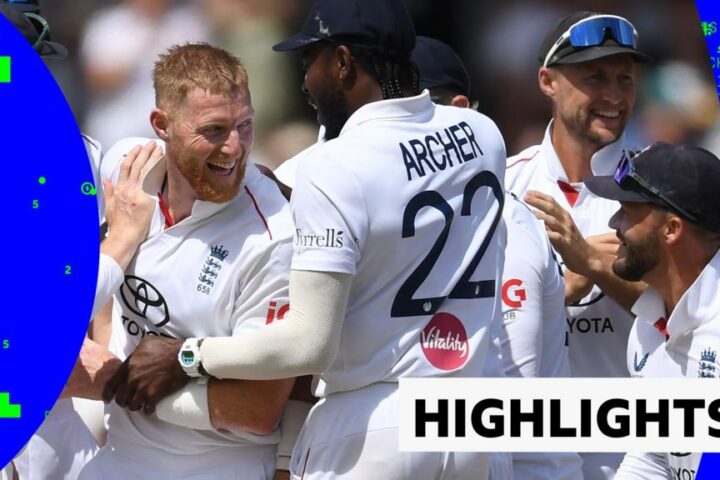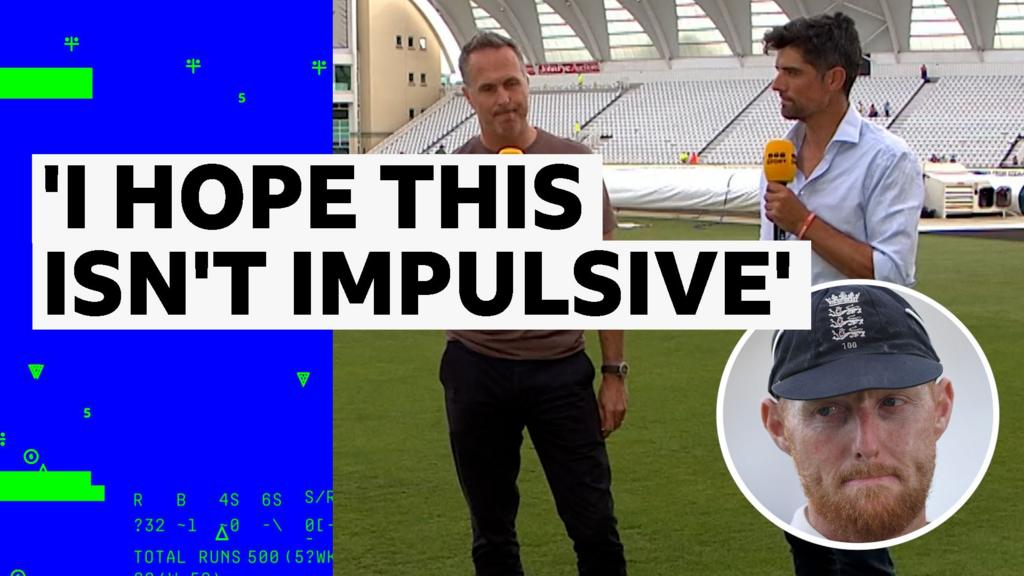
Former England captains Michael Vaughan and Sir Alastair Cook offered immediate reaction to talk of Ben Stokes retirement after the third Test against New Zealand at Trent Bridge. In a BBC Sport – Top Stories discussion, Vaughan’s stark line — “I think he’s had enough” — set the tone for an analysis that treated retirement as a possibility rather than a confirmed fact.
The broadcasters framed the exchange as expert opinion prompted by the Trent Bridge fixture. This article summarises what Vaughan and Cook said, reviews the match context, examines plausible reasons behind talk of retirement (while flagging the limits of speculation) and outlines the short- and medium-term implications for the England cricket team.
Quick summary
Ben Stokes retirement was the focus of a BBC Sport segment in which Michael Vaughan and Sir Alastair Cook discussed the signs that a senior international career might be drawing to a close. Both former captains emphasised that any decision to stop playing at the top level is complex, and they presented their views as informed impressions rather than direct information from Stokes or the England and Wales Cricket Board.
The segment ran under BBC Sport – Top Stories immediately after the third Test at Trent Bridge and aimed to help viewers interpret what recent performances and career context might mean for a high-profile all-rounder nearing the end of his international tenure.
What Vaughan and Cook said
Michael Vaughan was blunt: “I think he’s had enough.” Those four words were offered as a summary judgement, reflecting Vaughan’s view that the cumulative pressures of international cricket can prompt experienced players to step away when they feel they can no longer give everything the role demands.
Sir Alastair Cook gave a more measured reading. He cautioned against over-interpreting a single match or a pundit phrase, and placed the discussion in the broader context of how modern careers evolve under heavy schedules and scrutiny. Cook’s contribution reinforced the segment’s framing: this was interpretation, not breaking news from the player.
What happened at Trent Bridge
The BBC discussion was prompted by the third Test between England and New Zealand at Trent Bridge. While the match produced moments that invited questions about individual form and selection, neither Vaughan nor Cook tied any supposed retirement decision to a single incident from the game. Instead, they treated Trent Bridge as the latest context on a longer career timeline.
That distinction matters: commentators often use a current fixture as a prompt to reflect on a player’s broader trajectory, but such reflections are not the same as confirmed announcements from the player or team management.
Ben Stokes retirement: possible reasons and limits of speculation
When experienced analysts weigh up why a player of Stokes’ profile might step away, several recurring themes are offered as plausible explanations. Workload is frequently cited: the constant travel, training and match preparation at international level can erode energy and appetite. Injuries, or the fear of recurring physical problems, are another common factor for athletes thinking about their long-term availability.
Other possibilities include shifting personal priorities outside cricket and a desire to protect a legacy rather than risk a prolonged performance decline. Senior players sometimes choose the timing of their exit to preserve how they are remembered, preferring a dignified farewell to a slow fade.
It is crucial to repeat the limit of what we know: these reasons are general, plausible explanations rather than confirmed motives specific to Ben Stokes. Vaughan and Cook offered expert interpretation; neither presented new, direct evidence from Stokes or the England and Wales Cricket Board. Until an official statement is issued, such views remain speculative.
Impact for England and what comes next
If Ben Stokes retirement were to be confirmed, England would face immediate selection and strategic questions. Stokes combines top-order batting prowess with seam bowling that can alter the course of Test matches, and he has often been a psychological fulcrum in tight games. Replacing that blend of skills and temperament is not straightforward.
In the short term, selectors would need to rebalance the XI — deciding whether to add a like-for-like all-rounder, strengthen the batting, or deepen the bowling depending on conditions and opposition. In the medium term, his absence would open a pathway for younger players to stake a claim, potentially accelerating the development of Test options and prompting conversations about succession in leadership and pivotal match situations.
Practical steps to watch for are an official statement from Stokes himself, any comment from the England and Wales Cricket Board, and selection decisions for forthcoming fixtures. Those announcements will give clearer evidence than pundit reaction about the team’s immediate plans and how selectors intend to replace the roles Stokes has filled.
Source and caveats
This analysis is based on a BBC Sport – Top Stories segment featuring Michael Vaughan and Sir Alastair Cook following the third Test at Trent Bridge. The comments summarised here represent the views of former players and are presented as opinion and interpretation. There has been no official confirmation from Ben Stokes or the England and Wales Cricket Board in the BBC segment cited.
Read the original BBC Sport segment for full context: https://www.bbc.co.uk/sport/cricket/videos/c07yxgpl1p8o?at_medium=RSS&at_campaign=rss
FAQ
Is Ben Stokes retiring now?
There is no official confirmation. The BBC segment carried expert reaction discussing the possibility; it did not report a retirement announcement from Stokes.
What did Michael Vaughan and Sir Alastair Cook say?
Michael Vaughan said, “I think he’s had enough.” Sir Alastair Cook offered contextual analysis about career length and workload. Both presented their remarks as opinion rather than factual confirmation.
Will this change the England cricket team lineup?
If retirement were confirmed, selectors would need to reassess balance and role distribution. Short-term effects could include changes to the Test XI and leadership options; long-term consequences depend on selection strategy and the emergence of replacements.
Source: BBC Sport – Top Stories. The views summarised here are commentators’ interpretations and remain speculative until corroborated by official statements from Ben Stokes or the England cricket team.