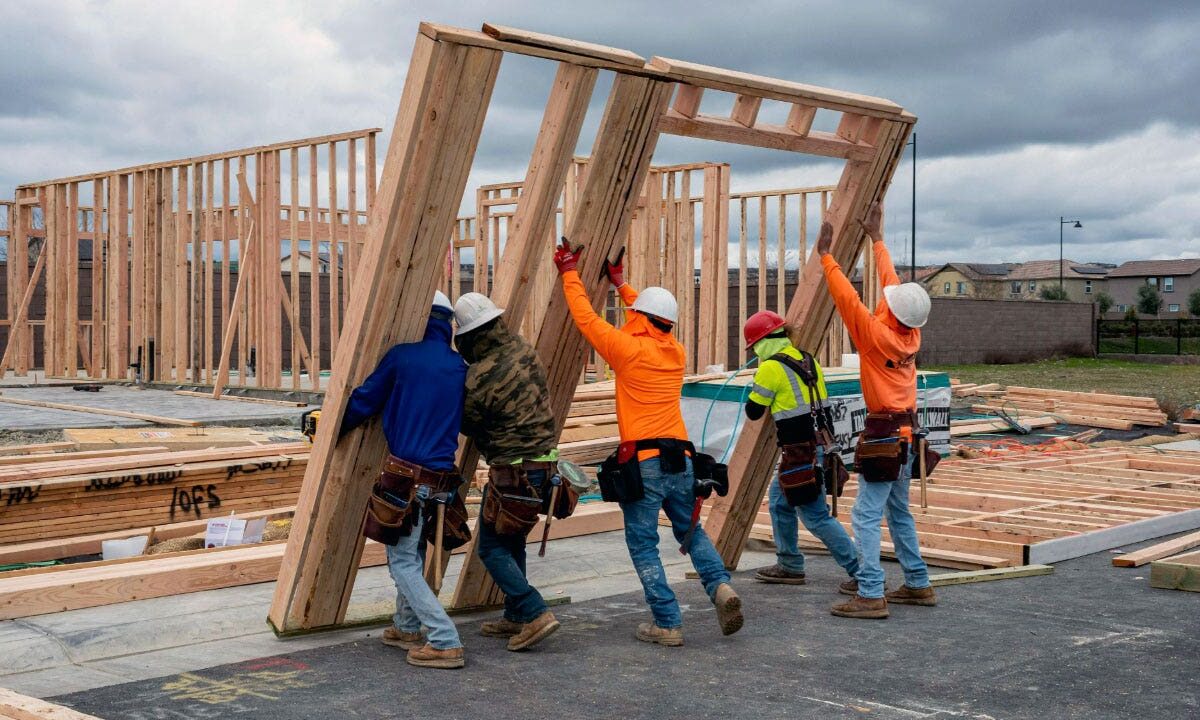
The construction labor shortage is now a measurable drag on U.S. homebuilding, industry leaders say. Builders report chronic understaffing on job sites that is lengthening construction timelines and inflating costs for homebuyers.
“Labor is one of the largest and most expensive inputs when it comes to home production and land development,” National Association of Home Builders CEO Jim Tobin said, framing the shortfall as a central constraint on new housing delivery. (Fox News Digital)
Construction labor shortage now
Industry figures put the shortfall in concrete terms. Tobin told Fox News Digital the sector is short roughly 250,000 workers per month, and that the gap reached as many as 400,000 jobs during stronger periods of activity. (Tobin via Fox News Digital)
A joint Home Builders Institute and National Association of Home Builders (HBI/NAHB) report projects builders will need roughly 723,000 new workers annually to keep pace with demand and work toward closing a roughly 1.5 million‑home deficit. (In this context, “deficit” means the cumulative shortfall between homes needed and homes completed.) (HBI / NAHB report)
The scale of those projections helps explain why builders across the country are raising alarms: without enough workers, planned projects take longer, some are postponed, and fewer new units enter already tight markets.
How shortages slow builds and raise costs
Builders and trade leaders link the labor shortfall directly to slower construction timelines and higher final prices for buyers. Home Builders Institute President and CEO Ed Brady told Fox News Digital the shortage “adds nearly two extra months to building timelines, inflating costs and delaying delivery.” (Ed Brady / Fox News Digital)
Those added weeks and months translate into tangible costs. Projects that stretch longer incur more overhead — equipment rentals, site supervision, insurance and financing — and those higher carrying costs (the ongoing expenses developers face while a project remains incomplete) are often passed to buyers through higher construction prices or delayed availability of finished homes.
Smaller builders report a different but related effect: to avoid overextending thin crews, some firms bid on fewer projects or stagger starts, which further slows the overall pace of housing delivery.
Why skilled workers are scarce
The shortage is rooted in several structural factors. One is workforce aging: many experienced tradespeople are retiring, shrinking the pool of senior craftsmen who also mentor new workers.
Another is a constrained training pipeline. Vocational programs, apprenticeships and technical-school slots have not expanded at the pace required to replace retirees and to scale up for higher building activity. Put simply, the supply of trained trades entrants lags demand from builders.
Recruitment struggles compound the problem. Construction employers often compete with sectors offering less physically demanding work or remote options, making it harder to attract and retain younger workers to the trades. The result is persistent understaffing at job sites and reduced capacity to start and finish new builds.
By the numbers
- ~250,000: industry shortfall reported monthly, per Jim Tobin (Fox News Digital).
- Up to 400,000: shortfall peak when activity was stronger, per Tobin (Fox News Digital).
- 723,000: new workers needed annually, per the HBI / NAHB report (HBI / NAHB report).
- 1.5 million homes: rough national deficit the report links to the labor gap (HBI / NAHB report).
- ~2 months: added construction time attributed to the labor shortfall, per Ed Brady (Fox News Digital).
Why it matters
The labor shortfall matters because it directly limits how many homes are completed and when. With a reported 1.5 million-home deficit, any delay in production keeps supply constrained and places upward pressure on home prices and rents, aggravating affordability problems for many buyers and renters.
For prospective buyers, slower delivery and higher construction costs mean longer waits and potentially larger mortgage commitments when homes finally reach market. For local officials and policymakers, workforce bottlenecks constrain efforts to expand affordable housing quickly, even when land and funding are available.
What comes next for builders and policy
Meeting the scale of need — roughly 723,000 trainees or hires per year, per the HBI/NAHB framework — will require coordinated action from builders, educators and public agencies. Near-term steps builders are pursuing include expanding apprenticeship slots, partnering with technical schools, and offering hiring incentives such as signing bonuses or retention pay.
Longer-term approaches focus on strengthening the trades pipeline: greater investment in vocational education, outreach to encourage trade careers that do not require four-year degrees, and accelerated credentialing so new entrants can move into productive roles sooner. Policymakers can help by funding workforce-development programs and aligning incentives with regional construction needs, though industry leaders caution that such solutions take years to scale.
Source attribution: Reporting and figures in this article are based on Fox Business / Fox News Digital reporting and the Home Builders Institute / National Association of Home Builders construction labor market report. Key reporting: The overlooked obstacle keeping America from building the homes it needs — Fox Business; industry report: HBI / NAHB construction labor market report (PDF).