Players at the 2026 All-Star Game media sessions made clear their stance on an MLB salary cap within minutes: blunt, unified and skeptical. “I think it’s bad for the game,” Los Angeles Angels star Mike Trout said, while Yankees outfielder Cody Bellinger added that a cap looks like an owners-first fix — “no good.” Those opening comments set the tone for a weekend of sharp public pushback.
Owners campaign and the Level the Field push
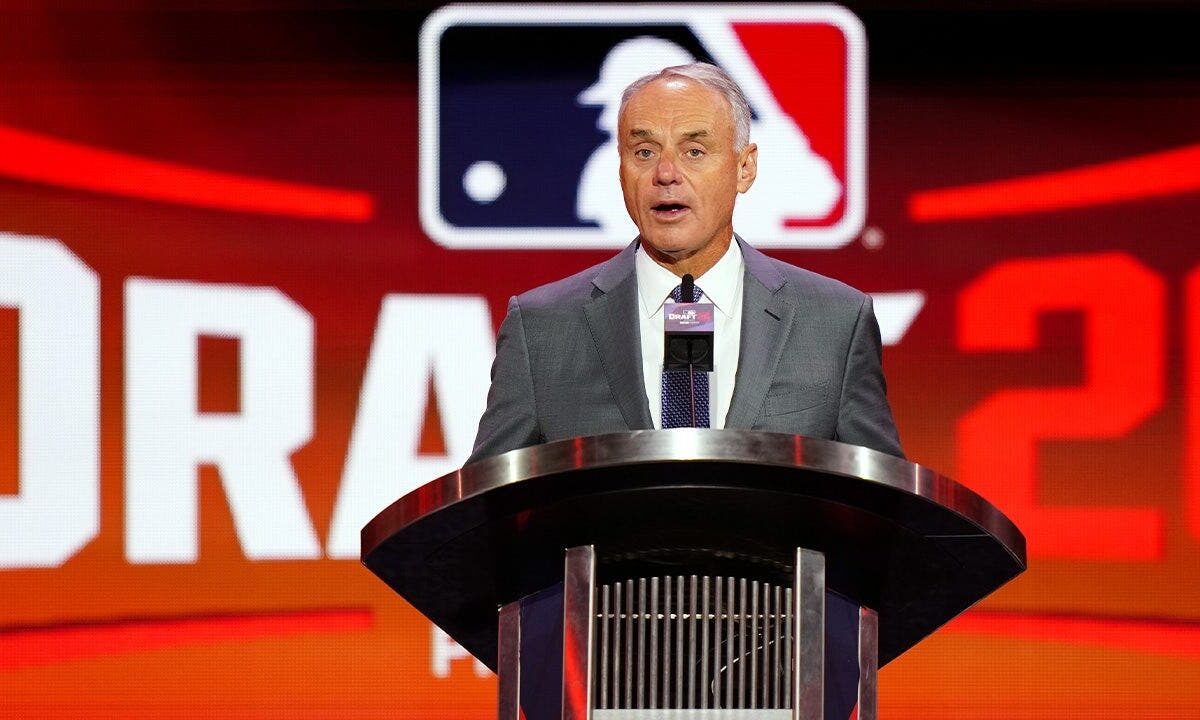
Major League Baseball rolled out an owners-backed “Level the Field” messaging push this year that included social graphics and posts arguing payroll disparities harm competitive balance and that fans deserve to know how owners propose to fix it. Commissioner Rob Manfred has defended the outreach as an attempt to “keep fans informed” about the owners’ bargaining position.
The campaign frames a salary cap as a structural solution to spending gaps and highlights examples of heavy spending by some clubs to argue limits are needed. League materials emphasize how money concentrations can shape outcomes, while owners say public messaging aims to build fan support for negotiation positions ahead of collective bargaining talks.
Player reaction at 2026 All Star Game
At media day, several marquee players responded directly. Trout’s “I think it’s bad for the game” was echoed by others who warned that a cap would curtail earnings and alter free agency. Bellinger questioned owners’ motives: “I think if the billionaires are wanting it…they want to continue to enhance their portfolios as much as possible.” Dodgers slugger Max Muncy observed that players in other capped leagues also resist caps, asking why baseball’s players should accept limits they generally oppose.
Shorter, emphatic responses were common: Louis Varland said simply “Bad” when asked, and several younger All-Stars used phrases like “Bad, bad” or indicated they were not in favor. The overall tenor was consistent across markets and ages — a strong, public rejection of the owners’ framing and proposals.
How money flows now: luxury tax and redistribution
Under today’s system, MLB enforces a luxury tax (officially the Competitive Balance Tax) that penalizes teams for exceeding thresholds; those payments are pooled and redistributed to clubs that stay under the limit. The mechanism is intended to discourage excessive spending and to circulate penalty funds to the league. For a basic explanation of how the luxury tax operates and how redistributed funds are calculated, MLB’s glossary and league materials provide a clear primer.
Recent reporting — notably a Fox News article with original All-Star coverage — also includes allegations that some owners have not reinvested redistributed luxury tax money into their on-field product and instead retained or redirected those dollars in ways critics say do not improve competitiveness. Those assertions are reported as allegations in the original piece and have not been independently verified by this outlet; readers should treat them as contested until further, independent documentation is available.
How an MLB salary cap would change pay and competitive balance
An MLB salary cap would be a major structural change. From a player perspective, a hard cap sets a firm ceiling on team payrolls and reduces the ability of the market to drive high-end salaries through bidding wars in free agency. That can compress top-end earnings, change contract negotiation dynamics and shift leverage toward owners who control overall roster spending.
Owners argue a cap would promote parity by narrowing the gap between big- and small-market clubs. Critics — including many players and some independent analysts — counter that caps can suppress wages, reduce market-driven distribution of talent, and produce unintended roster management strategies (more reliance on younger, cheaper control years, for example) that alter the on-field product in ways fans and players may dislike.
Current season context and payroll examples
The 2026 standings offer concrete context for the debate. Tampa Bay sits near the top — ahead by three games over New York — while the Toronto Blue Jays occupy the bottom of their division, underscoring that standings and spending do not always map neatly. Detroit, by contrast, has been cited in reporting as carrying one of the higher payrolls in its division while sitting at 44-52, an example owners have used to argue that money alone does not guarantee results.
Both sides point to outliers: owners highlight large-payroll clubs that underperform as evidence that unchecked spending is inefficient, while players point to lower-spending teams that overachieve as proof that roster construction, scouting and player development also drive success. The disagreement turns on whether a cap addresses root causes or merely constrains player pay without solving deeper competitive imbalances.
What comes next: union response and fan impact
MLBPA chief Bruce Meyer has publicly pushed back, telling ESPN that owners and the commissioner’s office have spent years trying to convince fans the game is broken and that the ads feel “perverse.” The union frames the outreach as a negotiating tactic that could harden positions at the bargaining table, increasing the risk of contentious talks.
That hardening raises the specter of a labor dispute. Owners’ coordinated push for a cap, combined with public messaging aimed at shaping fan sentiment, increases the possibility that bargaining could become acrimonious — and, if no agreement is reached, could lead to a lockout or work stoppage. Fans are likely to respond to the framing, and players warn that public messaging can mislead about how revenue currently circulates through the sport and how a cap would alter livelihoods.
With a cap: narrower payroll gaps, constrained free agent bidding, possible emphasis on cost-controlled young players, and downward pressure on maximum player earnings. Without a cap: market-driven salary growth for top talent, greater disparities in payrolls, and continued debate over whether spending translates to wins.
Source and attribution
This report is based on Fox News reporting from All-Star Game coverage and related owner messaging (see: https://www.foxnews.com/outkick-sports/mlb-stars-address-salary-cap-owners-saying-baseball-broken-ahead-all-star-game-bad-game). The MLB glossary provides an independent, league-side explanation of the luxury tax and redistribution mechanics: https://www.mlb.com/glossary/transactions/luxury-tax. The union reaction quoted above was reported by ESPN and discussed publicly by the MLBPA (see ESPN coverage at https://www.espn.com/mlb/).
Note: allegations in some reporting — including claims that redistributed luxury tax funds were not reinvested into on-field product by specific owners — are presented in the original stories as unverified and have not been independently confirmed by this outlet. Readers should treat those claims as contested pending further documentation or accounting records.