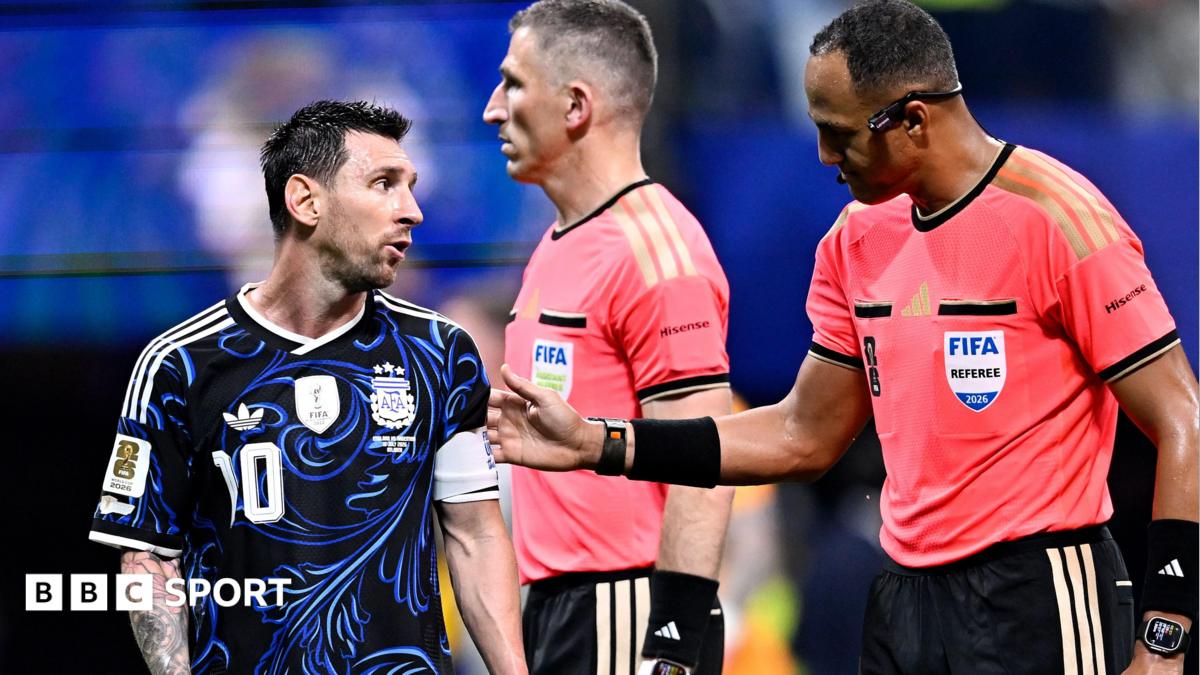
“I’ve been a World Cup official – I promise you there is no favouritism,” Darren Cann told BBC Sport, addressing concerns about World Cup referees within the first public comment many fans hoped would answer growing online speculation. His clear rebuttal frames the debate around perception, professional standards and the systems that govern elite officiating.
Quick take
Cann, identified by BBC Sport as a former World Cup official, pushed back on claims that referees act with organised bias. He described the intense pressure on match officials and argued that accusations of systematic favouritism misread how officials are selected, trained and monitored.
He acknowledged fan frustration after contentious calls but said those moments are best understood as part of the sport’s emotional landscape rather than proof of coordinated interference. Cann’s comments are offered as an expert view based on experience, and should be read as such.

World Cup referees
World Cup referees are chosen through multi-stage processes that prioritise experience, fitness and consistent performance in elite competitions. Governing bodies review match reports, fitness tests and VAR data when assembling tournament panels; these criteria are publicly cited by organisations responsible for international appointments.
Training for tournament referees typically includes scenario work, match simulations and briefings on tournament-specific protocols to ensure consistent application of the laws. Oversight is multilayered: assessor teams, VAR units and disciplinary committees all examine decisions before, during and after matches, creating multiple checkpoints designed to reduce individual bias.
Those basic operational descriptions align with public guidance from the bodies that run the game. For more on how refereeing is organised at the international level, see FIFA’s refereeing overview and technical pages, which outline selection and education frameworks used at major competitions: FIFA Refereeing.
Conspiracy theories and common claims
Accusations aimed at referees range from suggestions of regional favouritism to claims that organisers tilt results for commercial or political reasons. Many of these theories take hold after a single controversial decision or an emotionally fraught match and spread quickly on social media.
Psychology and social dynamics help explain the traction: people seek explanations for outcomes they dislike, and visible errors or marginal calls are easy to interpret as deliberate bias. Online platforms amplify those narratives, especially when they match a fan’s prior beliefs.
Cann and other experienced observers caution against conflating individual error with a coordinated agenda. Isolated mistakes — sometimes magnified by VAR replays or pundit commentary — do not, on their own, constitute proof of system-wide favouritism.
What referees really think, per Cann
Cann says officials who reach the World Cup level come prepared to apply the laws impartially and to manage matches under intense scrutiny. He described a professional culture in which credibility depends on consistent, rule-based decision-making rather than favouring particular teams.
According to Cann, routine debriefs use VAR footage and peer feedback to examine contentious incidents and to learn. That kind of post-match scrutiny is intended to improve consistency and to hold officials to account, not to hide errors. He emphasised that most referees are acutely aware their reputations rest on appearing fair.
At the same time, Cann was careful to frame his remarks as professional judgment rather than an independent audit of every decision. He said, in essence, that while errors happen, the systems in place aim to detect and correct them — and that assuming organised favouritism ignores that corrective architecture.
Why it matters for fans and the game
Perceptions of bias have real consequences. If fans widely believe referees favour particular teams, trust in results erodes, affecting fan engagement, sponsor confidence and even the integrity of betting markets. That erosion can harm the sport’s reputation beyond any single contentious match.
Cann suggested that greater transparency about selection, oversight and post-match review can help restore confidence. Clear communication about how officials are evaluated — and demonstrable evidence that assessments are routine and independent — makes it harder for conspiratorial narratives to take root.
For governing bodies, the practical takeaway from Cann’s remarks is straightforward: keep improving assessment systems and public explanations. Transparency and consistent, verifiable oversight matter more than attempts to silence critics.
FAQ
Did Darren Cann say referees favour any teams?
No. Cann told BBC Sport he has not seen evidence of systematic favouritism and said officials aim to be impartial. His statement is presented as his informed view based on experience.
Are conspiracy theories about referees proven?
No. While errors and controversial calls occur, broad claims of coordinated bias lack verified evidence and are disputed by experienced officials like Cann. Individual mistakes do not equal organised interference.
How are World Cup referees chosen and reviewed?
Selection is based on experience, fitness and performance in elite competitions. Referees undergo training, are evaluated by assessor panels and are subject to VAR and post-match review to encourage consistency and accountability.
Source: BBC Sport — I’ve been a World Cup official – I promise you there is no favouritism. Published 19 July 2026. Additional context on selection and training is available from FIFA’s refereeing resources: FIFA Refereeing.