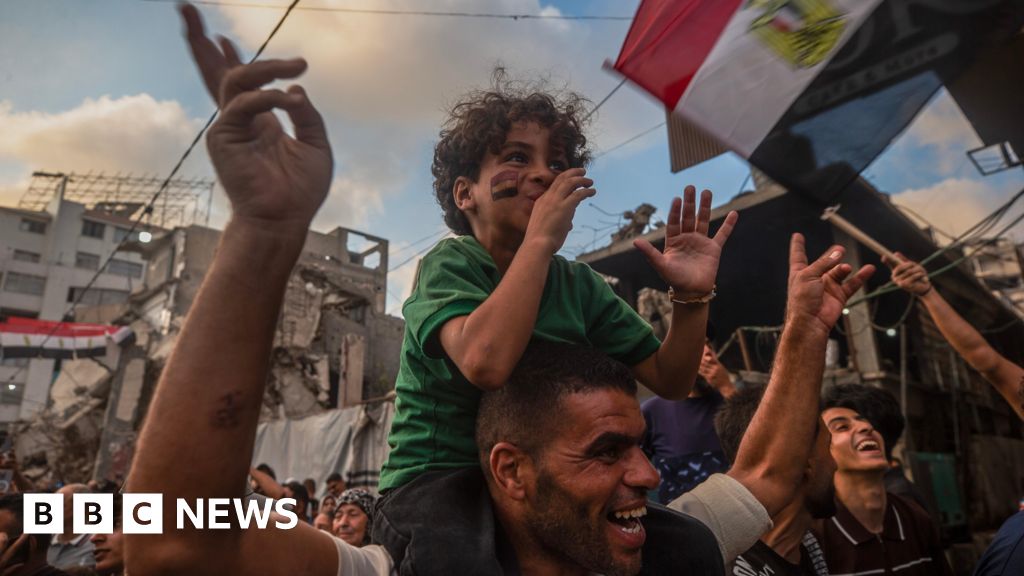
Gaza football fans gathered around a screen set up amid broken concrete and twisted metal to watch the Argentina v Egypt World Cup match, cheering loudly when Egypt created chances, according to a BBC video published on 2026-07-08. The footage captures a striking human-interest scene: neighbours of different ages sharing a rare, public moment of excitement despite visible signs of recent damage nearby.
Watch the BBC clip: https://www.bbc.co.uk/news/videos/c8r2nmm7xeeo?at_medium=RSS&at_campaign=rss
Scene in Gaza: the BBC video
The BBC footage shows groups of people clustered around a single screen placed in a partially cleared area, with broken walls and rubble visible behind them. Children sit on low walls or stand on tiptoe; adults lean in, shout and clap at key moments. When Egypt threatened Argentina in attack, the crowd’s cheers rose sharply, turning the temporary gathering into a lively, communal event.
The camera lingers on faces and reactions rather than on the wider neighbourhood. That close framing gives viewers an impression of immediacy — the sights and sounds of a crowd reacting in real time — while leaving the wider circumstances outside the frame.
The match and local reaction
The video documents local viewers watching the World Cup fixture between Argentina and Egypt. Most of the visible reactions in the clip are sympathetic to Egypt: applause, chanting and audible excitement punctuate the broadcast moments when Egypt performed well.
Support for Egypt among Palestinians in Gaza is commonly shaped by geography, family ties and frequent cross-border connections; the footage suggests those affinities helped shape how people responded to the game. The BBC report does not provide a detailed breakdown of every viewer’s preference, but the general tone of the crowd in the clip is supportive of the Egyptian side.
Why this moment mattered locally
Sporting events can serve as focal points for collective feeling, and the video shows how a single match became a brief source of communal relief. For a few hours people of different ages came together to share excitement and conversation, a momentary interruption to daily strain.
The gathering also signals how international events can resonate locally: cheering for Egypt reflects cultural and regional ties, and the shared experience of following the same broadcast can strengthen a sense of belonging and normality even in difficult surroundings.
What the footage does and does not show
The BBC describes those present as “hundreds”; that figure should be read as an estimate based on what the camera captures, not as a precise, counted attendance. The clip provides a snapshot of one location and one moment in time rather than a comprehensive survey of all local viewers.
Similarly, the visible “rubble” in the shot indicates damage to infrastructure in the area shown, but the video does not attribute causes, give a timeline, or present a broader damage assessment. Treat the setting as contextual: the rubble is part of the scene that frames the human story the footage highlights, not a detailed report on local events that led to it.
Local voices and atmosphere
The BBC camera captures conversations, laughter and spontaneous chants, but it includes limited direct interviews or extended first-person testimony. The strength of the piece is atmospheric: it records how ordinary moments of joy and disappointment around a football match can bring people together, with reactions visible across generations.
That communal response — shared cheering at goals, groans at near-misses, and applause for skilled plays — is the core human-interest thread the clip follows.
Images from the scene
The images in the BBC report complement the video, showing small clusters of viewers gathered closely around screens and devices. They emphasise scale and atmosphere rather than detailed demographic breakdowns.
Key takeaways
• A BBC video published 2026-07-08 shows an estimated hundreds of Gaza football fans watching the Argentina v Egypt World Cup match from among visible rubble and cheering for Egypt.
• The footage is a human-interest snapshot: it highlights communal reactions and atmosphere without providing detailed counts, an account of the damage shown, or long interviews with participants.
Source attribution
This update is based on a BBC News video published on 2026-07-08. Original report and clip: BBC News – Watch: Gaza football fans watch World Cup from rubble.
Notes on reporting: The term “hundreds” in the BBC report is reported here as an estimate based on the footage; it is not presented as an exact attendance figure. The visible “rubble” indicates damage to structures in the scene but the video does not attribute causes or present a damage timeline. For fuller context about the neighbourhood or follow-up reporting, readers should consult broader coverage and local sources.