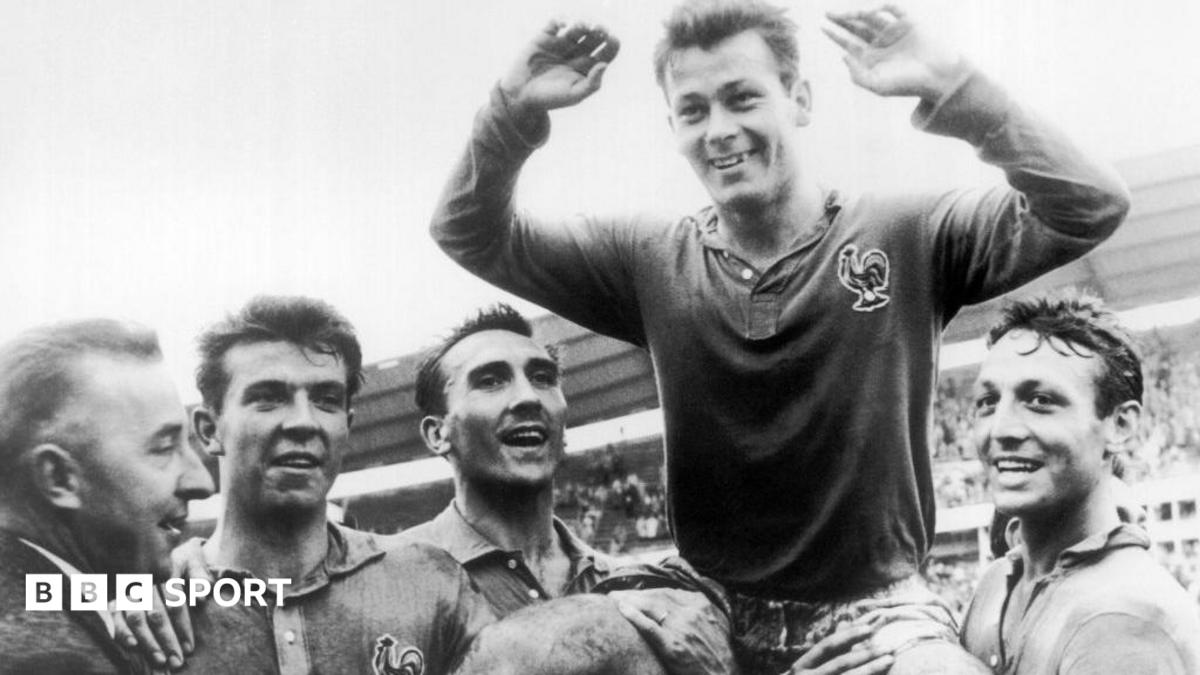
Just Fontaine scored 13 goals at the 1958 World Cup — the single‑tournament scoring record that still defines his place in football history.
Fontaine’s 13‑goal haul in Sweden is the clearest headline of his international career. He achieved that total across France’s six matches at the finals and finished as the tournament’s leading scorer. Below we recap his tournament run, expand on the matches in which those goals were scored, explain the injury that ended his period of top‑level play at age 28, and place the record in historical perspective.
Just Fontaine’s 13-goal World Cup run
Fontaine became a global talking point in 1958 because of the sheer concentration of goals he produced in one edition of the World Cup. The official match logs record 13 goals across six games — a single‑edition total that has been referenced by commentators and statisticians ever since.
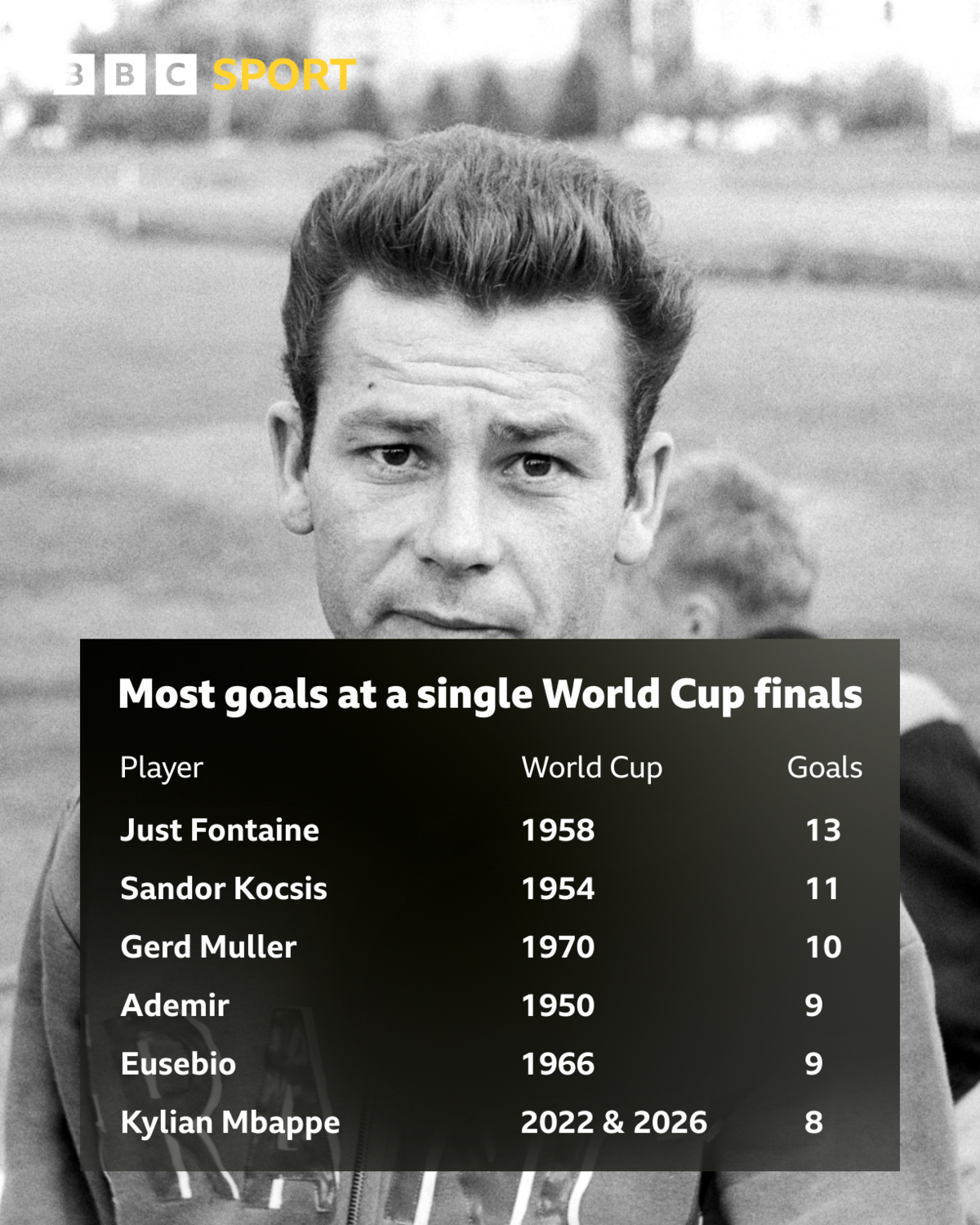
He finished the finals as the tournament top scorer (the period equivalent of today’s Golden Boot) and was instrumental in France reaching the latter stages, where they secured third place. That combination of volume and tournament impact is the core of Fontaine’s World Cup legacy.
Match-by-match: how the goals came
Fontaine’s output was compact: 13 goals came in six France fixtures during the tournament. Contemporary reports and tournament summaries note that his scoring included multiple multi‑goal games and at least one hat‑trick, with strikes spread through the group phase and the knockout rounds.
Because official match records of the 1958 finals list each game’s scorers, historians rely on those logs to reconstruct Fontaine’s sequence of goals. The pattern is notable: he scored consistently rather than in a single outburst, converting chances in group matches to set up France’s progress and adding important goals in the knockout ties that followed.
Match-by-match scoring in 1958 shows a forward who combined poaching instincts with an aptitude for finishing from a variety of positions. Those fixtures — dated in June 1958 in the official tournament calendar — provided the six opportunities in which Fontaine amassed his 13 goals.
Injury and the end of his international career
Fontaine was 28 when a serious leg injury curtailed his period at the top level. According to BBC Sport, the injury the following season substantially reduced his ability to return to his previous form and meant he did not appear at another World Cup. That setback effectively ended the momentum that had produced the 13‑goal finals haul.
Contemporary reporting and later retrospectives emphasise the impact of that injury on Fontaine’s playing career: the 1958 performance remained his single greatest international achievement, and he never had the same sustained run of form at major tournaments afterwards.
Why the 13-goal record still matters
It is useful to separate two ideas when assessing Fontaine’s tally. First, the 13 goals are an exceptional single‑tournament total: no player in World Cup history has exceeded that number in one edition. Second, the figure has endured across many tournament formats and tactical eras, from the late 1950s to the present.
That longevity gives the record explanatory power. When modern players score prolifically in a finals, commentators compare their totals to Fontaine’s 1958 mark as a way to judge how exceptional a single‑tournament performance is. Fontaine’s name thus functions as a statistical benchmark as well as a historical reference point.
For perspective, all‑time World Cup scoring lists (which aggregate goals across multiple tournaments) are separate from Fontaine’s single‑edition record, but both kinds of records are used to frame debates about the greatest scorers in the competition’s history.
How history remembers him
Fontaine’s 13 goals are the primary reason his name endures in World Cup history. Writers, broadcasters and statistical compilations repeatedly return to the 1958 totals because they encapsulate a remarkable hot streak in a single finals.
He is thus often described in historical accounts as the greatest single‑tournament scorer — a label grounded in the documented 1958 totals and in the fact that his career at the highest international level was cut short soon after by injury at age 28.
FAQ
How many goals did Just Fontaine score in one World Cup?
He scored 13 goals in the 1958 World Cup, the highest total recorded in a single edition of the tournament.
Did Just Fontaine win the Golden Boot in 1958?
Yes. Fontaine finished as the tournament’s top scorer in 1958 — the equivalent of today’s Golden Boot — with his 13 goals.
Why did Just Fontaine stop playing after 1958?
A serious leg injury in the season after the World Cup curtailed his top‑level playing career. BBC Sport notes the injury significantly reduced his ability to return to previous form, and he did not appear in another World Cup.
For the original reporting and fuller background on Fontaine’s 1958 run and the subsequent injury, see the BBC Sport profile linked below.
Source: BBC Sport — BBC Sport profile